While I haven’t written a Pine Curtain Storyin a while, they’re always on my mind, waiting for the right time and way to be told. I know they’ll be back soon. I think about those stories all the time. Not because I’m living in the past or wish to (no thanks!) but because I feel they’re important and timeless; both the smaller focus on my friends and I, and the larger focus on what it meant and still means to have been a teenage girl in a specific time and place.
Like any good daydreamer, I have a list of songs that I would choose for a soundtrack to my future Pine Curtain movie. It evolves, but it’s mostly eighties and early nineties alt-rock. The latest addition is Rickie Lee Jones’ “Satellites,” which to me perfectly describes the relationships in Pine Curtain Stories.
“So you keep talking in many languages/ Telling us the way you feel…”
When we were younger we had so many creative “languages” to communicate in – folded notes, made up stories, prank calls and other outward expressions, even collages and cartoons and of course, the treasured mix tape. If we could think of a way to express an emotion or idea, we did, even if it was weird, risky or poorly-executed.
And that goes away.
Now there are text messages, emails, social media and all of those things are fine, but very clinical and dilute the depth of emotional exchanges, dialogue and ideas for the sender and the receiver.
And yet, we are satellites. Some of us are in touch more than others and we are all busy and scattered, at the same time we are bound by those years we spent together. I can think of something that happened in 1991 and immediately feel exactly how I felt then, and remember who was there and what their voices sounded like and what style of clothing they were wearing. If it was nighttime, I can hear the cicadas or wind blowing through the pine trees. I can remember what was playing on the stereo and the sound of car wheels on gravel when we pulled over to socialize on the nights we cruised endlessly between the local mall on one side of town and the Sonic drive-in on the other side.
Satellites homing in on a shared constant.
I wish there were more songs that brought to mind early friendships. Most of the songs on my “future soundtrack” are pretty angsty or about boys. But as the heroes of these stories, we need an anthem just for us. This is a strong contender.
“What we call the beginning is often the end. And to make an end is to make a beginning. The end is where we start from.”
T.S. Eliot
After a nice Christmas and New Year’s Day, by ten a.m. on January 2, I was at the veterinarian’s office saying goodbye to my 17-year-old cat, Molly. Diagnosed with osteosarcomain August and mostly stable, her final weeks, while treasured, were helped along by painkillers, and balanced an increasingly volatile situation as her tumor spread along her cheekbone and toward her ears, mouth and eyes. Thursday was the day. I would never have been ready to let her go, but it was clearly not a moment too soon. I was grateful that it didn’t appear to be delayed into constant pain, either. Cosmic timing in many ways. As we say, 17 great years and one bad morning.
My acute grief and forever love for Molly is its own thing and needs its own post when I am better equipped to write it. But today Molly’s journey and the changing of the years made me think of the T.S. Eliot quote written above. Every end a beginning. How hopeful that is!
For me, new beginnings mean things like taking time to set healthier habits now that I am no longer needing to care for Molly in such consuming ways. I miss my old routine so much, even the dreaded eye drops that I know Molly doesn’t miss at all. (To be fair, she got the short end of that stick.) My heart breaks a little when I wake up in the morning and she’s not crunching from the pile of treats my husband gave her before his shower (we were definitely in cat spoiling mode!), or running to me for her morning brushes. While I never want to lose those memories, I am trying to make a new routine by reading from a book between the time I wake up until James leaves for work and beginning my own work day, filling my “Molly time” with something relaxing vs. opening my laptop or clicking around aimlessly online, or thinking about what I have lost. Every end a beginning.
My husband has his own changes to make and goals he wants to reach now that his routine is different. He had “night duty” with Molly because he naturally stays up later, but that often meant a few extra chores before he could relax and sleep. He’s working to channel that found rest and energy into his physical health.
Our theory is that things are different anyway. Everything from our routines to the way our house looks and sounds. (Who knew the absence of a tiny cat and her thousand toys could cause a house to echo?) Why not guide those changes for good, to the extent we can? Every end a beginning.
One day, we will be ready to open our hearts to a new kitty or two, and by that time it can make its own, beloved, precious place in our lives, not simply fill the Molly-shaped hole that is so deep now. Every end a beginning.
We can’t control much about the endings in our lives, but we can control where and how we start from. That’s the lesson that I take from this sad start to a new year that still has a lot of potential and joy to be discovered.
In August, on the day that Molly was diagnosed, I sat on the couch and carved a rubber block while she rested in her carrier and slept off her X-Ray tranquilizer. The repetitive motion of the carving helped keep my hands busy while my mind was moving in a lot of new and confusing directions. It was a fun little piece then, and now, I love it not only because it features my favorite subject, but because it reminds me of the beginning of this journey, of Molly’s victory lap. How rich and rewarding and challenging the months in between have been, and how at the end of it, Molly still shines and so do we.
Every end a beginning. Every darkness an opportunity for light. MollyPop, my “Muse who Mews,” inspiring me even now.
This year, I was lucky enough to travel all around the country seeing interesting and beautiful art…and call it work! Before I leave 2019 behind, I wanted to share my favorite art discoveries of the year, in no particular order.
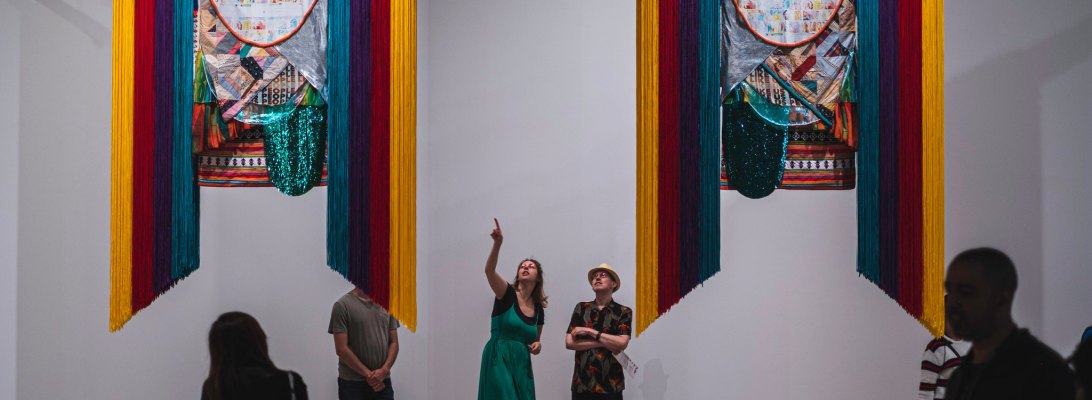
Textile Art by Jeffrey Gibson at the 2019 Whitney Biennial. Photo: James Khattak.
Jeffrey Gibson : I know I said “no particular order,” but finding this artist easily tops my art discoveries of 2019. I first saw his work at the Whitney Biennial, and then was able to see his “This is the Day” exhibition in Austin. Gibson’s work is just gorgeous, and he incorporates his Native American heritage into every piece in a way that is both interesting and clear while also making you think.
Tomashi Jackson : I saw Jackson’s work at the Whitney Biennial as well, and have been (im)patiently waiting to see more of it ever since. Her work is very interesting, with a lot of thought, depth and skill layered into the pieces. Viewing the Whitney pieces was like looking into a scrapbook – so much story and narrative.
Lincoln Gallery : Smithsonian American Art Museum | Washington, DC : This wasn’t my first visit to this museum, but I hadn’t seen this gallery before. It was definitely a “Where have you been all my life?” moment. From new/digital media pieces by Jenny Holzer and Naim June Paik to vibrant Mickalene Thomas and Kerry James Marshall paintings and a large installation by David Hockney, it really represented the best of America’s best.
Jeff Koons “Split-Rocker” at Glenstone. Photo: James Khattak.
Glenstone | Potomac, MD : This experience felt very exclusive, but is completely accessible. Free to the public but involving a bit of transportation finagling, Glenstone’s grounds and art pavilions feel almost otherworldly, especially when some of the first things you experience are Jeff Koons’ “Split-Rocker” rising to greet you from a distant pasture, and “Forest (for a thousand years…)” a sound installation by Janet Cardiff and George Bures Miller, booming through the trees at regular intervals.
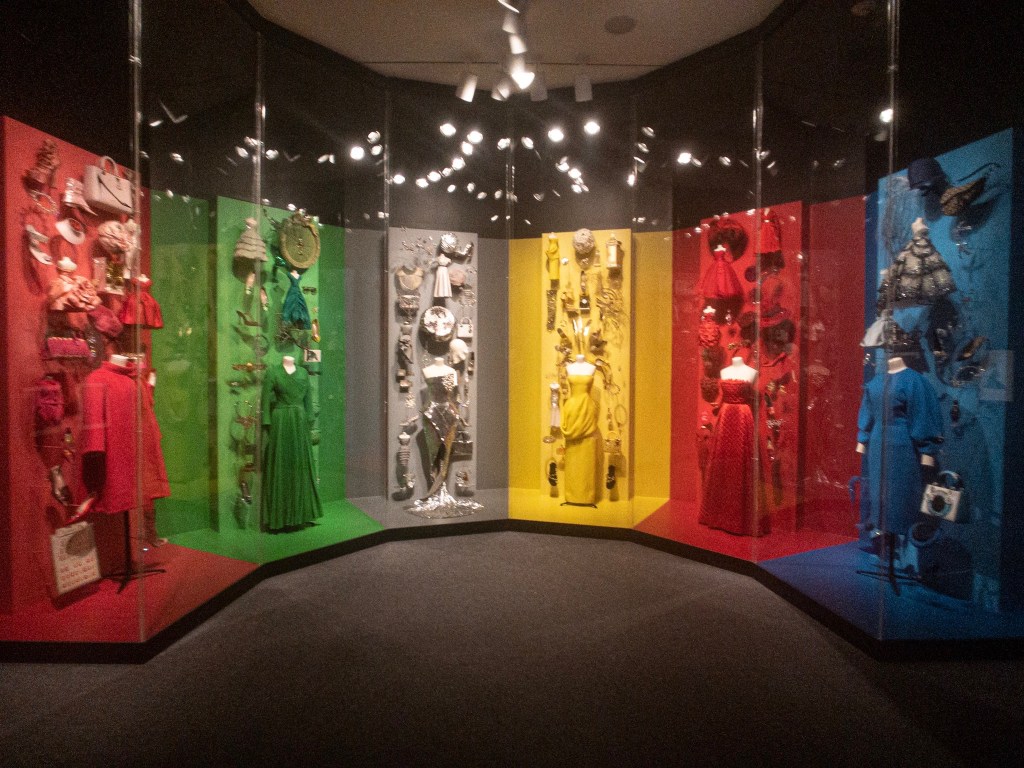
“Dior: From Paris to the World” at the DMA. Photo: James Khattak.
“Dior: From Paris to the World” , Dallas Museum of Art | Dallas, TX: The exhibit itself was great, but what really shone was the exhibition design. It was so well done, and really made me think about how presentation does or doesn’t work in other exhibits. It’s easy to assume that art speaks for itself, and it mostly does, but when exhibition planners go that extra mile, it has a huge impact on visitor experience.
Blanton Museum of Art | Austin: The Blanton has been in the spotlight in recent years for its permanent Ellsworth Kelly “Austin” installation piece. But if you only see that piece, you’re truly missing out. The Blanton has had some of my favorite traveling exhibitions (Jeffrey Gibson’s “This is the Day” and 2018’s “Making Africa: A Continent of Contemporary Design”) and its permanent collection is really fantastic. The museum is large, and contains works by Yayoi Kusama, a comprehensive selection of Latin American art, and a very cool portrait of Madame C.J. Walker, made of hair combs, by Sonya Clark.
Houston Art Scene : Houston is close to Dallas, and even closer to my hometown. But it was still a pleasant surprise to visit for a weekend and see so much going on in its art communities. We went for the Van Gogh exhibition at the MFAH, and while we were there, we were able to experience James Turrell’s “Twilight Epiphany” Skyspace on the Rice University campus, the MFAH sculpture garden and Anish Kapoor’s “Cloud Column,” and there are so many things that we didn’t have time for, that we must go back and see.
Valley House Gallery & Sculpture Garden | Dallas : This gallery is a few miles from our house, an oasis in the middle of North Dallas. We were first introduced to it at this year’s Dallas Art Fair, and visited shortly after. Its staff is friendly, and its exhibitions are interesting and diverse, with many pieces made using techniques I hadn’t seen before, and inspiring my own artistic process. And one of the best things about it is the sculpture garden and pond behind the owner’s residence. (The garden isn’t always open – look for a sign, or simply ask.)
Amon Carter Museum of American Art | Fort Worth: A long-time favorite of ours, the Amon Carter got a refresh this year and it is even better than ever! The upgrade better-highlights the Carter’s contemporary art collection, and gives polish and deeper context to some of its pieces around the American West. When we went, its main exhibition was of Gordon Parks photos, which in itself was a 2019 highlight because of the talent, subject matter, and Parks’ groundbreaking position as a successful black photojournalist in and around the Civil Rights Era. Its Gabriel Dawe and Justin Favela installations are also crowd pleasers.
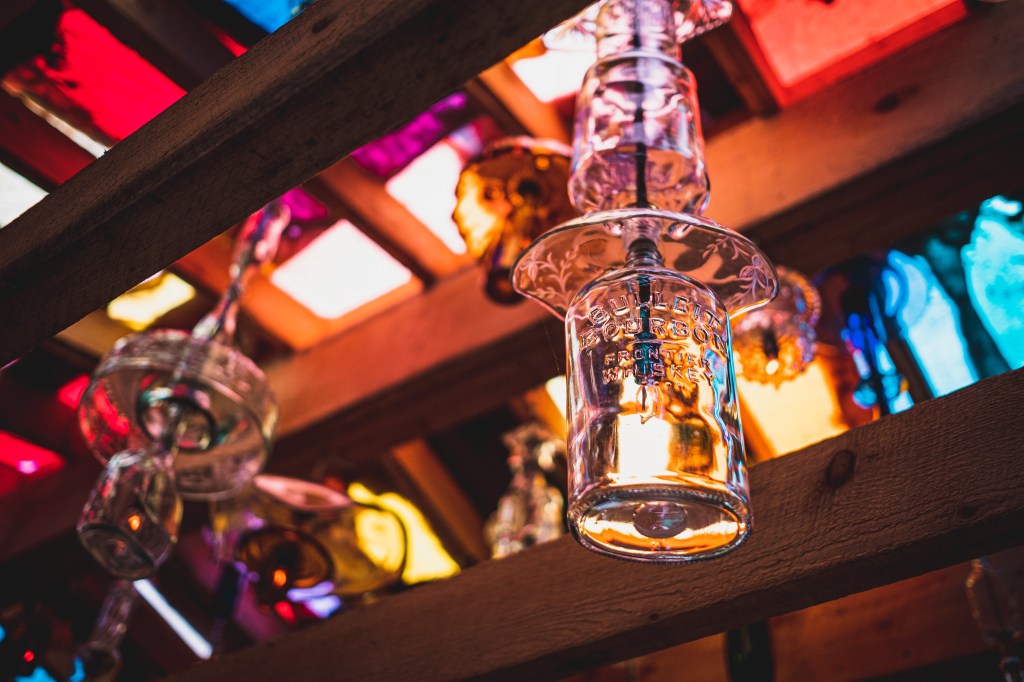
“Slumgullion (The Venerate Outpost)” by Karl Unnasch at Philbrook Museum of Art. Photo: James Khattak.
“Slumgullion (The Venerate Outpost)” by Karl Unnasch, Philbrook Museum of Art | Tulsa, OK : Made entirely from reclaimed materials, including colored glass objects and lamps, t-shirts and the skeleton of a late-1800s pioneer home, Slumgullion is a log cabin installation at the back of Phibrook’s fairy tale gardens, which makes it seem even more magical. Philbrook is doing all kinds of interesting and innovative things lately. Can’t wait to see what it brings in 2020! (And if its’ Instagram hinting is any indication, we are in for something – maybe thirty somethings – very cool!)
Believe it or not, this is not all of the amazing art I saw in 2019! I actually did narrow it down a lot, which wasn’t easy.
If you see something interesting in this list, I hope you will bookmark it, research further, and let it inspire your own artwork, art travels or creative thinking!
I read a lot, sometimes a book a week if I have the time and energy. Here are a few of my favorites, in no particular order:
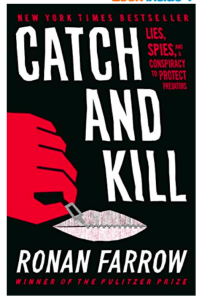
Catch and Kill. Ronan Farrow. Fast-paced and deep look into investigations of the #MeToo movement and its impact on the author.
Trick Mirror: Reflections on Self-Delusion. Jia Tolentino. These essays analyze modern and internet culture and how it has changed society, how we find and define our place in it, and how we view ourselves in these new and changing contexts.
Lot: Stories. Bryan Washington. I really loved these interconnected vignettes that formed a narrative around the life of a Houston boy and his family as he grew to adulthood and the neighborhood evolved around him.
American Predator. Maureen Callahan. This book was really scary. I read a lot of true crime, and this one was the first in a long time that truly unsettled me.
Working. Robert Caro.I’m late to Robert Caro, but after reading this I immediately reserved two of his other books through my library system. His writes clearly, but beautifully and humanizes his subjects without pulling punches.
Henri Nouwen. Discernment. I NEEDED to read this book when I read it. Truly life-changing for me. I downloaded some of his other books, and they were good, but I truly found this one at the right time. (Or perhaps it found me, if you are into that sort of thing.)
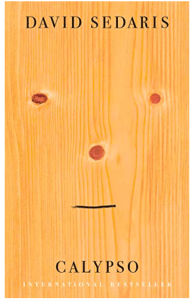
Calypso. David Sedaris. The best of the best at his best. Sedaris takes universal challenges (aging ourselves, caring for aging parents) and makes them both poignant and hilarious.
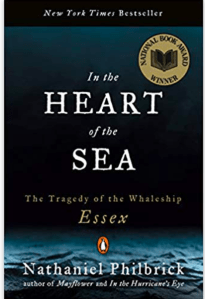
Heart of the Sea : The Tragedy of the Whaleship Essex. Nathaniel Philbrick. I read this as I was missing and reminiscing on The Terror: Season One, and had already read the book on which that show had been based. I was looking for a true seafaring adventure and this did not disappoint. It was heartbreaking at times, and the descriptions of historic Nantucket as a place bound so tightly to the whaling industry were interesting as well.
Wave. Sonali Deraniyagala.Heartbreaking and beautifully written, this first-person account of the 2004 tsunami in Sri Lank is told by a woman who lost her husband, two children and parents to the wave. It is a short book, spare in language but not without depth, emotion and even beauty.
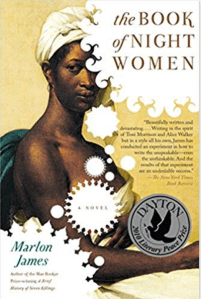
Book of Night Women. Marlon James.This author has had a few big publications since this book was published in 2010, but this one is no less strong than his more recent works. It tells the story of a gifted young woman in Jamaica coming of age at the time of a slave revolt on the sugar plantation where she lives. It is hard to read in some parts, but also hard to look away from because the story is so compelling, and James’s gifted prose gives each scene the importance and gravity it rightfully deserves.
When I was growing up, our church hosted First Friday potluck dinners. They were a chance for all of us from the satellite communities around our town to come together outside of Sunday services, and they often went late or included an activity for us kids afterward. For at least a few Decembers, that activity was a Bird Tree, balls of peanut butter, bird seed, sunflower seeds or other treats that a bird would like, plus soft yarn for nests and other things. We took our work very seriously, and hung each finished ornament with great care before devolving into slap fights and wrestling as was per usual. We weren’t a church that volunteered in soup kitchens or anything like that, but we were a country church that loved and served our community, even its feathered members. (And probably a few furry ones that enjoyed a spot of birdseed now and then.)
December is marketed as a time of joy, and of course it is. The birth of Jesus! The season of light!
To quote Lucy Van Pelt in A Charlie Brown Christmas: “You know, deck them halls and all that stuff?…You know, Santa Claus and ho-ho-ho, and mistletoe and presents to pretty girls.”
At the same time, it is a dark season for many people, including me. There’s a bittersweet feeling that comes each December. A coming to terms with the year that was and the present that is. A sense of an ending.
But I think that is normal.
After all, it is an ending. And if there wasn’t an understood, collective darkness, then we would not have so many songs, verses and stories about bringing light. The new year itself is a promise of light. The manger story is one of darkness and light. The two coexist at this time of year in almost every cultural touchstone that define it.
We are wired for the mixed emotions that many of us feel as we drink cocoa, sing carols and also miss our loved ones or feel apprehensive about the year ahead.
So, what’s the solution, then? I think the solution, as with many things, is to accept it. Lean into it and feel your complicated feelings. Know you’re not alone.
Look around you and see who you can serve, where you are and with what you have. Make a bird tree. Watch them flock to enjoy it, and then let them fly away.
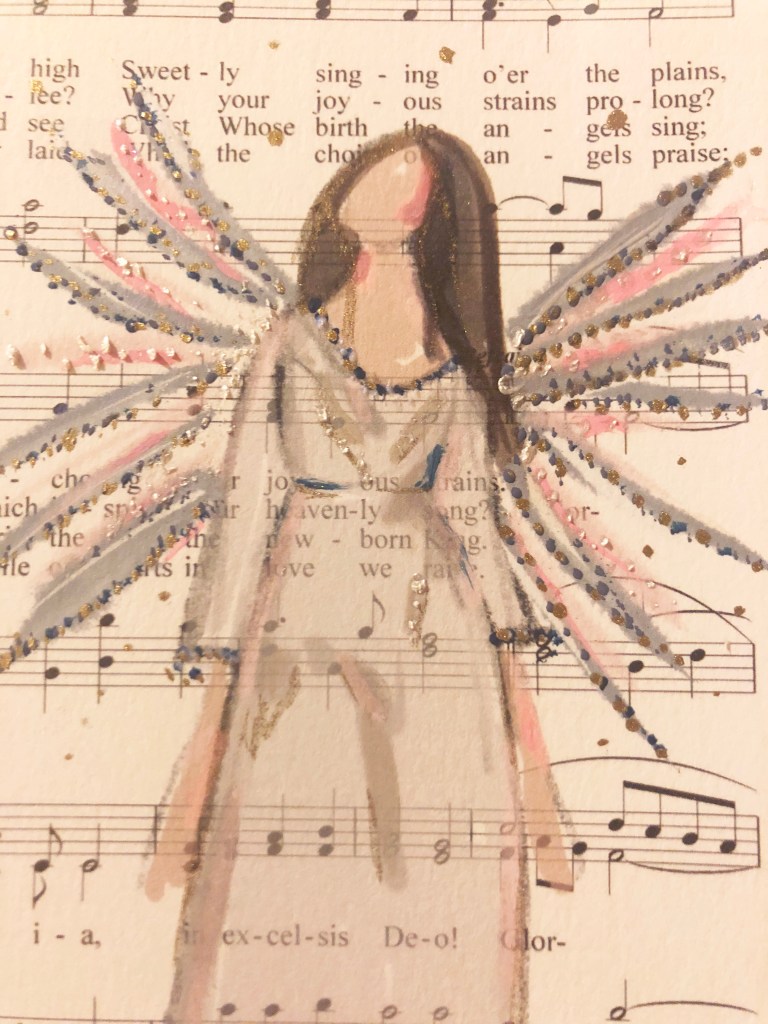
I recently discovered the process of incorporating plexiglass into art projects to create a layered look. I tested it out using old hymn sheet music, acrylic paint and gold Pebeo Vitrail stained glass outliner.
I’m happy with the way it turned out and have plans for more of these! The challenge is in finding the best way to frame them, especially if I were to offer them for sale. But creating it is the fun part, and I’m excited to move forward with that!
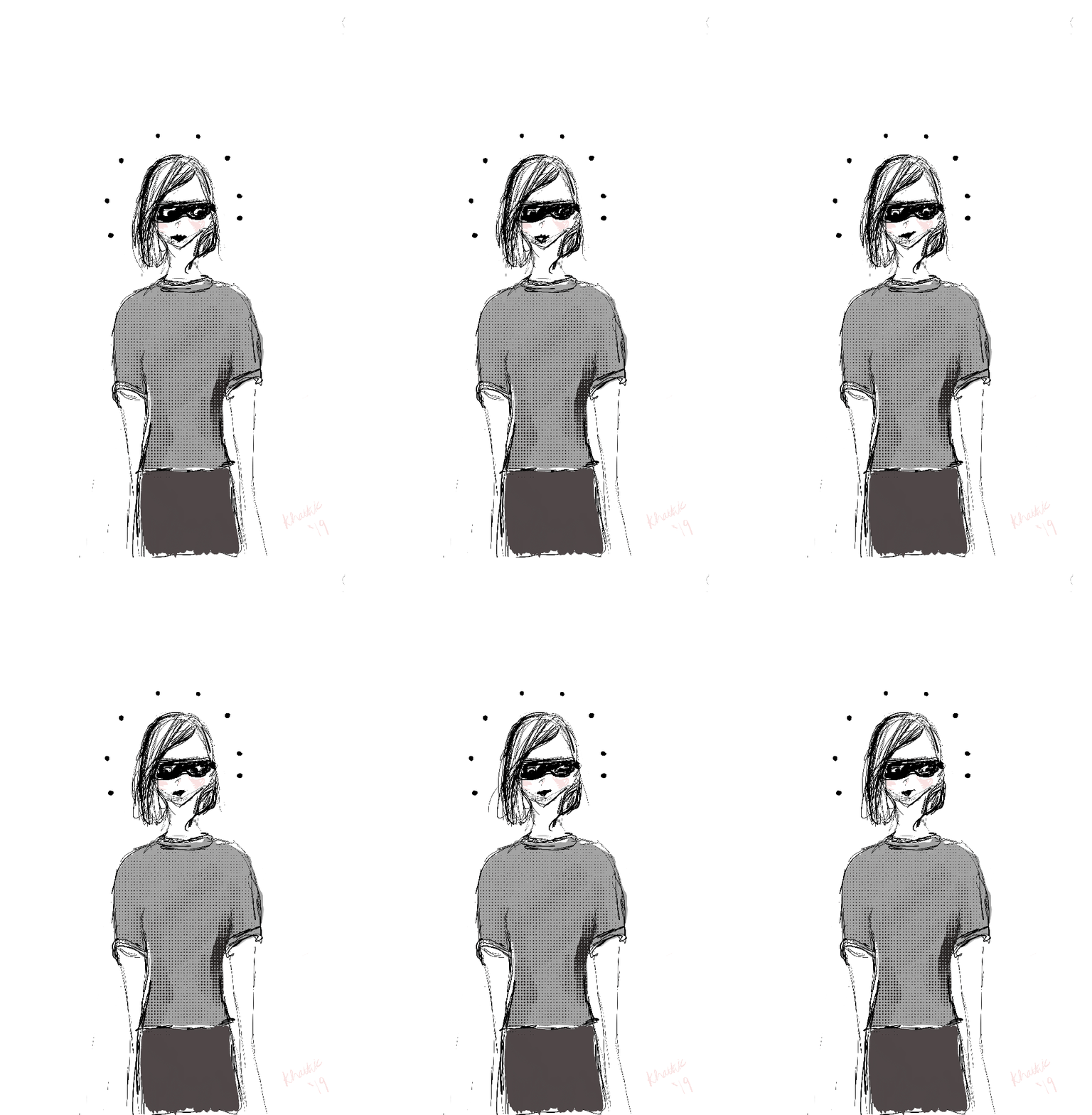
Happy Inktober/October! Yes, I know this isn’t “real” ink, but i was playing around with Adobe Fresco and really enjoying its ink brushes, so I thought I would make a little rough animation.
Not sure if she’s a superhero, or just in disguise. I guess it just depends on the day!








 stephaniekhattak.com