East Texas Research Trip

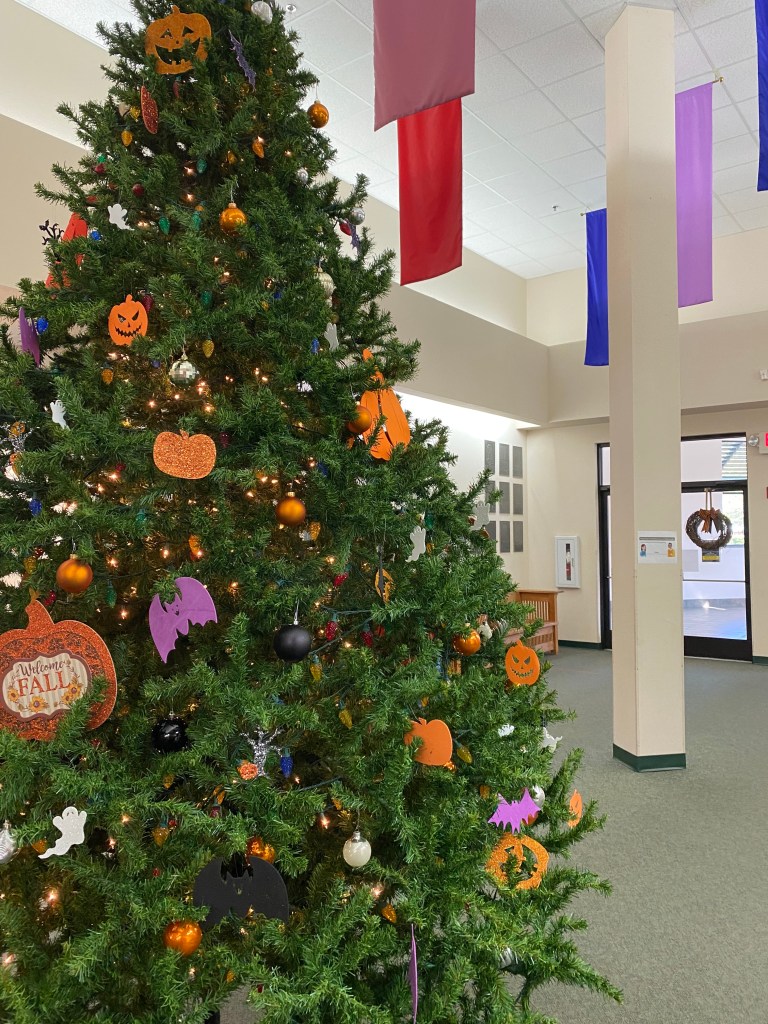
Halloween tree at Kurth Memorial Library, Lufkin, Texas.

I spent the past weekend in and around Lufkin, conducting research and visiting family. I added an extra day to my usual weekend visits to fit everything in, and I still didn’t fit everything in!

Due to the size and complexity of the Pine Curtain Project, I have divided it up into a multi-year roadmap and what I hope are small, manageable chunks. The last time I visited for this work, I focused on some cemetery tours and family oral history. For this trip, I chose two local history centers and narrowed down my research to Old Homer History and the beginnings of a Huntington, Texas history that I am pursuing.

Researching takes a long time, longer than expected and longer than people realize. When I look through archives or do field interviews, I usually have one or two main points I want to explore, but I also have to leave time and “brainspace” for other ideas and topics that I encounter along the way, to either fit them into the narrative or file them away for later. Especially when I am interviewing or consulting someone. This is why you may notice that sometimes my art production goes dark for a few weeks – it is just hard to do everything at once. The past few weeks have been devoted to launching the podcast and preparing for this trip.


Because the Ora McMullen Genealogy Room hours aren’t compatible with my non-resident schedule, the Kurth Memorial Library team was kind enough to pull stacks of requested materials and set me up in a study room on Friday. I stayed for nearly three hours and only made it halfway through. I spent my time going through three large file folders: One on the historic role of the Masonic Lodge in Homer; one on general Homer history; and one on Huntington, Texas around the 1930s-40s. I have 347 photos from my trip, and most of them are of documents found in these folders, if that tells you anything.
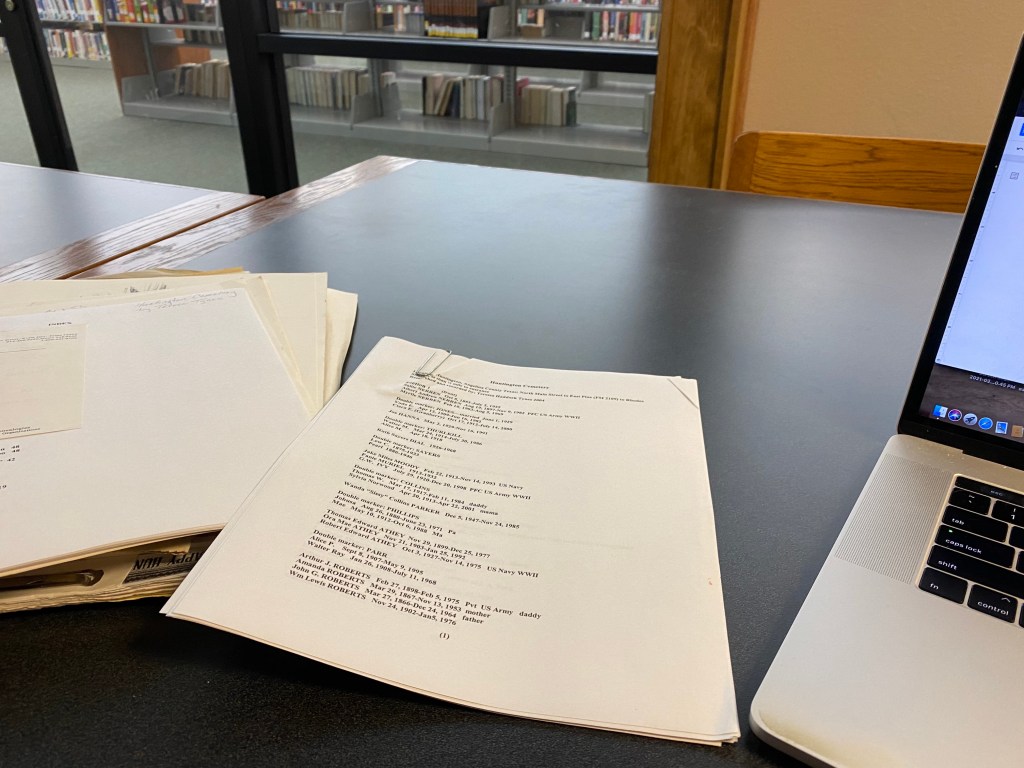
Workspace view and archival documents, Kurth Memorial Library, Lufkin.

Saturday morning, I woke up early and drove out to Huntington, to spend some time talking to Darrell Bryan of the Huntington Genealogical & Historical Society. Darrell is a longtime Homer, Huntington and East Texas historian whose work focuses on armed conflicts, cattle rustling, racism and land disputes. He is also a friend of my father’s, and very nice.

Darrell gave me a tour of the historical society building in Huntington’s Centennial Park, and then spent most of the morning sharing his research finds and opinions; and helping me understand the bigger picture around the incidents I am learning about. I came away with a better idea of the “whys” around the “what happened,” and also new, bigger mysteries to contemplate.

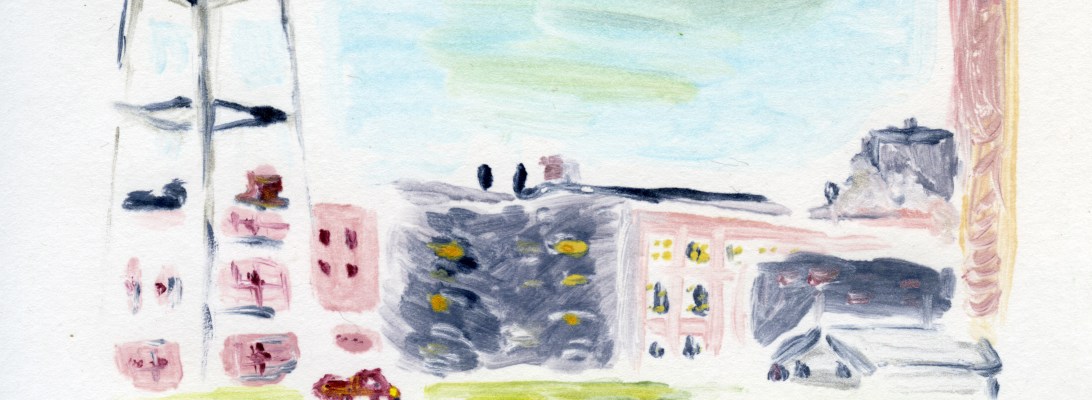
View of Heritage Park from the Huntington Genealogical & Historical Society and Centennial Park, Huntington, TX.

Suite at the Courtyard Marriott in Lufkin.

Since most of my work was in Lufkin proper, I stayed at the Courtyard Marriott. I’m a frequent guest there, and this time they upgraded me to a suite! Score! So, I spent the evenings with lots of space to spread out, organize my notes and snack from the giant bag of gummy candy I bought at Target.

When I wasn’t working or in the hotel, I was at my parents’ house catching up with their animals, and that was pretty cool, too. Less cool is the blighted field across the street from them, that used to have horses, goats, tall grass and trees. Soon, the field will be an all-night gas station and truck stop. An infuriating but important lesson that nothing lasts forever.
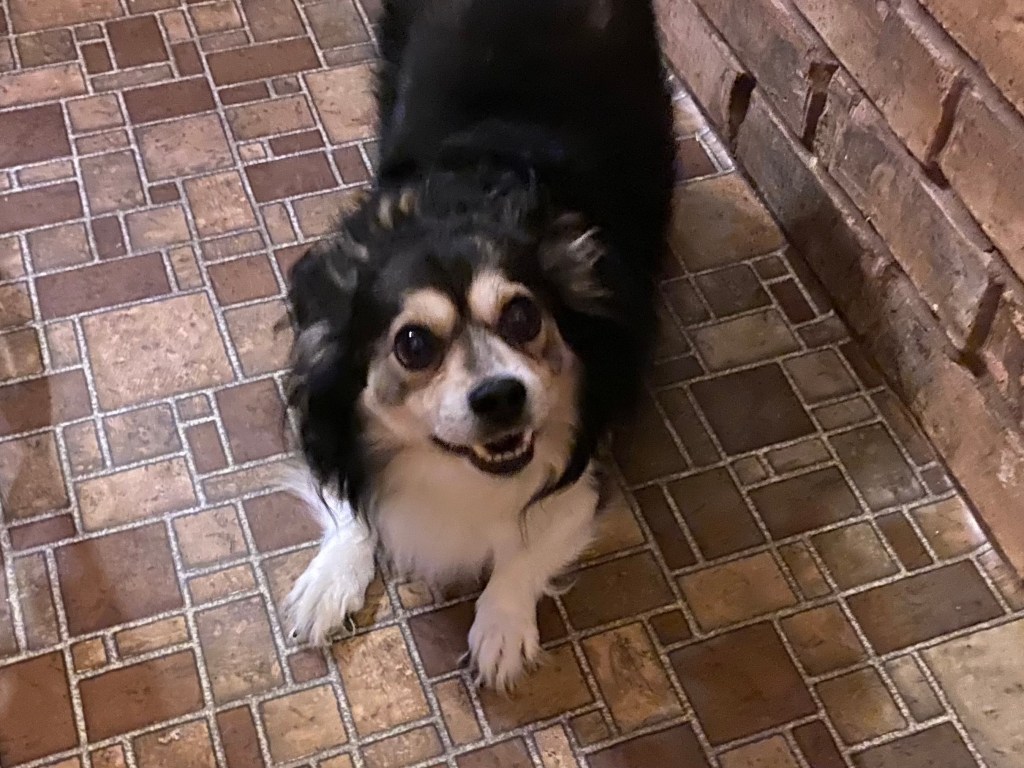
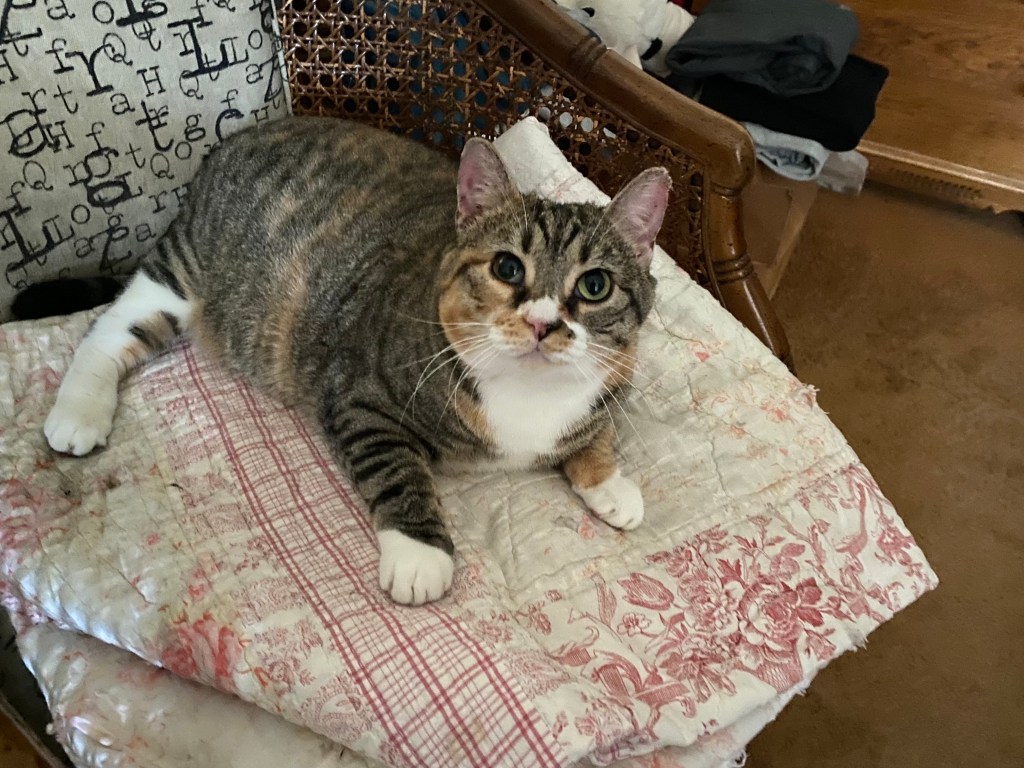
Poncho!
Sweet NaNa.
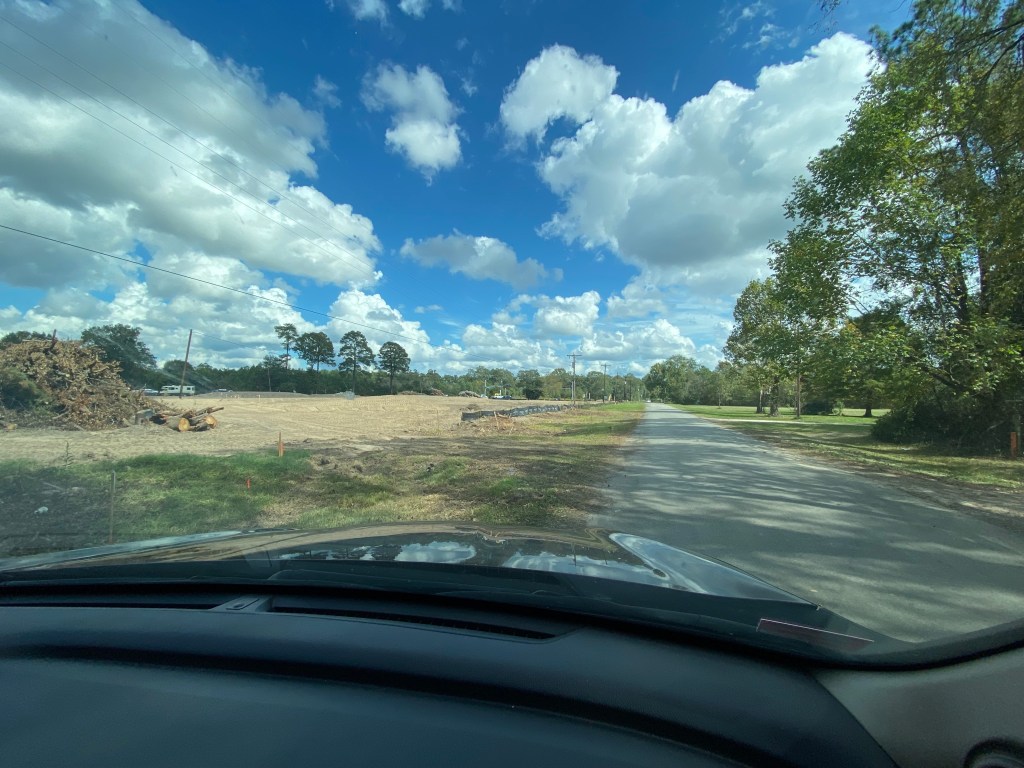
Soon, the construction site here to the left will be an Exxon gas station in Homer. To the right is my grandfather’s front yard. Harder to see – a great big hole at the end of the street to catch groundwater and God knows what else that drains from the site.

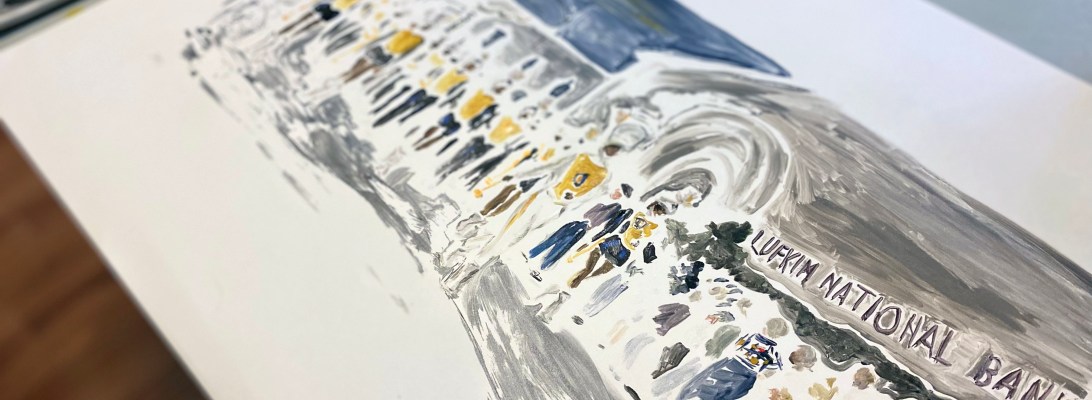
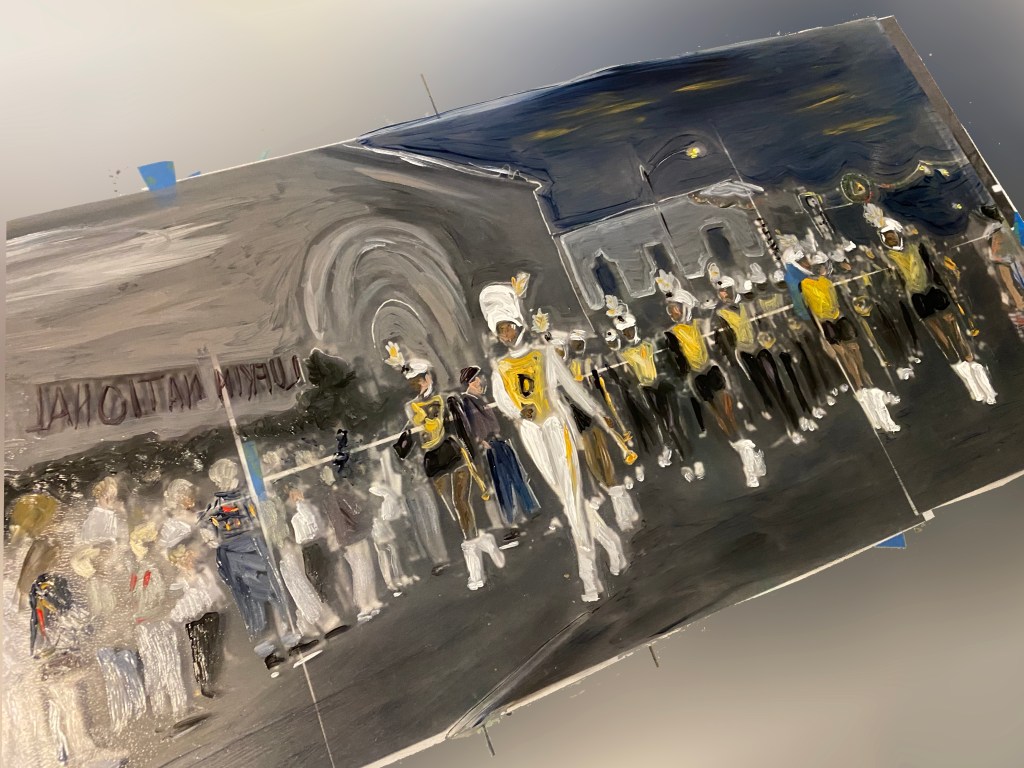
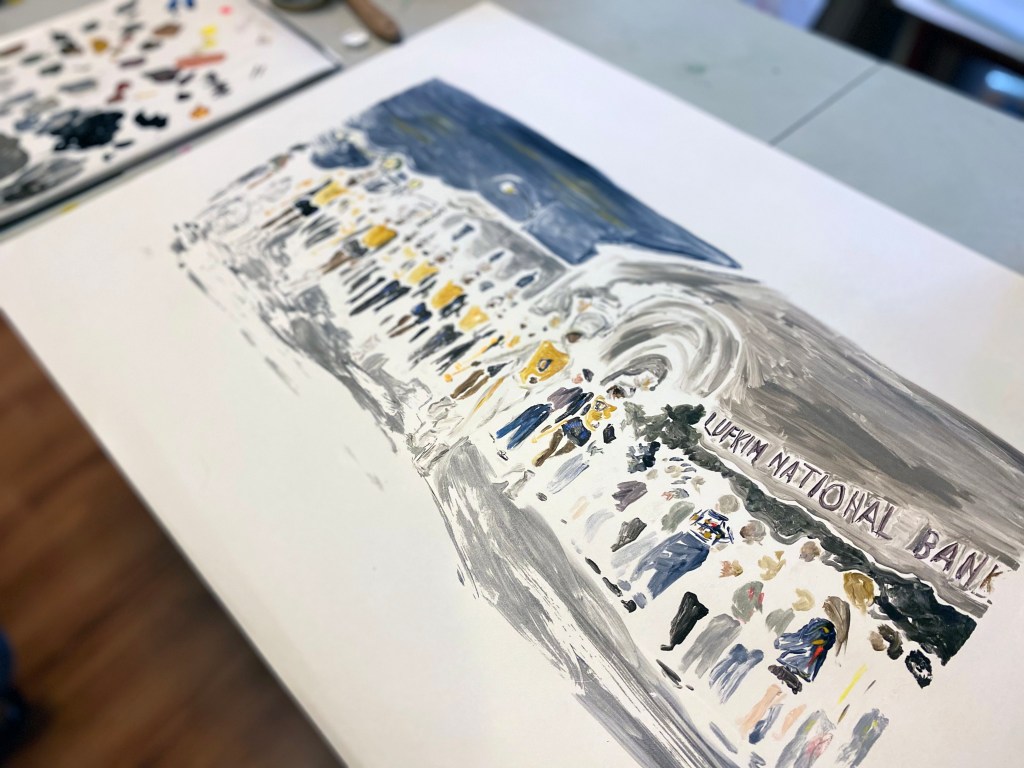
Dunbar Marching Band, 1965

This is another large piece in progress, inspired by a photo from The History Center, of Lufkin Dunbar High School’s marching band performing at a Christmas parade in 1965. So much to like about this photo that I wanted to capture – the uniforms, the mod-looking building behind the crowd. and while it is hard to see here, the Christmas decorations in the background.

This photo was taken in 1965, when Lufkin was still a segregated school district, and Black students attended Lufkin Dunbar High School. The school, named for *poet and writer Paul Laurence Dunbar, was known for excellence in academics, athletics and leadership.

After integration, Dunbar became the district’s middle school, and it now serves as both Dunbar Primary and the Lufkin ISD education center, as well as hosting the Dunbar Hall of Honor.

As with so many other subjects I have researched, this photo was a valuable if much, much belated opportunity to learn more about Dunbar High School and its legacy.

*Note: Paul Laurence Dunbar’s 1899 poem Sympathy inspired the title of Maya Angelou’s book I Know Why the Caged Bird Sings!

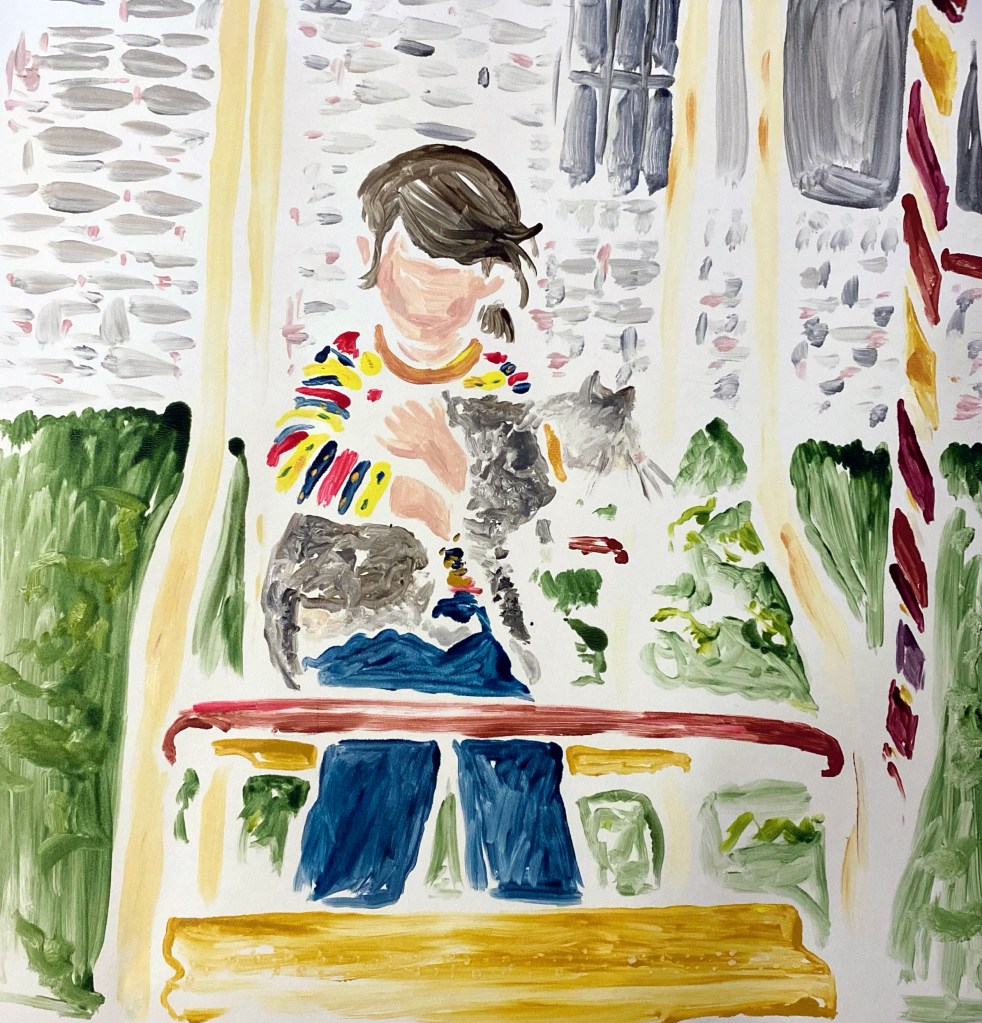
Future Cat Lady

Cat Lady in Training,” by Stephanie Khattak

If you have been connected with me for any amount of time, you know I am a cat lady. Here is the kitty that started it all, Baby Kitty in my arms, in this print based off of a 1979 photo. Baby Kitty was a gray striped tabby who lived in the barn between my house and my great-grandmother’s house. I don’t remember her being an inside cat, but she was always around and a really good sport while I learned to love animals. Baby Kitty was a beloved member of our family, to be cherished and pampered as such. As has been the case with every cat, dog (and in my cousins’ cases – horse, snake, parakeet and Galapagos turtle) since then.

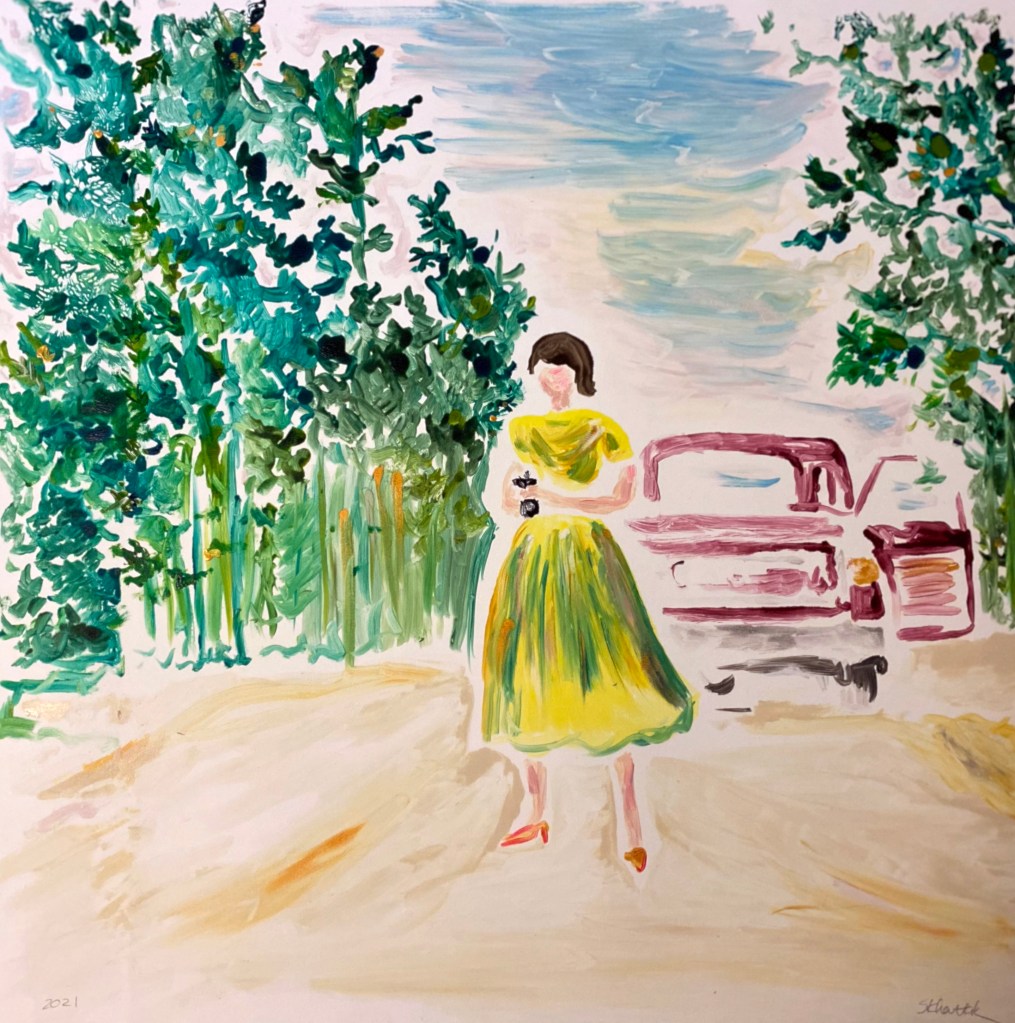
Ready to Fly

“Ready to Fly,” by Stephanie Khattak

My grandmother’s cousin was a career flight attendant. She worked for Braniff International in the swinging sixties, among other notable things, and retired from American Airlines in the mid-nineties after a long and interesting career. Now she lives across town from me with a designer cat and a bunch of friends who are (almost) as fabulous as she is.

Here she is with her mother in their yard. I would estimate the year as somewhere in the late 50s. This was definitely not a Braniff outfit, so I’m guessing it was early in her career. All of her Braniff photos are at her house, and I’m sure she will share them when I pester her about it enough.

Pine Curtain Art: Texas Forestry Museum

“Southern Newsprint,” by Stephanie Khattak

The Texas Forestry Museum invited me to contribute a piece to auction in its annual Feast in the Forest fundraiser. While the end sale would be an original piece, the museum worked with me in a similar process as a commission, providing a few photo options to work from for the end result. This piece is from one of their archival photos, and I chose it to work with because I loved how it set the scene and really brought back a sense of time and place. For my process, I have to prioritize which elements of a photo I want to emphasize on the print and for this one, I wanted to make sure to capture the railroad tracks, the water tower and the smoke coming from the building on the far right. While I knew I wouldn’t be able to capture the detail in every letter on the water tower, I loved the stylized first letters and wanted to retain those. In the original, many of these elements were further enhanced with iridescent and metallic paint.

This project captured all of my favorite things about working on commissions, and it was nice to be able to contribute a piece to an organization that is so important and shares my passion for capturing and preserving the rich history of this part of East Texas.

This was a unique piece, but the Texas Forestry Museum is also a retail partner, so please get in touch with them if you’d like to see another option in their inventory.

Contact me if you’re interested in initiating a commissioned project of your own! If you’re thinking of one for the holidays, its best to get in the pipeline by Oct. 1.

East Texas Video Archive

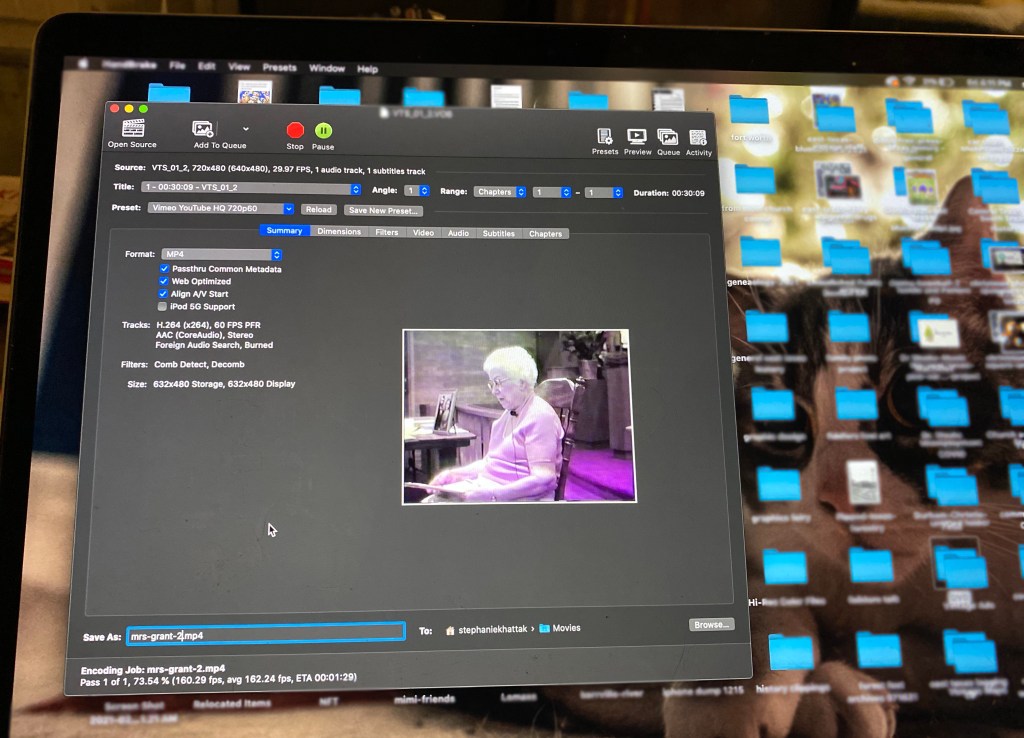
I’m not the first amateur archivist in the family. My dad, for as long as I can remember, has documented community and family life in East Texas, first with reel-to-reel recorders and Super 8 videos, then with a huge brick of a VHS camcorder (which went on every family vacation, duct-taped and cumbersome, until the late 90s, when the battery kept falling out at Graceland.) Now, like everyone else, he uses his iPhone and sometimes the video functionality on his digital camera. But he kept EVERYTHING, and a few years ago gifted me with a box of roughly 30-40 discs, each with 4-5 events captured on it. Best of all, he had long before captured the Super 8s onto the VHS, a painstaking process where he set up the screen in the living room, put on his oldies records, and videoed the screen while my mom and I tiptoed around the set-up and tried not to knock anything over or share incriminating gossip that might be picked up on audio. He later transferred those videos to DVDs as well, so they’re also in the box.

As modern technology evolved, I eventually found myself with no DVD player, and also no real way to copy those discs to a digital format. But they are treasures, and I knew that in particular, there was a Homer history talk by the OG Homer Historian, Mrs. Ruth Grant, in an event at our church in the early aughts. Because I don’t know of a labled map of old Homer, I needed to see if she mentioned any locations or had other information that I could use in my upcoming folklore presentation. So, I went on Amazon, bought some new equipment and started my journey down memory lane.

The good news is that it all works perfectly and I have been having a great time seeing so many memories again. I did find Mrs. Grant’s lecture, and it provided some missing links and also, since she was an expressive talker, I am able to estimate some of the important landmarks of old Homer based on which direction she pointed as she spoke.

This is really exciting for me, not only for this particular event I am preparing for, but also in general to see how I can use more multimedia content to create for and enhance the Pine Curtain Project.

The missing link!
The family dog’s haircut and then his funeral. Not on the same day. RIP Tater.
Not sure what happened at the Smokey Bear museum, but it must have been unpleasant!
My patron saint these days. She’s done all the hard work, I’m mostly just sifting through and organizing it.
How I wish she was still with us to discuss these things in person!

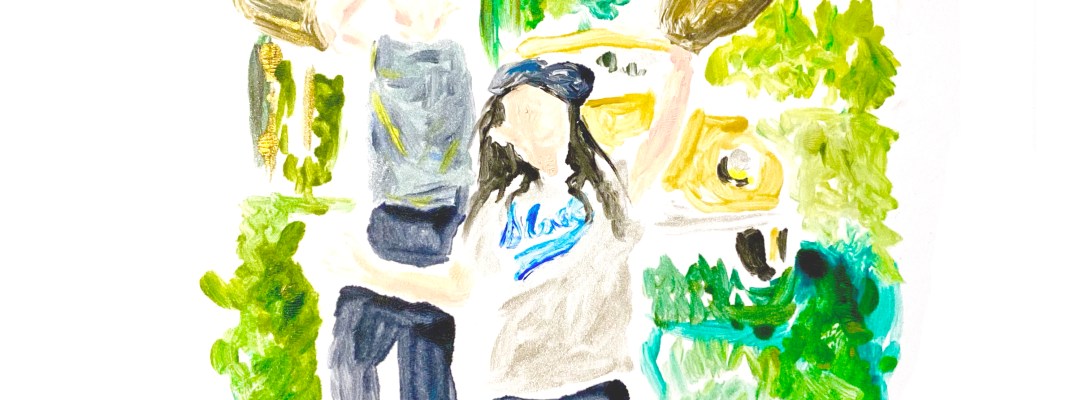
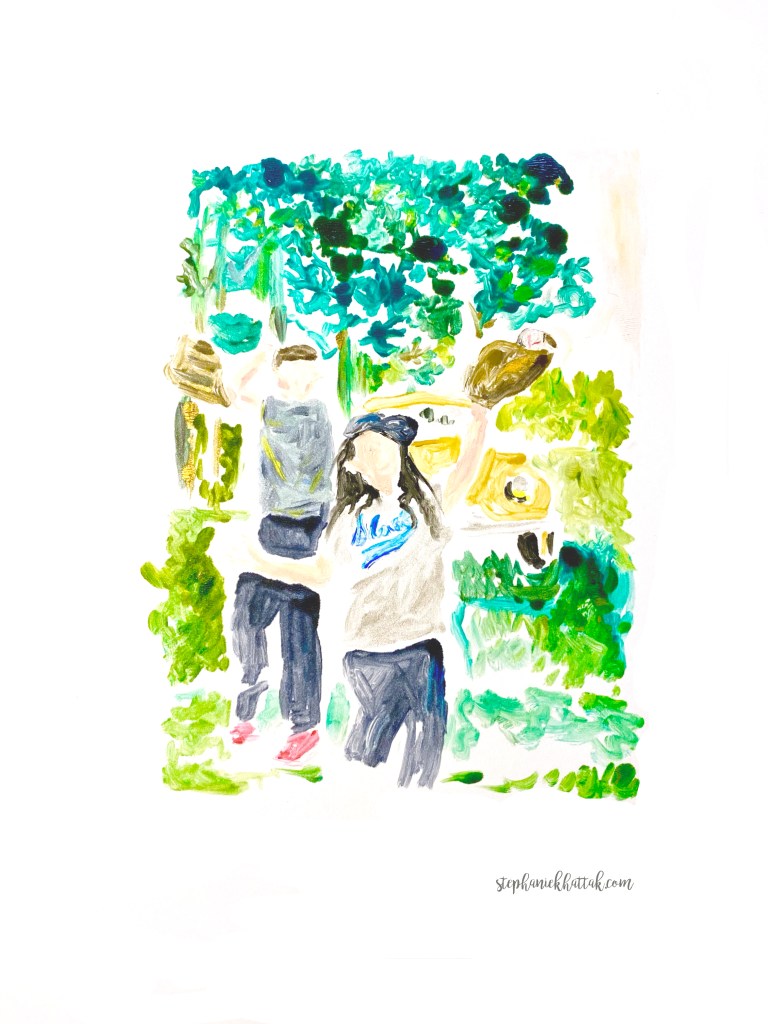
Catch!

“Catch it! Got it!” By Stephanie Khattak. 12×18 Acrylic Monotype on Paper.

This print was taken from a vintage photo from the late 1960s in Lufkin, in the deep East Texas. My uncle and cousin playing baseball in my great-grandmother’s yard, dodging pine trees to catch the ball. Somewhere in front of them, there must have been a batter and a photographer. No cameras were harmed as far as I know!

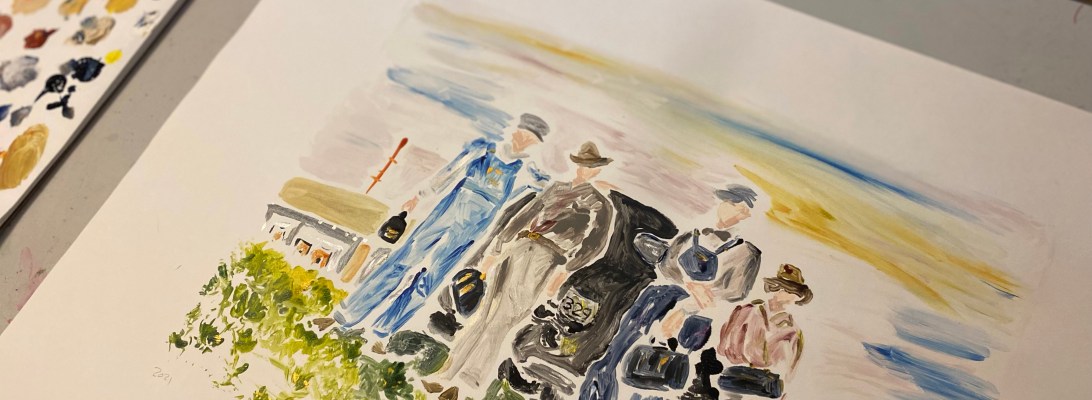
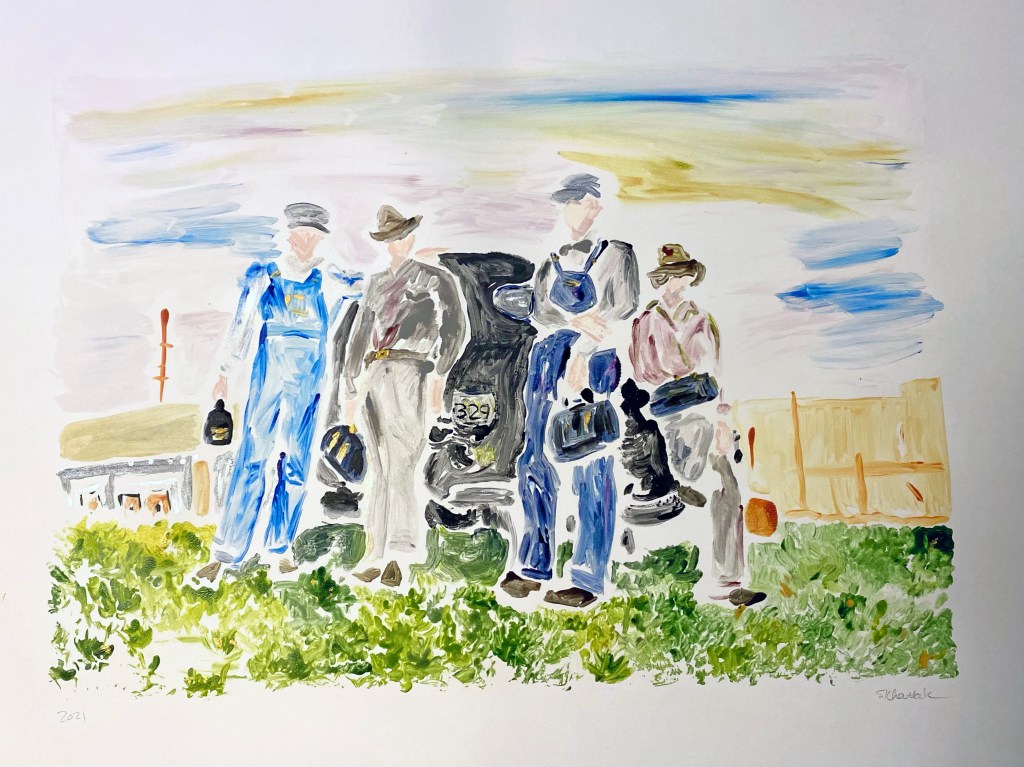
East Texas Car Share

“Paper Mill Car Share.” Acrylic monotype, 18X24 by Stephanie Khattak.

This piece is based on another Farm Security Administration photo by John Vachon. It shows four Southland paper mill workers and their car share vehicle. I like that it also shows their work gear and lunch boxes. Reminds me of how my dad used to dress for work and the lunch box he carried for so many years. My mom always packed my dad’s lunch (or dinner, if he was on an evening or overnight shift) and used to put Mrs. Baird’s fruit pies in there for dessert. So, when I see these types of lunch boxes, I think of fried pies and those big metal clasps snapping shut.

The paper mill has been a theme in my work before and probably will be again. As I’ve mentioned, it had a huge effect for Lufkin and surrounding areas, too. It was one of the largest employers for generations, and when it shut down, it didn’t necessarily tank the economy because I feel at that time the town’s economic drivers were changing anyway. But it definitely caused a shift and left a lot of people displaced, professionally. It is integral to the larger East Texas story.