Artifacts

I’ve written a lot about the many phases of the gas station saga, the spark and motivation of the Pine Curtain Project and my attempt to document, work though and move forward (and help move my family forward) as things change so much around them. It has been a while since I provided an update — for a long time nothing really happened. And then, kaboom.
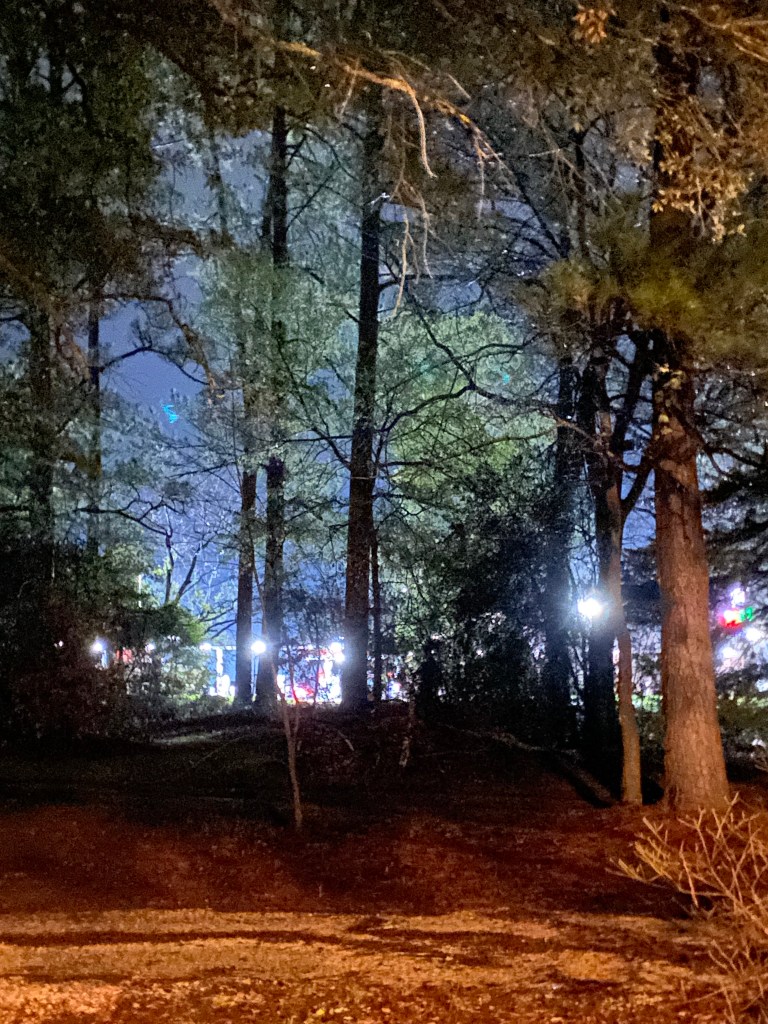
There’s the gas station. When I took this photo, I was standing in my parents’ yard. Not at the edge of it, in their garage. It’s worse in front of my grandfather’s house. Around the time the gas station was finishing construction, other parcels of land began to sell around my families’ homes. It has become a (somewhat expensive and complicated) game of whack-a-mole, with my extended family members and my parents trying to figure out what’s for sale, is it worth buying themselves, is it a good investment, etc. just to maintain some sense of normalcy for a little bit longer. When I was home last, in early May, the area was hard to recognize. Trees have been cleared in all directions, new construction is going up, three or more houses on lots that used to hold space for just one. As these changes have happened, there has been a predictable increase in petty crime like loitering, trespassing and break-ins. And so begins the letting go.

My parents are still coming to terms with what happens next, and because they’re mentally and physically independent, I try to just stay out of the way let them do what they do. And then I look for a bag to breathe into.

They, and my cousin, uncle and grandfather are all handling things in their own way. My grandfather, who lives practically in the gas station parking lot, is getting by with blackout curtains and a good sleep mask. My cousin, the practical one, has bought up some property to delay the inevitable, but has also been making trips to where they all want to resettle to scope it out. My uncle is the only one to actually cross the store’s threshold, because they make a good slushie. My parents are in archaeologist mode.


Every so often, my mom will show up for a visit with a plastic tub of my old stuff. Some of it’s relevant to my research but mostly it’s a hodgepodge. My dad is taking a different approach and finding random old things to refurbish. And I do mean random.

Mom: “Your dad found your bike to fix up for you.”

Me: “What bike?”

Mom: “The little cowboy one. Maroon.”

Me: “The one I had in third grade?”

Mom: “Yes! That one,”

Reader, I am 47. I am almost six feet tall. I don’t have kids and I don’t know any little kids. My cats will never be able to ride that bike.

Mom: “So, do you want it?”

Me: “Umm, why don’t you guys keep it for me a little bit longer.”

A few weeks later.

Mom: “Guess what we found?”

Me: “What?”

Mom: “Your Barbie Dream House!”

Me: “From 1982!?”

Mom: “Yeah, do you want it?”

A few weeks later.

Mom: “I found something you might want in the old barn.”

Me. “??”

Mom: “Your recorder!”

Me: “From elementary school? Like, the ‘Hot Cross Buns’ recorder?”

Mom: “Do you want it or not?”

Other things they’ve “found” and fixed up for me include some kind of ancient weed tiller thing from my late grandfather’s farm, a little deer hide chair from the 1800s, a foot-pedal sewing machine, a 1970’s Ford, a 1960s Mercury Comet and a 1992 Chevy S10. (To be clear, I already have a car!)

I know this is them working through what they need to work through, and who knows, maybe one day I will want to play the recorder again. I think my bestie Missy reclaimed her own Barbie Dream House in a similar scenario, so maybe we can set them up and play, like old times.


The next phase is one that I deeply dread. I have long-promised to help my mom clean out my room, and after years of kicking that can down the road, the day is fast approaching. I do not want to do this. Not only is it going to be an absolute a$$-whip of a project, I know what all is in there.

In the tubs that my mother has brought, the ones she’s piled into my car as its driving away, and the many more that remain, there are stacks of old notes, old writing, old mementos, yearbooks, and photos. Painstakingly folded notes that air one side of long-ago grievances, photos of me looking weird, photos of me trying too hard. Crispy-dried prom corsages. A hand-painted egg from a junior high family science project, still unbroken, resting in its little plastic basket. Diaries that contain God-knows-what about God-knows-who. Tube tops and plastic barrettes and probably all my vinyl pants from the nineties. Notebooks with doodles, directions and things to remember from long-ago trips and my time in New York, when Google didn’t exist and I had to rely on my wits. All of it there, just waiting to bite me.

I know that the cleanest break is to just throw things away. Stop digging, wash my hands, move on. But I can’t. I have to look through these boxes, even the ones that I know will hurt. Because we all know the myth about boxes, and how sometimes, even when pain flies out, there’s still hope left inside. Maybe I’ll find something good.

Gardenias

Gardenias,” acrylic on canvas by Stephanie Khattak.

Like night flowers and moon gardens, sometimes what is special and unique is already there, just doing what its meant to do for those who are meant to see it. In other words, maybe there really are no late bloomers, just those who shine in different ways.

Little Houses

“Little House,” Pastel and Gouache on panel by Stephanie Khattak
“Little House, Night” Pastel and Gouache on panel by Stephanie Khattak

A good thing about hoarding up art supplies for so many years is that by now I usually have what I need without having to out and buy new things. I’ve been experimenting more with my lesser-used pastels, and how to combine them with gouache to create a certain look. It’s a very messy process and still not quite right, to my eyes. But getting there.

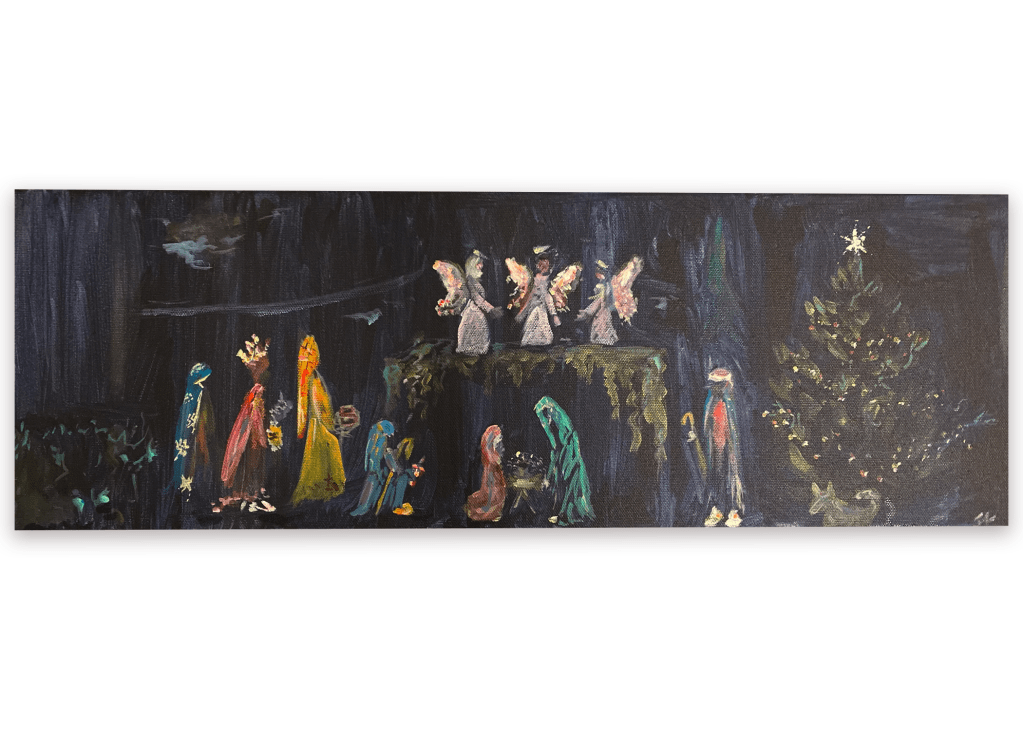
Joyful and triumphant

“Joyful and Triumphant,” acrylic on canvas by Stephanie Khattak.

Every year, from the time I was about eight until eleven or 12, our church would produce a live nativity scene. Community members of all ages were instructed to stand like statues for a few freezing cold hours over a weekend while cars from as far away as Lufkin and Nacogdoches slowly drove through the parking lot. No chewing gum or tobacco; no chit-chat; no silly dances, waving or hollering at cars we recognized, nothing. Just stand there.

The first year was contained to the walkway between the church sanctuary and fellowship hall; subsequent productions had shepherd fields out among the trees. The set was constructed from wood scraps covered with moss and other scavenged greenery.

The costumes were old sheets and ripped up cotton fabric; there were sneaker logos shining under robes; at least one king sported a repurposed Burger King crown. Fountain drink cups were barely hidden, as was the inevitable appearance of neighborhood dog. We never stood like statues when there was gum to chew, chit-chat to share and silly dances to perform. The best part of the evening was going inside for a hard-earned hot cocoa when it all got to be too much.

But “joyful and triumphant” are guiding words for the season, and that has never been lost on us.


*I talk a little more about the annual Christmas nativity and other traditions in my 2021 holiday podcast. Yes, I realize it’s now 2022 and almost 2023. The podcast has been down, but not out. Can’t say for sure when I will have a new episode, but it’s still cooking. Just on a back burner for now.

Recent Paintings

I’ve continued my Pine Curtain Project pieces with the folk/narrative art pivot, and as I do so, starting with a blank canvas rather than a photo or historical context, I am seeing more of a personal artistic style emerge.

I gravitate toward juxtaposition of bright and cool colors, which give the paintings kind of a whimsical, otherworldly glow effect. I also create some figures in more detail than others, which places my “characters” within a greater community. I also make sure there’s a little dog with a curly tail somewhere in there, representing my childhood dog Tater (1980-1997) who was always in the mix and lived long enough to bear witness to many life and community milestones.

With everything else going on and general life happenings, I usually do about one of these a month. So far, they have coincided with seasons or events, but that is more by inspiration than by design.

“Fall Festival” by Stephanie Khattak, 2022. Acrylic on Canvas.
“Too Much Sugar!” by Stephanie Khattak, 2022. Acrylic on canvas.

Exhibition: Dallas Public Library

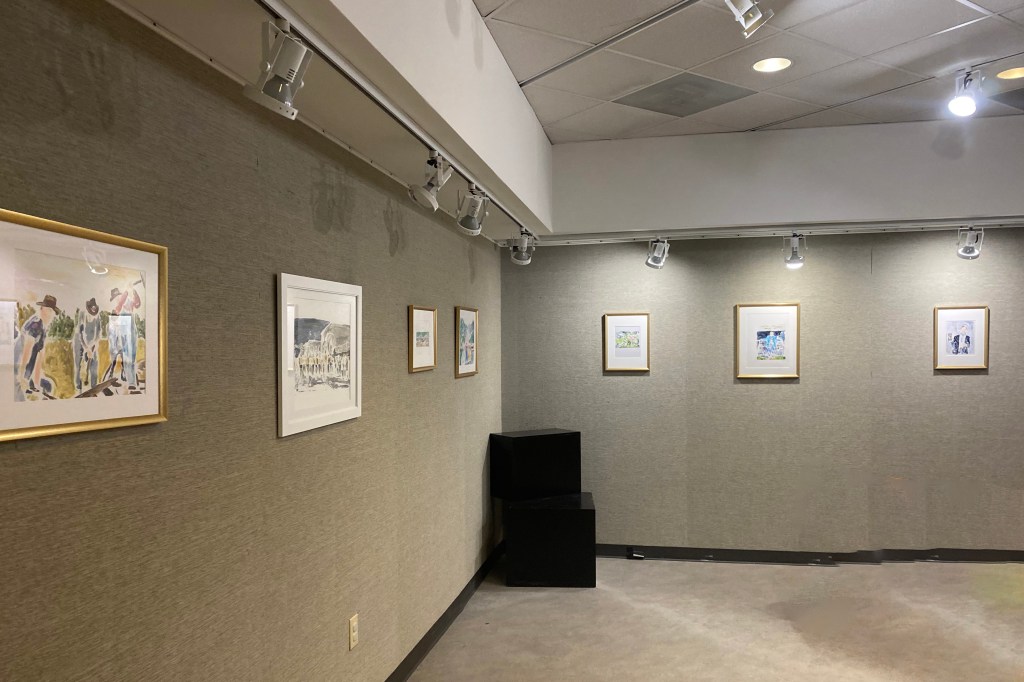
Installed art at the J. Erik Johnsson Central Library, Lillian Bradshaw Gallery.

Last Friday, I made a trip to Downtown Dallas to install my first solo show at the J. Erik Jonsson Central Library. This show was supposed to happen last spring, but schedules could not quite align. Happily, now is a better time, and I have the space for the next month or so.

Although I have been creating some new work since the show was proposed and accepted, monotype prints still comprise the majority of my work, so that’s what’s on view.

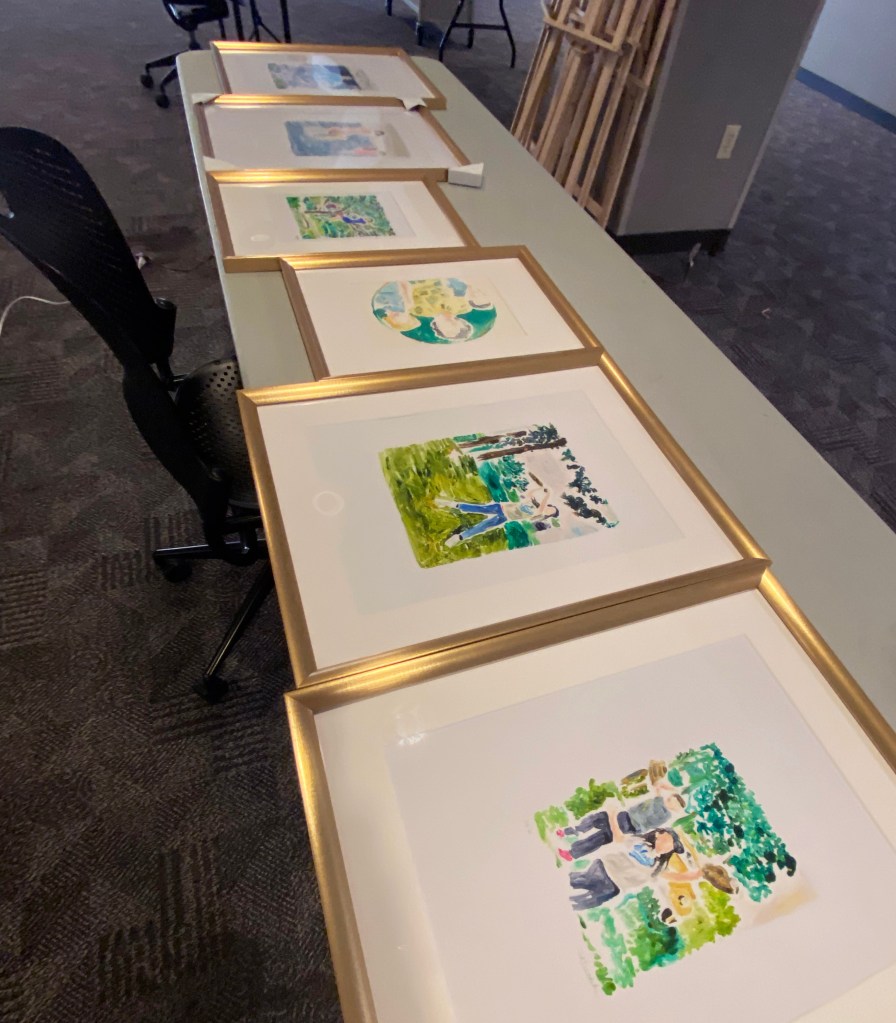
I’m still in the “bring your own hammer and hangers” phase of my art career, but unlike my last big show, James was able to help me out, which made it a bit easier.

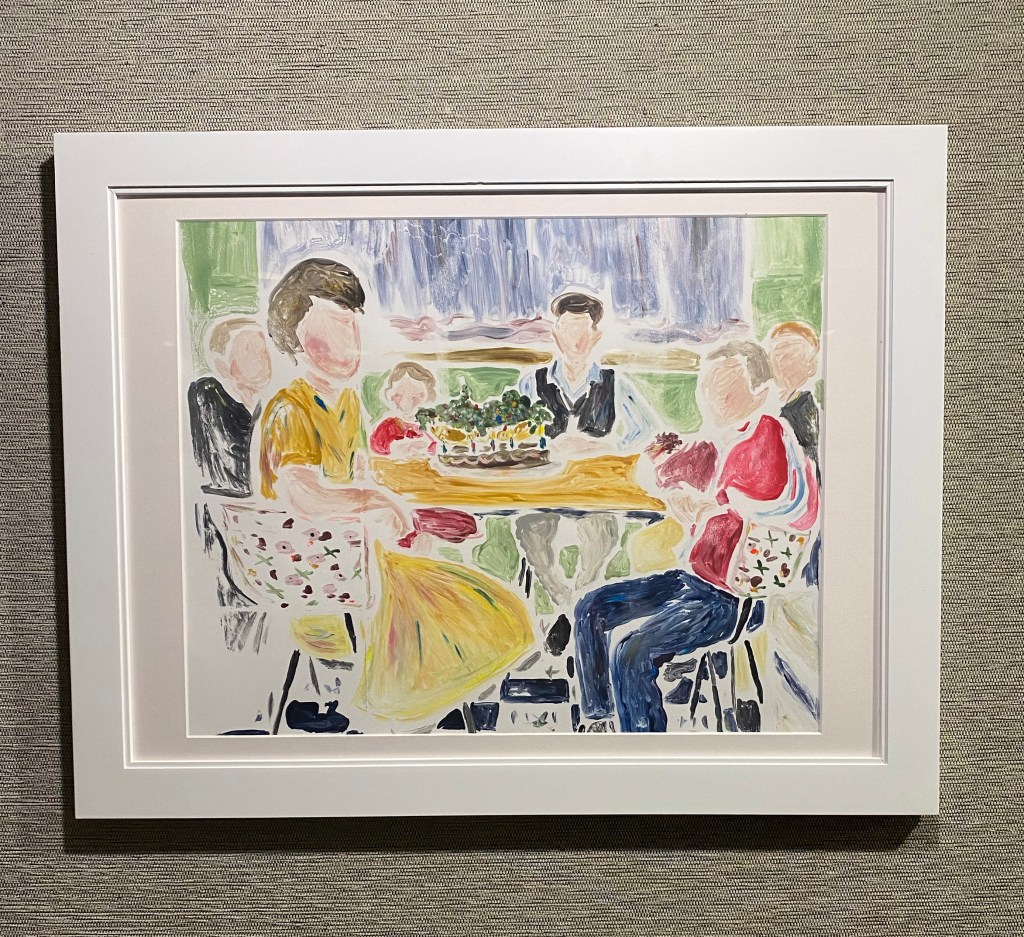
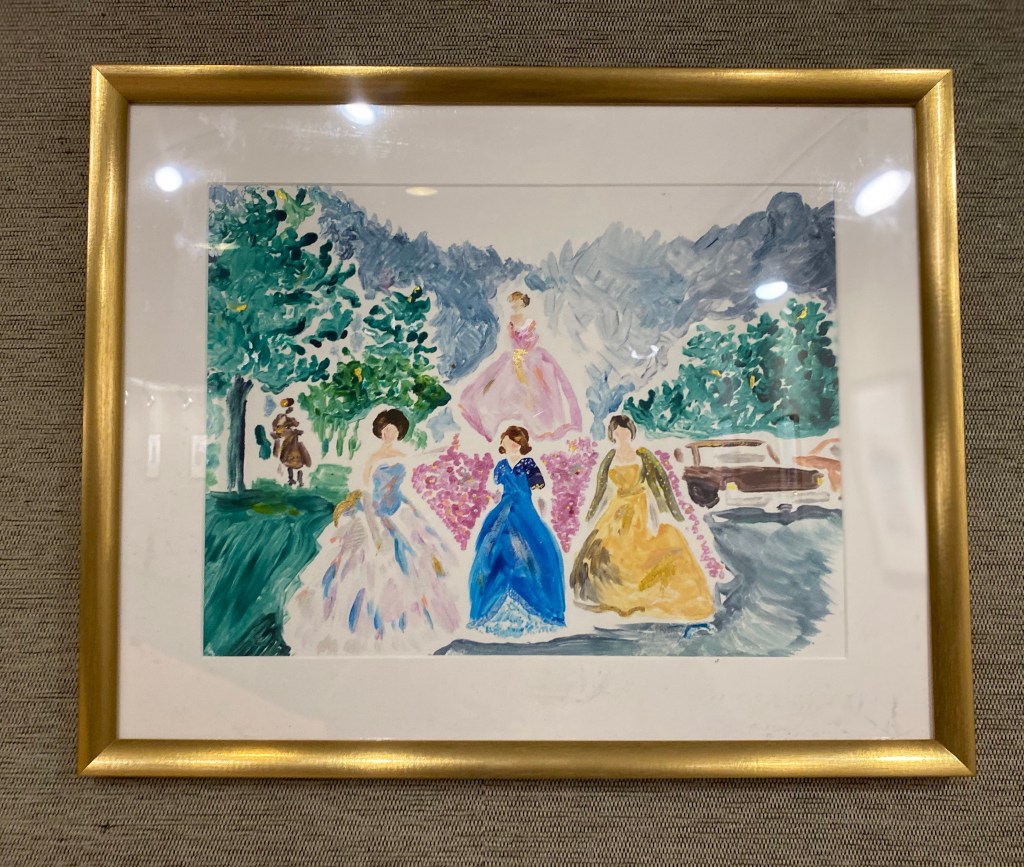
All-in-all, I have 16 pieces up, framed in various sizes. Since it had been a little while since I worked on these prints, it was fun to go back through them to pick and choose which art to display. The majority are from family photos, but one wall’s art highlights the greater Lufkin and East Texas community.

Here are a few that I chose, which link to their accompanying blog posts!

To see the rest, make a trip to the library! (While you’re there, get a library card! If you already have a card, pick out a new book! And if you already have your card and plenty to read, check out the library’s awesome new historical exhibition of archival materials around Big D Reads and “The Accommodation” book! I have to say, it’s an honor to be part of the good work of the Dallas Public Library.


If you see a piece that you are interested in here, at the show, or elsewhere please get in touch. After a break to focus on other things for the summer (did you know I published a travel book?!) I am open again for sales and a limited number of commissions. I am always interested in opportunities to showcase or share about my art, process and research project. Please get in touch if you’d like to learn more.

Happy Summer!

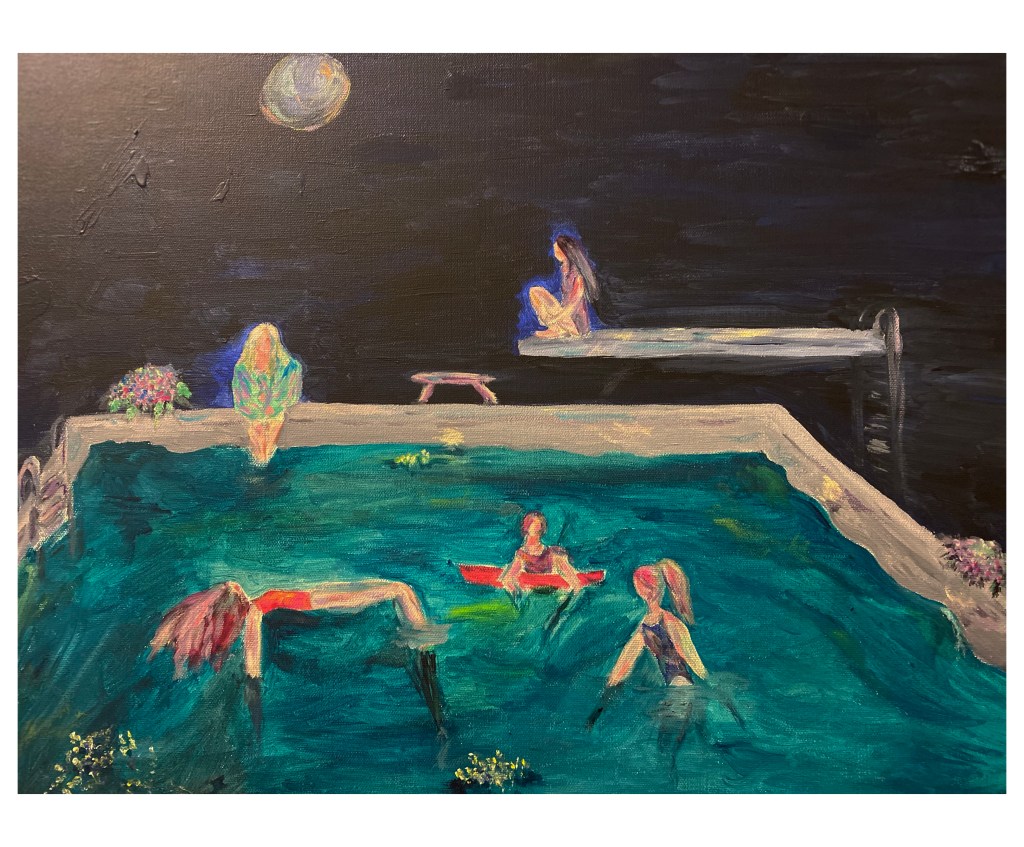
“Night Swimming,” Acrylic on Canvas by Stephanie Khattak.

Hello, why yes — it HAS been a while since I last updated my blog and my web site. What can I say, the first half of 2022 has gone by really quickly. And while in some ways it’s been really nice, it hasn’t left a lot of time for more creative pursuits, much less documenting those pursuits.

I secured a new freelance/contract client in January that takes up most of my weekday hours, and I published a travel book! The operative word there (after “published” I suppose) is travel. I haven’t been home many weekends in the past year or so. I am planning more travel books which entails more travel. So, it’s been a bit of a balance to learn, but I am getting better at it.

But I still paint as often as I can, and I still have the Pine Curtain Project going in the background. The above painting doesn’t look quite like the other pieces in the Pine Curtain Project. That’s another reason this blog has been quiet for a bit. I have felt compelled to bring the project into a more modern era, and am always tiptoeing around that a little bit. Some stories are not my stories to tell, but intersect with mine. So, what to do? My solution is to just focus on the scenes and feelings that I want the paintings to evoke while making everything else unidentifiable. This specific swimming pool didn’t exist, and neither did the specific girls in it. But what did exist, for me and I imagine many others, is night swimming with friends on a summer night. One of my besties had a pool, and my church rented one each summer from the time I was in middle school on out. There was a special kind of relaxed that we felt after swimming, and many pool nights melted easily into slumber parties. It was hot, and the June Bugs were loud, and we somehow felt sunburned even though we were swimming at dusk. And it was wonderful.

Embroidered Paper Art

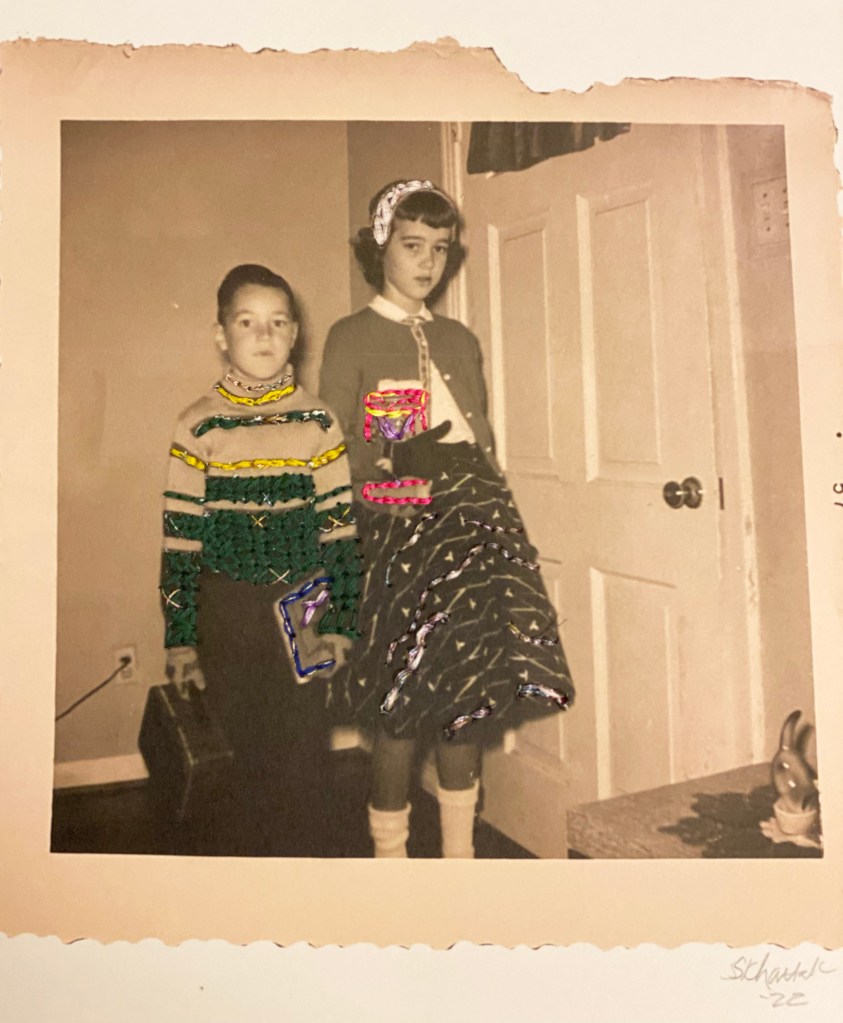
Embroidery on fine art print of vintage family photo, 2022 Stephanie Khattak.

This is an embroidered vintage photo of my dad and aunt in the late 1950s in East Texas. They’re at my grandmother’s house in Homer, Texas outside of Lufkin, and looks like they’re on their way to school on a chilly day!

Creative Threads and Magical Thinking

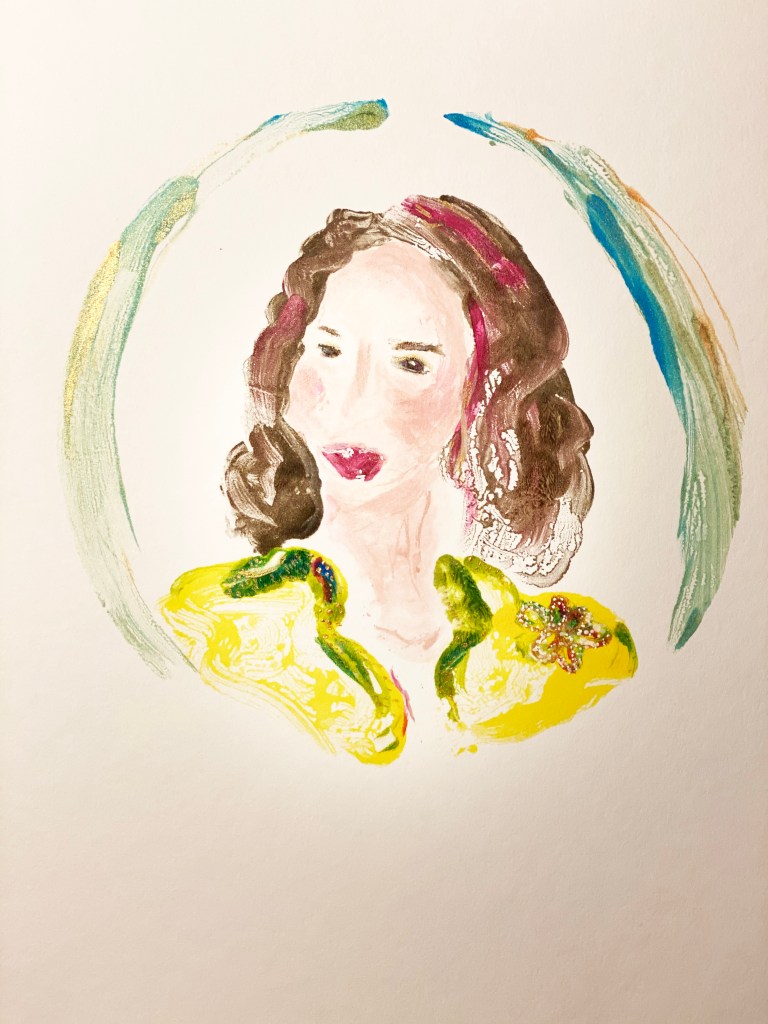
Acrylic monotype on paper, 2020 by Stephanie Khattak.

Lately, I have been thinking of embroidery. And by extension, I have been thinking about my Auntie. She died late April 2020, but not of Covid. A distinction that didn’t matter once she was moved into a skilled nursing center for what we thought would be a few weeks of care and then home, or worst case, private hospice. When she went in, she was well enough to ask for a specific red jacket to be brought to her, already planning her outfit for her release.

For about a month her daughter and my mother, her niece tried their best to communicate through speakerphone, FaceTime, message relays from the nurses (for as long as she could understand them) and finally, the last goodbye. My cousin, my mother and I stood in a nursing home parking lot in Tyler and yelled into a stranger’s iPhone as Auntie slept fitfully, inside and many floors up and maybe heard us but who knows, really.

She was my second casualty of the last two years and the first involving a person. This kicked off a parade of horrors that marched on to include the deaths of her husband “Pete-o”; a cousin younger than me and both of his grandparents – another great-aunt and uncle of mine, and two other cousins – siblings. Within one week, I lost two classmates – one who I had adored since 1981 and another that I had happily tolerated for just as long. A married couple from the family next door warranted a double funeral, closing off yet another chapter of our multi-generational story. My friend from college died that February, and in October my ex was killed in an accident while experiencing a mental health crisis. Loss upon loss.

And of course, the Big Bad gas station looms large across from my parents’ house. The Final Boss that will send my family scrambling back to Hoot Owl Holler where we came from, four generations and nearly 100 years ago.

I know mine is just one story in many similar ones these days. I really don’t know where any of us go from here. For me, and for a lot of people I imagine, there is a strong sense that things will never feel normal again. And how can they, with such loss? And how could we even want them to?

Thinking of Auntie, and thinking of embroidery, I keep coming back to stitches and sewing. Perhaps it is my mind, as it often does, working things out creatively when it is hard to communicate in other ways. Piecing it back together, trying to bring out the beauty.


Auntie was the family seamstress, making most of my clothes for most of my life. All of my prettiest dresses came from her: the red strapless prom dress with a full petticoat skirt and bow on the bodice, so glamorous and timeless that it was altered to fit my very short best friend a year later and looked equally amazing. A black, off-the-shoulder floral Gunne Sax-inspired dress for the 1990 National Future Homemaker’s of America (FHA) convention in Washington DC, complete with hand-placed clear sequins over every pink and red rose petal and green leaf. That trip was my first time on an airplane, so of course I had to have two new wrap skirts made to wear on the flights – a navy one with a bright, whimsical crayon print, one in tropical pastels.

In researching my family history, I learned that Auntie’s auntie was a pattern maker, and her great-grandmother did professional needlework and embroidery for the community in the early 1900s. I didn’t inherit any of that. I did poorly in my Home Economics sewing unit, somehow stitching a needle into the pillow I was making. (My FHA success came through its public speaking components.) Once, I thought I’d sew a sundress for my little cousin and was feeling pretty good until my mother walked by, sighed and rolled her eyes. “Make something she can wear,” she said.

But still, I think about stitches, piecing together, making something plain just plain prettier. As with my prints, never obscuring or transforming, always honoring and enhancing. So, stitch by stitch, something new begins.

Work in progress, acrylic and embroidery on photo-printed canvas. Stephanie Khattak 2022.

When Auntie and Pete-o died, it fell to my mom and my cousin to clean out their house. There isn’t much in there that I really wanted. An oil portrait of my mother and a matching one of my cousin, if she or her child don’t want it. A framed 1993 Youth Fair needlepoint project depicting the million little things that make up a sewing room: thread, a sewing machine, scissors, spinning wheels…it was so big and complicated that I pulled tearful all-nighters to complete, sometimes working on one corner while my friend Jake worked on the other. It lost to a scene of a teddy bear eating an apple. A teddy bear! But that’s fine because Auntie liked it, and I liked it, and now I want it back.

But, what I really want is her sewing kit, a lidded basket in the shape of a beige house edged in blue and green. It sat by her machine for as long as I can remember, there with everything she’d need for each stitch and sequin, snip, button and flourish. There was never one thing out of place in that house, and yet that sewing kit is nowhere to be found. My other family members aren’t interested in it, and if they were they would just tell me. It’s simply not there.

Maybe it will turn up, but if not, that’s okay. I have a theory, or maybe some magical thinking. Perhaps she came back for it, took it with her to wherever she went. Her greatest joy was in her sewing, the satisfaction that can come from fixing a stitch, making something pretty, making something right.

There is a lot that is wrong right now. Who’s to say that the other side is so cut off from us that they can’t feel it? Maybe they feel helpless, too. So many gone, in such short time. To them they’ve arrived en masse somewhere entirely new with lingering, fuzzy memories of voices through smartphone speakers, unrecognizable shapes in hazmat suits, blinding lights. Who’s to say that they too, wouldn’t like to return to the comforts of old joys, to attempt to set something right, perhaps stitch by stitch. Who’s to say they can’t?

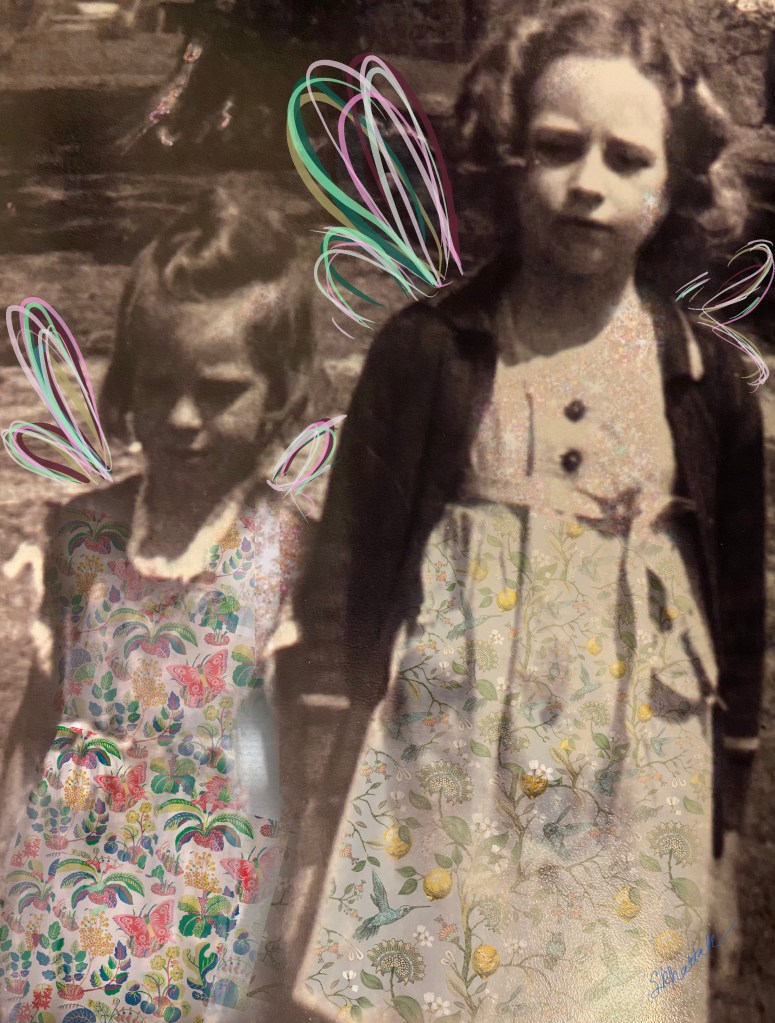
“Mimi and Auntie, 1940s” digital collage 2021. Auntie and her sister, my grandmother. By Stephanie Khattak.