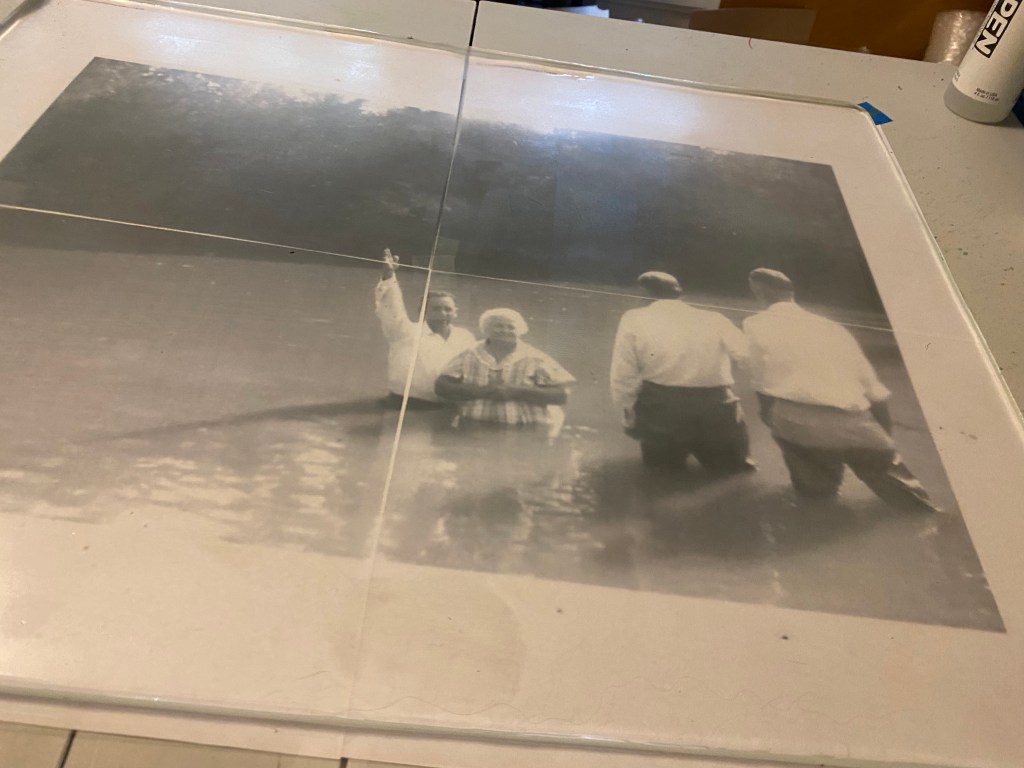
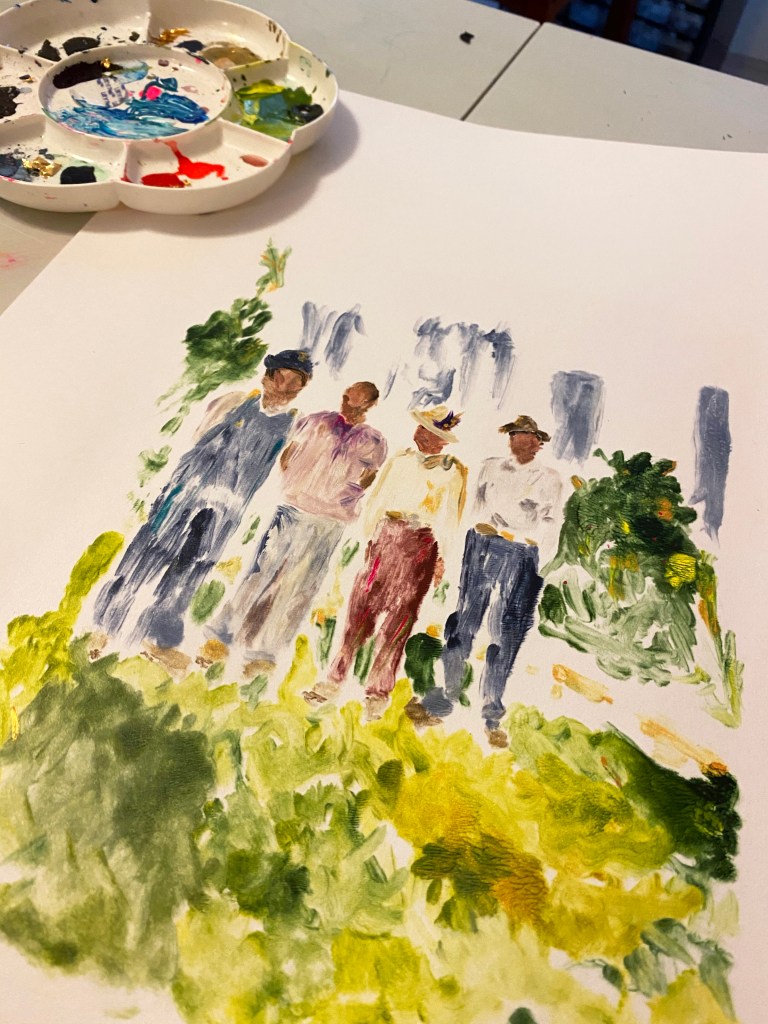
I’ve started working on larger monotype prints, which is fun. It takes a little bit of problem solving, since I don’t have a large format printer and wouldn’t want to spend money to have something printed professionally that’s just going to be a reference piece. So, in order to get the photo large enough, I open Adobe Acrobat and print as a poster, which enlarges across multiple sheets of paper. I put them together sort of like a puzzle under my large plate (or plates if the finished product will be larger than 16X20.) It is a little extra work, but I love how these look at a larger scale when I can bring out more of the entire scene.
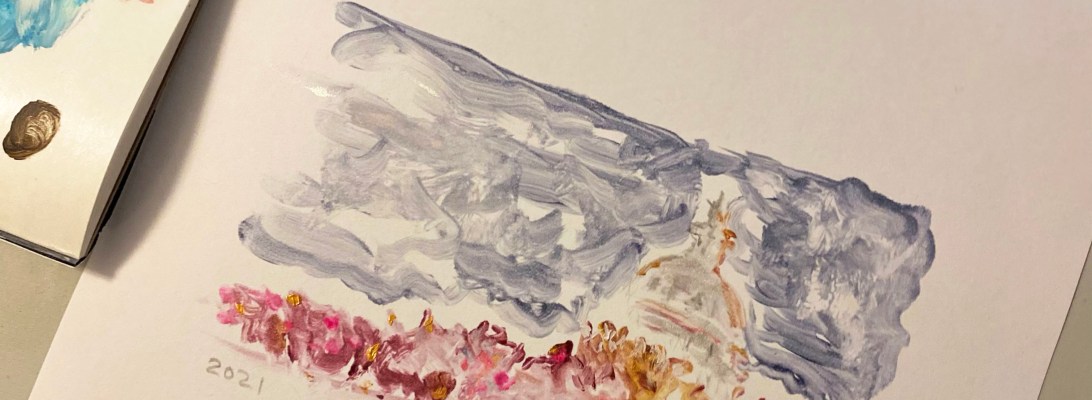
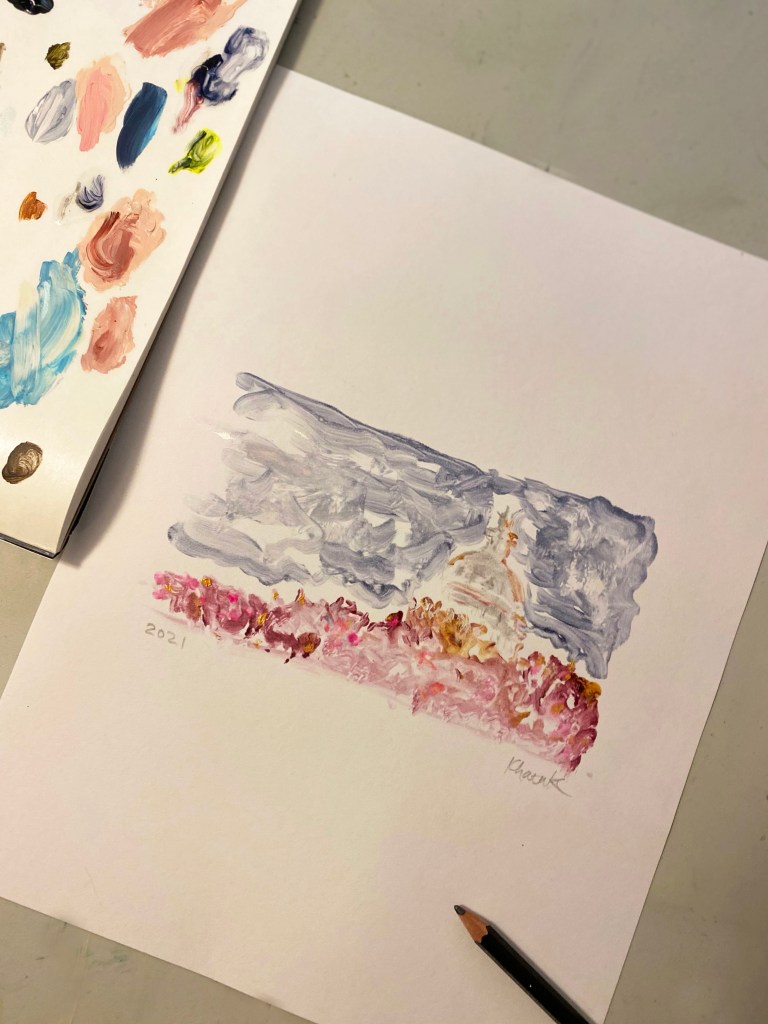
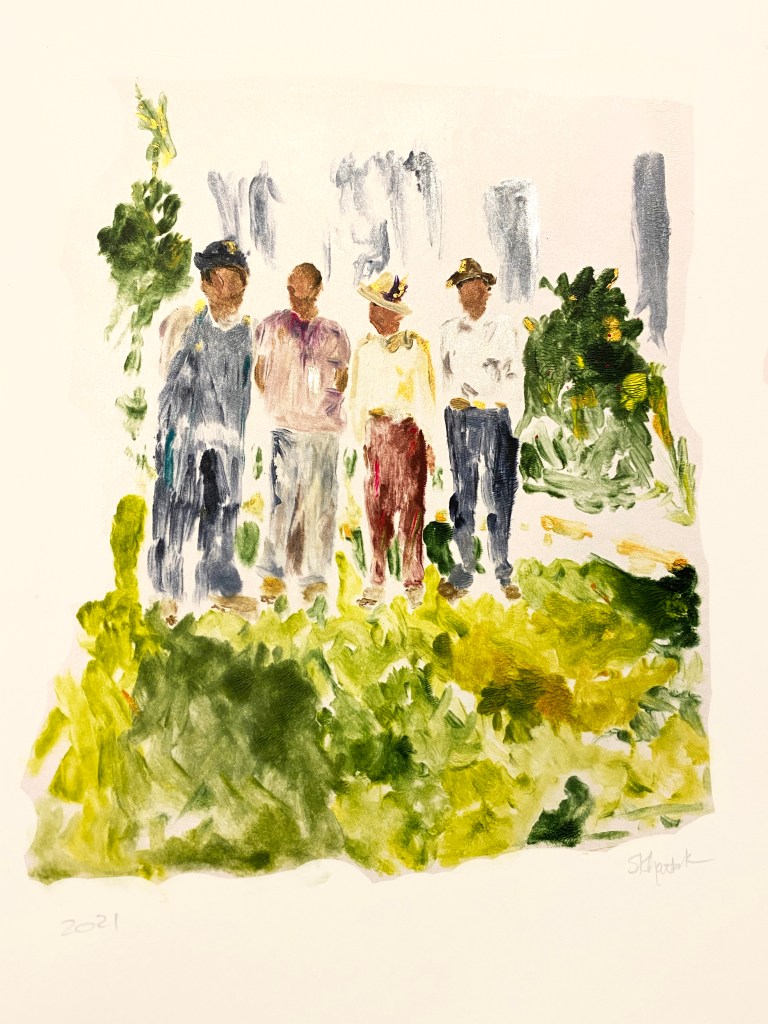
“Logging Crew,” by Stephanie Khattak. Acrylic Monotype, 8X10 on paper.
A few months ago, the Texas Forestry Museum in Lufkin contacted me about providing a limited-edition of hand-embellished reproductions from my “Logging Crew” print for its gift shop! This is really exciting, because not only is the Forestry Museum a really solid East Texas history and cultural center, it’s also in my hometown and I have many happy memories of visiting it over the years.
If you are local in East Texas, I encourage you to go in and visit the museum’s newly updated space! If you’re not local, or not quite up to in-person visits, drop them a line for more information.
This wonderful collaboration kicks off my wholesale art program. If there’s a local museum gift shop, CVB or specialty retailer with a strong local focus where you would love to purchase my work, please tell them about me! I don’t sell reproductions of my work directly, so this program is a really great way for customers to purchase the pieces they like and support independent, local businesses at the same time.
This art is professionally reproduced on BFK Rives fine art quality paper, and each one is hand-embellished, making it a piece of truly unique East Texas art for sale. They’re sold unframed, so that you can display them to perfectly fit your taste and decor.
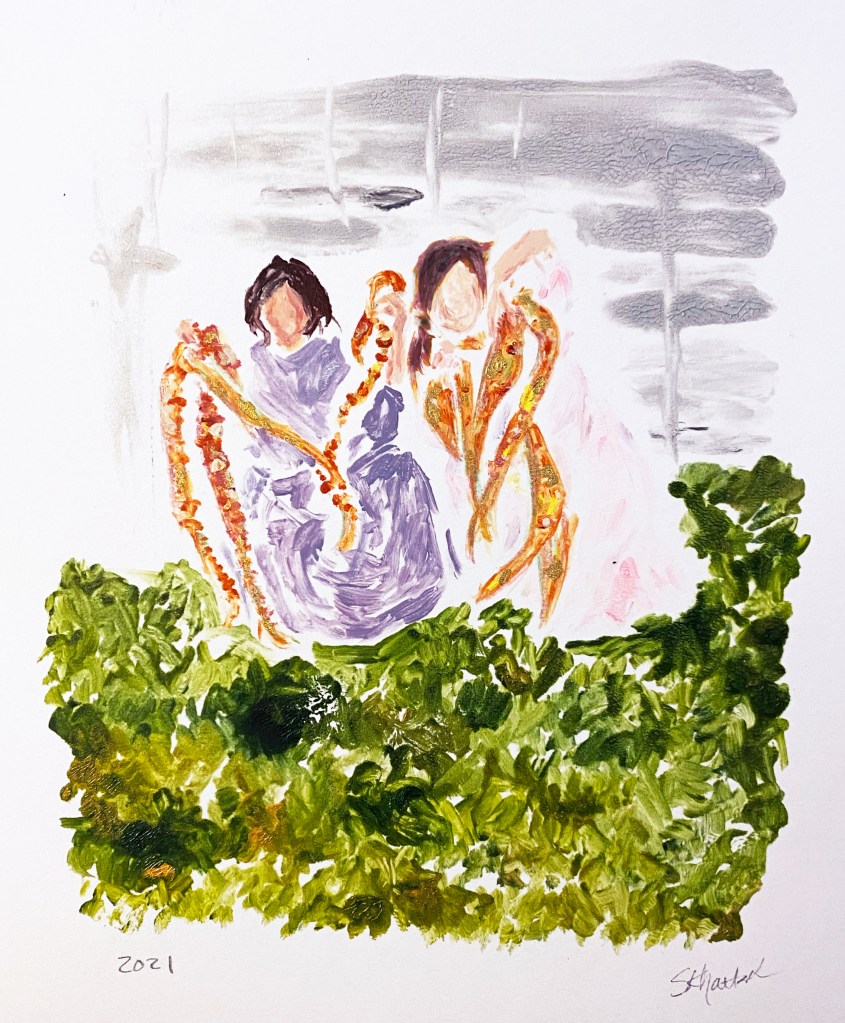
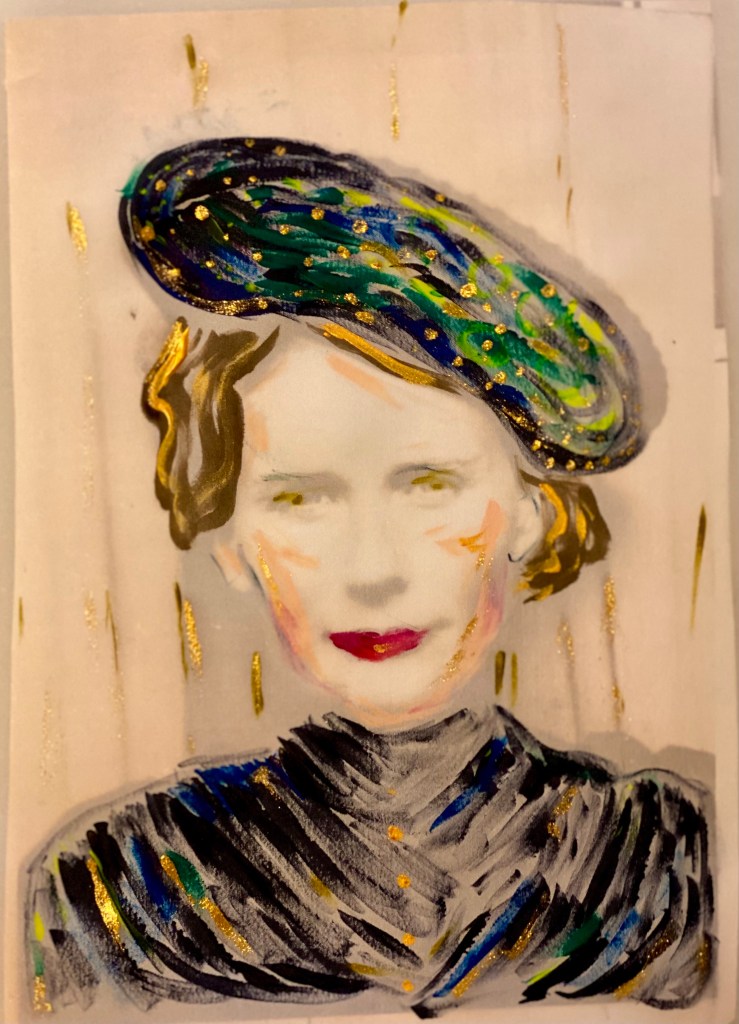
“Beatrice,” acrylic and pigment on silk over vintage photo, by Stephanie Khattak.
This is my great-grandmother on my mom’s paternal side. She passed in February 1978, before I was two years old, so she knew me, but I didn’t really know her. My mom says that they would bring her to my grandparents’ house to spend time with me, and that she really enjoyed that. I like to believe that I enjoyed our short time together, too.
I’m always interested in how creative people structure their time, so I thought I’d share a little bit about how I work. Especially since what so many people see is just the finished product, and that is just the tip of the iceberg!
My artwork takes a long time to do. Not as long as, say, a photorealistic oil portrait, but it is very process heavy and needs a lot of protected time, as it is not work that I can start, stop and come back to. If the acrylic dries on the plate, it is unusable for my process, and if I try to rush through and end up with an off-center or flawed print, it’s back to the proverbial drawing board, or literal printing plate, to start over again.
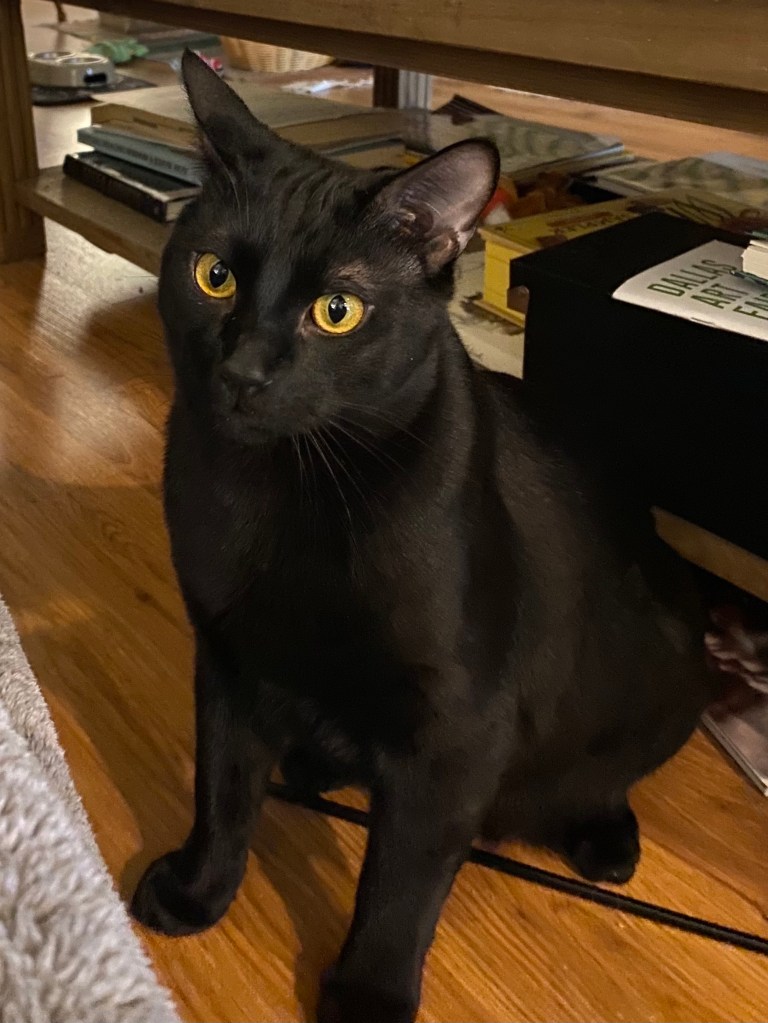
So, printing the art itself is something I usually batch over one or two dedicated days of the week in my studio and in that time I can print roughly four pieces depending on the size and level of detail. (It also helps with cat control, as the kittens still aren’t allowed in there and I don’t like having to shut them out more than necessary. One, it makes me feel bad and two, they bang on the walls and rattle the door. I think the house panther is about three “aha” moments from unlatching the doorknob.)
An intelligent stinker.
When I’m not actively printing or hand-embellishing completed prints – either for my own work or commissions from others, I do a LOT of research. I would say that a typical week is 50 percent creating the art, 40 percent research, and ten percent admin/marketing/operations which includes things like invoicing, cleaning my work space, looking for and responding to promotional opportunities, updating digital platforms and responding to commission requests (not all of these tasks need to be done each week, thankfully.)
My days are structured like any other workday, usually getting started around 9-10 am and finishing around 6 pm for family and TV time with the kittens.
Bonnie loves TV. Here she is learning about culinary travel to Costa Rica.
I sometimes work over the weekends, and I’m always reading on my off-hours, and some of that is research time as well. On weekends I try to recharge and work around the house or go see shows by other artists for inspiration. But during the pandemic I have been mostly at home.
Because my work centers on the Pine Curtain Project, I am always on the hunt for compelling vintage images with compelling stories, ideally that contribute not only to my own family history, stories and memories, but also to the larger cultural history of East Texas. As I wrote in a previous post, I’m focusing on a few main topics this year, which is not to say that other images and themes aren’t included as well. But, I am finding so much information just on these topics, that I am very busy researching, reading, cataloging and analyzing information.
Combining my art so closely with writing and research complicates things in some ways, but in most ways, I feel that it leads to a more rewarding experience for me as the artist, and hopefully for the viewer as well. As a person who likes a little more structure in the day, I feel that this project lends itself well to providing that structure while still leaving plenty of room for the flexibility needed for the creative process to do its thing.
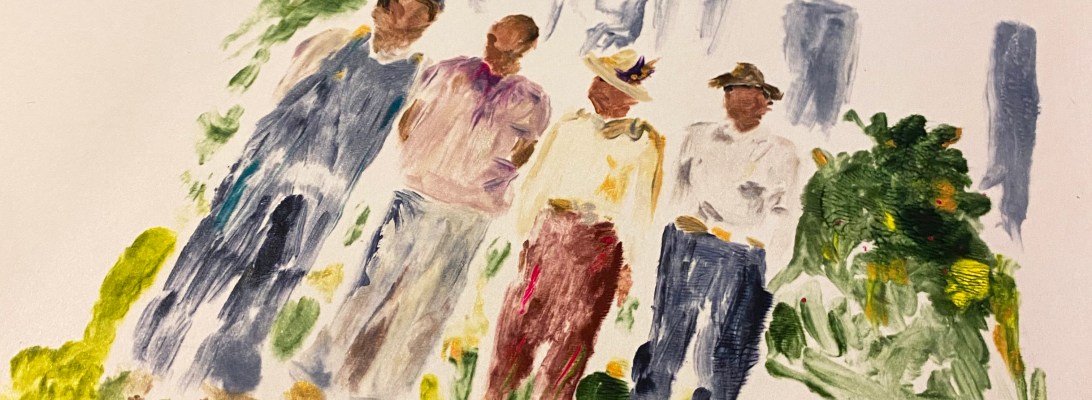
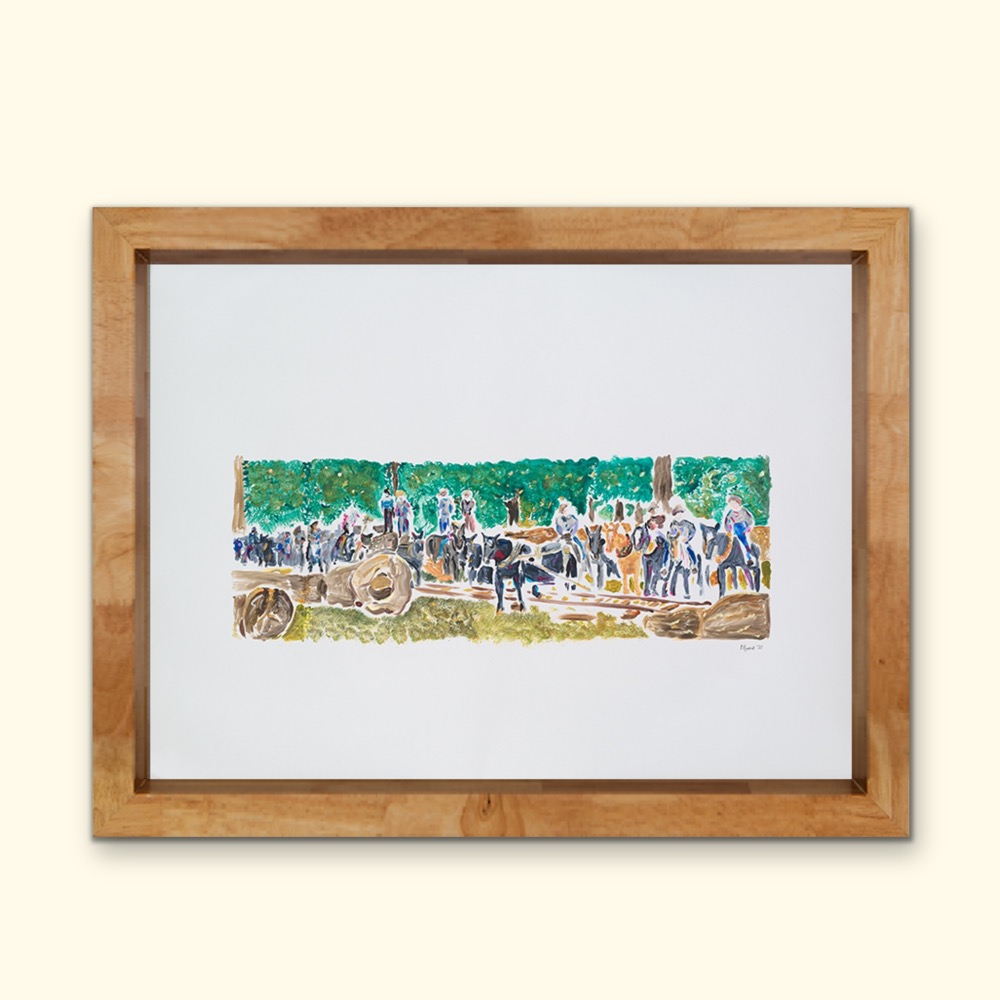
“Logging Team with HorsePower Engines,” by Stephanie Khattak. Acrylic monotype print. 20X26 on paper.
The early prosperity of East Texas started with trees, and the region had (and still has) plenty of those. There’s a reason I named my work “The Pine Curtain Project.” The part of East Texas where I am from is dense with pines – The Piney Woods. It is so much a part of the region’s identity that even today, the local university’s mascot is a Lumberjack, a popular local coffee shop is Java Jack’s, the best-known festival is the Forest Festival and the main drag in Lufkin is Timberland Drive. At the same time, the density of trees can either isolate or protect, depending on how you look at it. Like…a curtain. I imagine this “curtain effect” was even stronger before the timber industry moved in, cleared away and changed the physical, sociological and cultural landscape.
This image makes me think of the beginning of the end of an era, which I feel evolved over generations. It was a double-edged sword, or saw if you want a more thematically accurate metaphor. On one hand, clearing the trees made way for unprecedented economic and civic progress. On the other hand, once the curtain was pulled back, things would never be the same.
As I am more of an artist and less of an academic historian, please explore these links forcitationsand further reading:













 stephaniekhattak.com