East Texas Mule Skidder

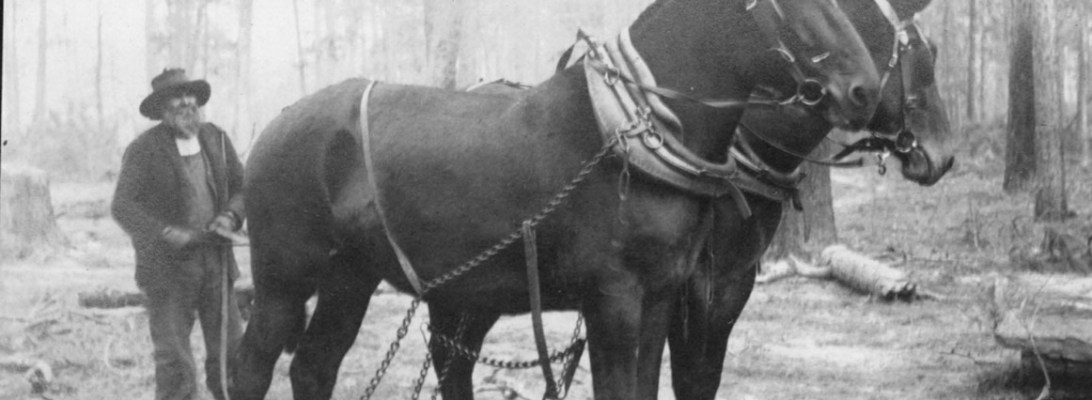
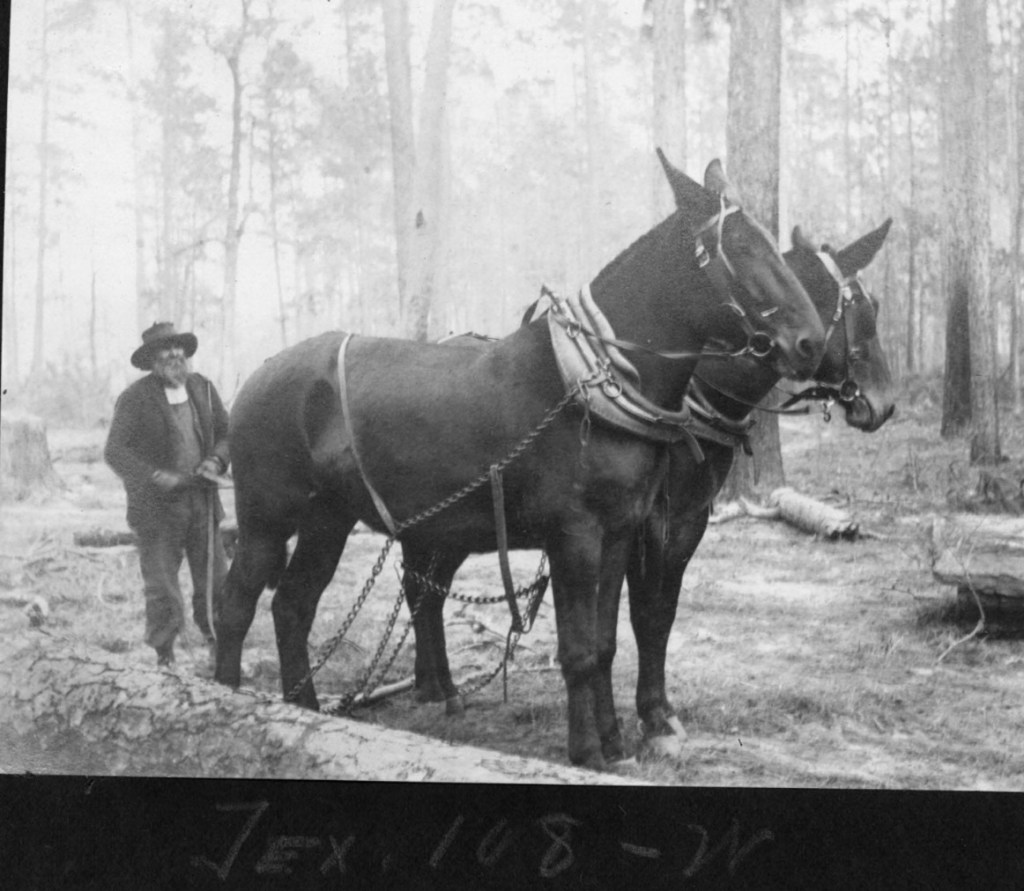
vintage photo of logger with two mule team

This week, I am returning to archive photos from the Diboll History Center. This is just one comprehensive source that I use, and it does a great job organizing its images into historical sets, so it is easy find images from the same era, activity or theme and put them together to document and build larger stories.

This image is “Two Mule Skidders and a Man,” from the Southern Pine Lumber Company, in 1903. The last time I worked from a vintage photo of East Texas loggers, it was a team from the 1930s, if that tells you how long this area has been working with timber.

These photographs at the History Center were part of a larger project by American Lumberman, a weekly trade journal established in 1899.

“The American Lumberman photographs of the Southern Pine Lumber Company consist of 255 gelatin silver prints made by American Lumberman photographers during visits to Diboll in 1903 and 1907. They document the lumber company’s management, logging operations, Texas South-Eastern Railroad, timber, lumber camps, sawmills, commissary, and social life. The photographs provide insight into the early twentieth-century community life of a Texas sawmill company town and connected logging camps.” – American Lumberman Photographs of Southern Pine Lumber Company in The Portal to Texas History. University of North Texas Libraries.

I didn’t know what a “mule skidder” was until today, and when I Googled it, images came up for heavy machinery, not animals. But back when the animal was the machinery, a driver would position the cart over felled logs, where dangling tongs would then raise the end of the log off the ground. The mule, oxen or horse team pulled the tong forward, allowing the log to “skid” along between the rolling wheels.

The photo caption notes that the actual skidder is not shown here, so it looks like the guys in this photo were suiting up for a hard day’s work. Or maybe resting between tasks. Either way, all three were in the middle of a very important job.
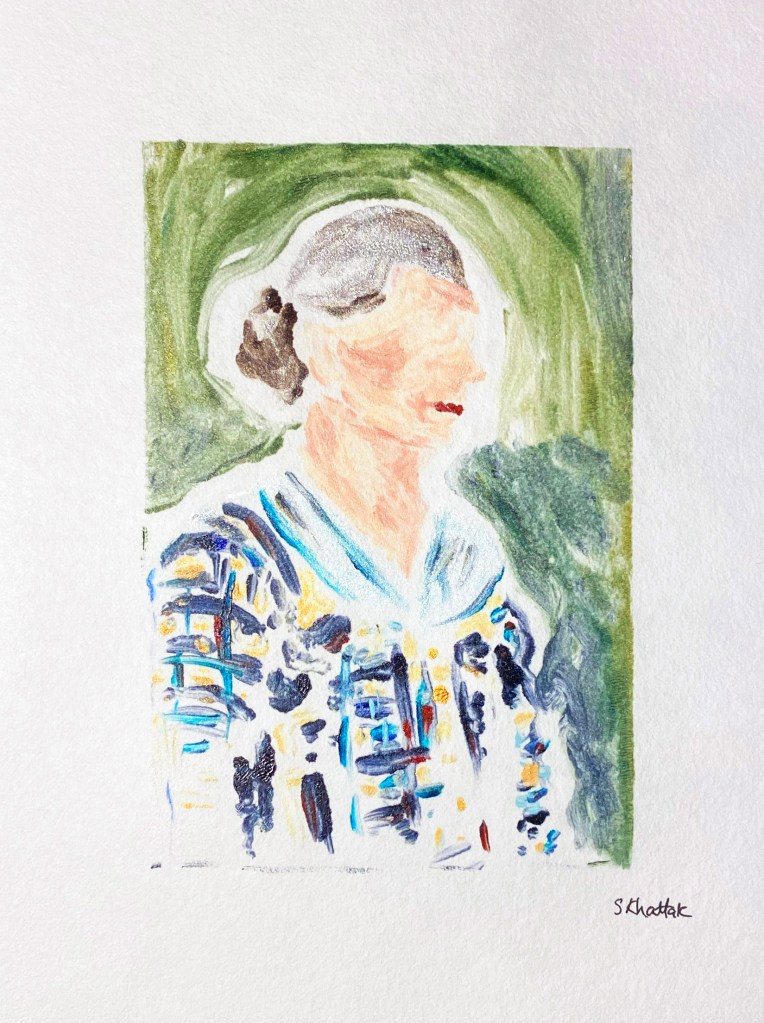
Lucy Ann

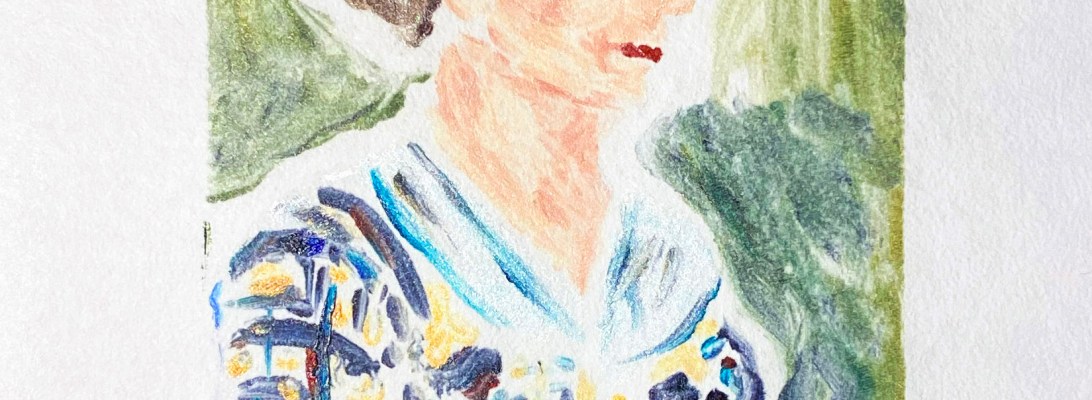
“Lucy Ann,” Acrylic Monotype by Stephanie Khattak.

This portrait is of Lucy Ann, my great-great-great aunt, who lived between 1866 and 1958 in Huntington, Texas.

Portraits are a bit of a challenge for me, because faces are big enough to not look right left “blank,” but the print process makes it tricky to get the details right and still maintain the abstract look that I am going for. I am happy with the way this one turned out.

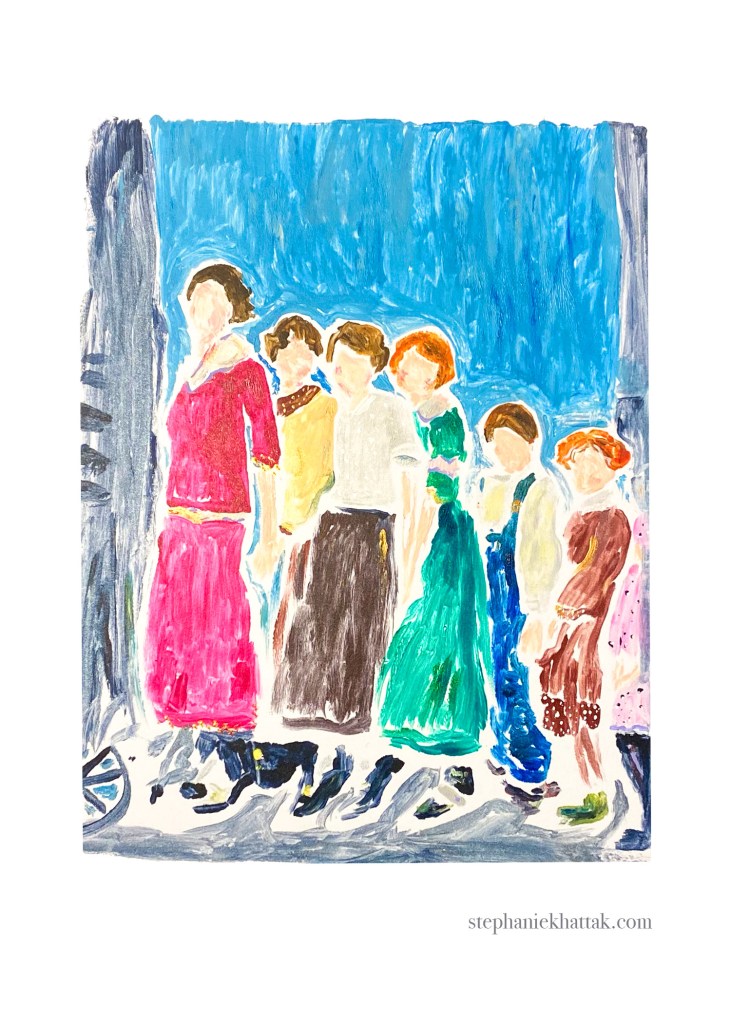
The Huntington McBryde Kids

“McBrydes and Porter Kids.” Acrylic monotype by Stephanie Khattak.

This is a family photo of my great-grandmother (in green), her siblings and her cousins. The little boy in the overalls, my great-great uncle Sherman, grew up to be a WW2 soldier killed in action in Sicily. I imagine growing up with so many sisters and girl cousins made him pretty tough and a great mediator.

Portraits on Silk

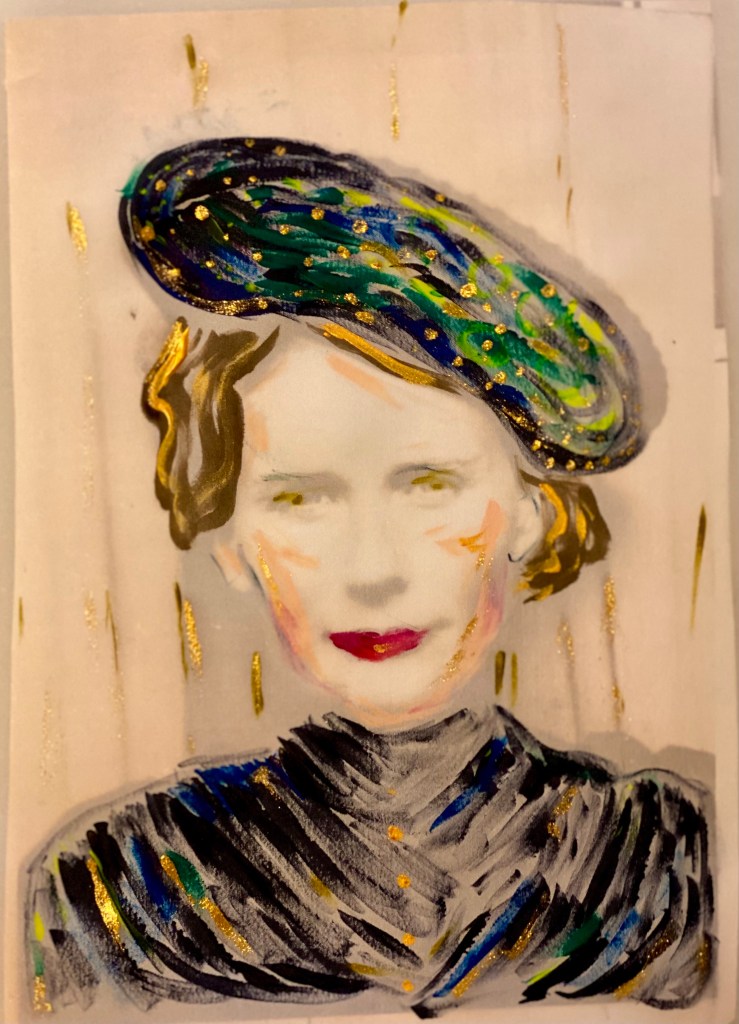
“Beatrice,” acrylic and pigment on silk over vintage photo, by Stephanie Khattak.

This is my great-grandmother on my mom’s paternal side. She passed in February 1978, before I was two years old, so she knew me, but I didn’t really know her. My mom says that they would bring her to my grandparents’ house to spend time with me, and that she really enjoyed that. I like to believe that I enjoyed our short time together, too.

East Texas Loggers, 1930s

“Logging Team with HorsePower Engines,” by Stephanie Khattak. Acrylic monotype print. 20X26 on paper.

The early prosperity of East Texas started with trees, and the region had (and still has) plenty of those. There’s a reason I named my work “The Pine Curtain Project.” The part of East Texas where I am from is dense with pines – The Piney Woods. It is so much a part of the region’s identity that even today, the local university’s mascot is a Lumberjack, a popular local coffee shop is Java Jack’s, the best-known festival is the Forest Festival and the main drag in Lufkin is Timberland Drive. At the same time, the density of trees can either isolate or protect, depending on how you look at it. Like…a curtain. I imagine this “curtain effect” was even stronger before the timber industry moved in, cleared away and changed the physical, sociological and cultural landscape.

This image makes me think of the beginning of the end of an era, which I feel evolved over generations. It was a double-edged sword, or saw if you want a more thematically accurate metaphor. On one hand, clearing the trees made way for unprecedented economic and civic progress. On the other hand, once the curtain was pulled back, things would never be the same.


As I am more of an artist and less of an academic historian, please explore these links for citations and further reading:

Image Source: “Paul Durham, Sr. Hardwood Logging Crew,” The History Center.

The Texas Forestry Museum

Aldridge Sawmill“, Texas Beyond History.com

East Texas Lumbermen

Painted acrylic gel plate. Stephanie Khattak.
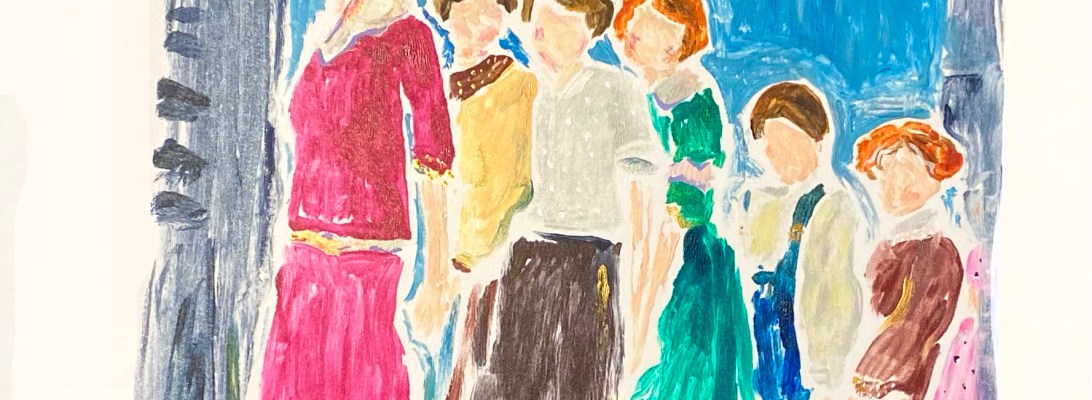
Detail shot, work in progress. Southern Pines Lumberman Team, 1930s. Acrylic monoprint, Stephanie Khattak.
Desktop view, work in progress. Southern Pines Lumberman Team, 1930s. Acrylic monoprint, Stephanie Khattak.

This work in progress is of a logging team, part of the Southern Pines Lumber Co. in the 1930s. The image was pulled from the Diboll History Center, Durham family photo collection. My great-great uncle (my father’s great-uncle) worked on this team and is in this photo, something I didn’t learn until I started to research the image.

This was not a branch of the family tree that I was close to, so learning more about them, and their place in history, has been interesting and a nice surprise.

An image this large and detailed required not only my 16X20 plate (aka Big Betsy), but also a bit of my 8X10 plate to extend the edges. This is the largest and most difficult piece I have attempted in terms of balancing aesthetics, details and expediency so that I can pull the print before the paint dries. It is pretty abstract (keeping with my artistic style) but I wanted to make sure that the horses mostly looked like horses and that the large trees came through.

One reason the source image is so striking is the size of the cut trees against the horses and workmen. When I post the final, I will link to it so you can see for yourself. It’s pretty cool, and there are many other photos in the collection that I want to work from.

A Multitude of Matriarchs

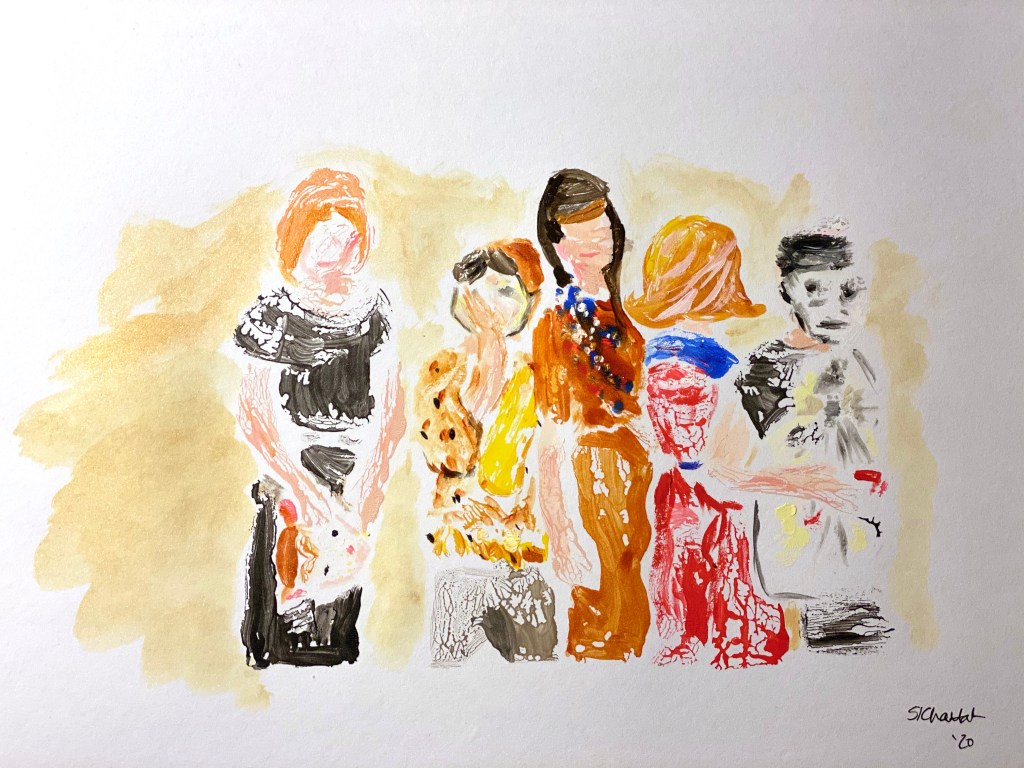
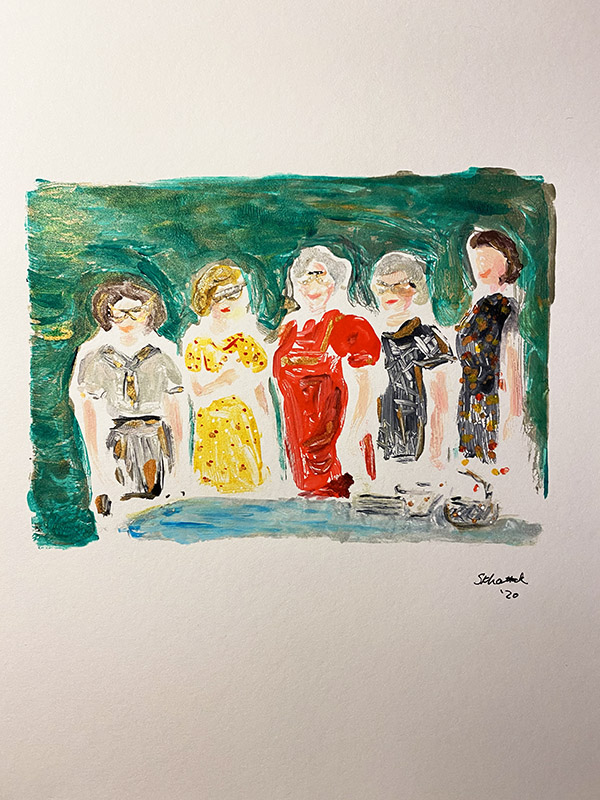
“Multitude of Matriarchs,” Monotype Print: Acrylic and Ink by Stephanie Khattak.

This print was taken from a 1960s baby shower at the Homer United Methodist Church. These were the hostesses, family friends who could always be counted on to spray their hair, polish up their cat-eye glasses and punch bowls, and run the show.

Many, many years after this, I hosted my first shower for my own expectant friend, in the same church fellowship hall where these ladies stand. I remember standing in the church breezeway, cutting gladiola stems, wondering if we had enough tablecloths and feeling a connection to the community of “aunties” who I had seen do the same things over the years. I’m proud to come from a community where it is second nature to show up and celebrate people.

Researching East Texas History

My research assistant, Bluebonnet, hard at work.

This week, I discovered a few new online resources to help my research:

The JStor academic database, which has a free tier during the pandemic

The SFASU East Texas Research Center online libraries

The Texas Historical Commission library

AND, yesterday, I received my copy of “They Left No Monuments,” a volume of East Texas human interest stories by the late historian Bob Bowman.

I’m just scratching the surface of these resources, but I have already learned so much! It’s really exciting to read this information, find archival images, and think about how it might fit into writing, art or both.

I’ve settled into a routine where I work and write in my studio most afternoons, and in the evenings I dig around online and read. Routine and purpose have been things I really miss about pre-COVID times when my business was stronger. If you are struggling, too, I urge you to just pick something fun to do and dive in. If you have a fuzzy assistant or two to keep things lively, even better.