Artifacts

I’ve written a lot about the many phases of the gas station saga, the spark and motivation of the Pine Curtain Project and my attempt to document, work though and move forward (and help move my family forward) as things change so much around them. It has been a while since I provided an update — for a long time nothing really happened. And then, kaboom.
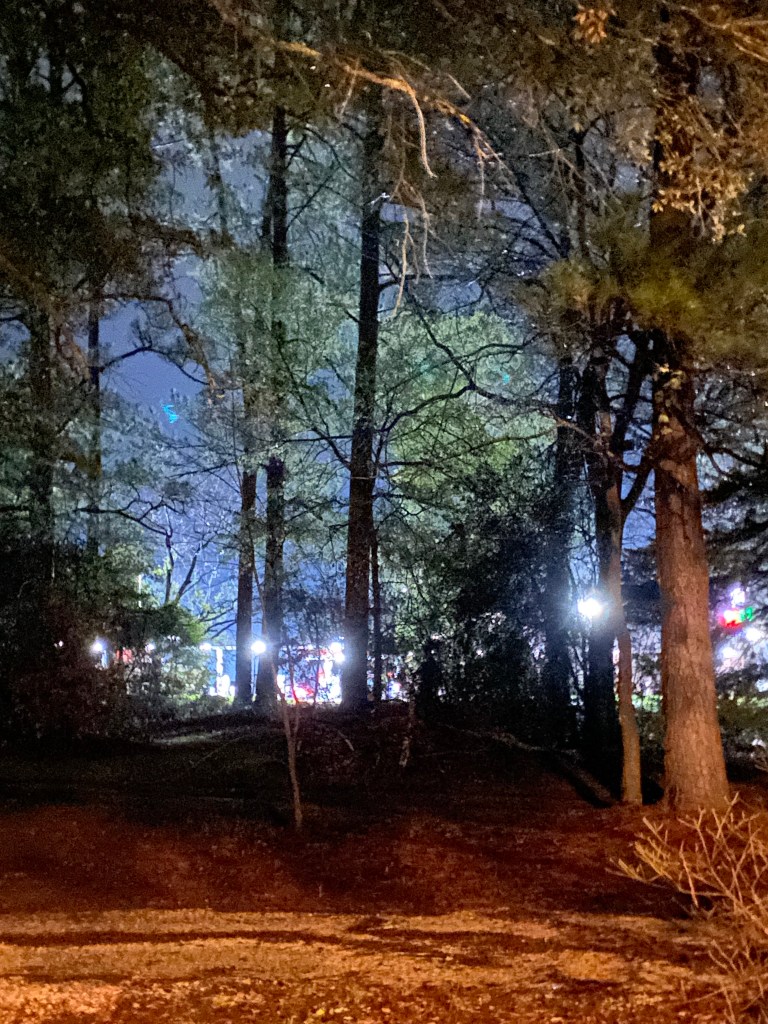
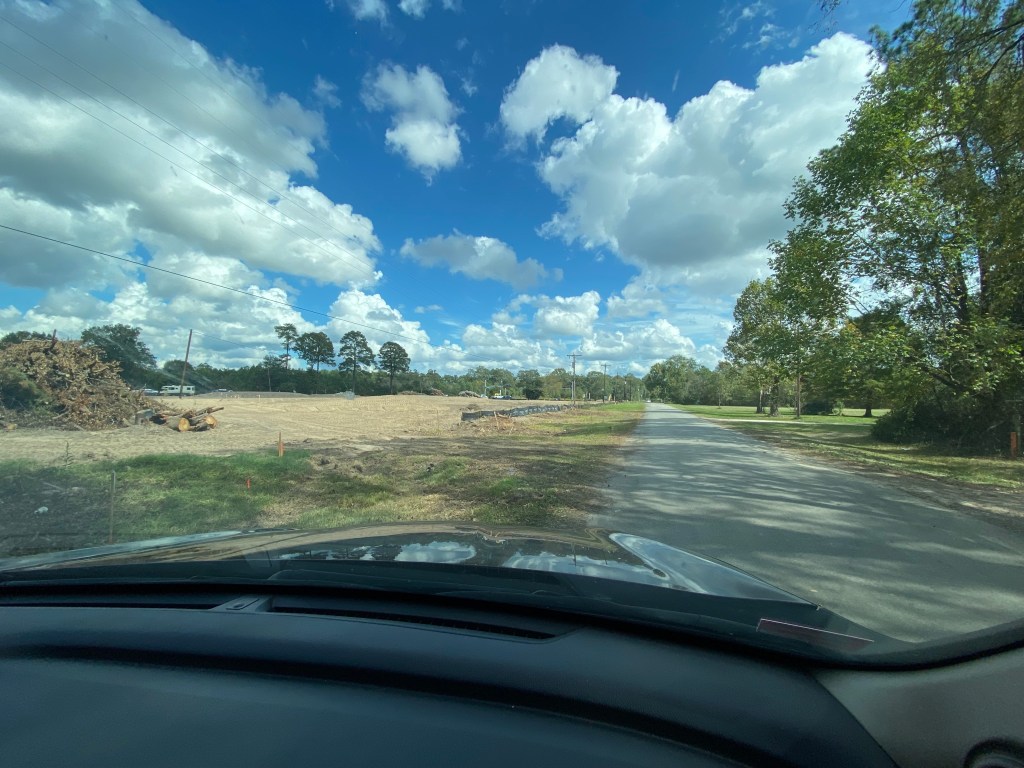
There’s the gas station. When I took this photo, I was standing in my parents’ yard. Not at the edge of it, in their garage. It’s worse in front of my grandfather’s house. Around the time the gas station was finishing construction, other parcels of land began to sell around my families’ homes. It has become a (somewhat expensive and complicated) game of whack-a-mole, with my extended family members and my parents trying to figure out what’s for sale, is it worth buying themselves, is it a good investment, etc. just to maintain some sense of normalcy for a little bit longer. When I was home last, in early May, the area was hard to recognize. Trees have been cleared in all directions, new construction is going up, three or more houses on lots that used to hold space for just one. As these changes have happened, there has been a predictable increase in petty crime like loitering, trespassing and break-ins. And so begins the letting go.

My parents are still coming to terms with what happens next, and because they’re mentally and physically independent, I try to just stay out of the way let them do what they do. And then I look for a bag to breathe into.

They, and my cousin, uncle and grandfather are all handling things in their own way. My grandfather, who lives practically in the gas station parking lot, is getting by with blackout curtains and a good sleep mask. My cousin, the practical one, has bought up some property to delay the inevitable, but has also been making trips to where they all want to resettle to scope it out. My uncle is the only one to actually cross the store’s threshold, because they make a good slushie. My parents are in archaeologist mode.


Every so often, my mom will show up for a visit with a plastic tub of my old stuff. Some of it’s relevant to my research but mostly it’s a hodgepodge. My dad is taking a different approach and finding random old things to refurbish. And I do mean random.

Mom: “Your dad found your bike to fix up for you.”

Me: “What bike?”

Mom: “The little cowboy one. Maroon.”

Me: “The one I had in third grade?”

Mom: “Yes! That one,”

Reader, I am 47. I am almost six feet tall. I don’t have kids and I don’t know any little kids. My cats will never be able to ride that bike.

Mom: “So, do you want it?”

Me: “Umm, why don’t you guys keep it for me a little bit longer.”

A few weeks later.

Mom: “Guess what we found?”

Me: “What?”

Mom: “Your Barbie Dream House!”

Me: “From 1982!?”

Mom: “Yeah, do you want it?”

A few weeks later.

Mom: “I found something you might want in the old barn.”

Me. “??”

Mom: “Your recorder!”

Me: “From elementary school? Like, the ‘Hot Cross Buns’ recorder?”

Mom: “Do you want it or not?”

Other things they’ve “found” and fixed up for me include some kind of ancient weed tiller thing from my late grandfather’s farm, a little deer hide chair from the 1800s, a foot-pedal sewing machine, a 1970’s Ford, a 1960s Mercury Comet and a 1992 Chevy S10. (To be clear, I already have a car!)

I know this is them working through what they need to work through, and who knows, maybe one day I will want to play the recorder again. I think my bestie Missy reclaimed her own Barbie Dream House in a similar scenario, so maybe we can set them up and play, like old times.


The next phase is one that I deeply dread. I have long-promised to help my mom clean out my room, and after years of kicking that can down the road, the day is fast approaching. I do not want to do this. Not only is it going to be an absolute a$$-whip of a project, I know what all is in there.

In the tubs that my mother has brought, the ones she’s piled into my car as its driving away, and the many more that remain, there are stacks of old notes, old writing, old mementos, yearbooks, and photos. Painstakingly folded notes that air one side of long-ago grievances, photos of me looking weird, photos of me trying too hard. Crispy-dried prom corsages. A hand-painted egg from a junior high family science project, still unbroken, resting in its little plastic basket. Diaries that contain God-knows-what about God-knows-who. Tube tops and plastic barrettes and probably all my vinyl pants from the nineties. Notebooks with doodles, directions and things to remember from long-ago trips and my time in New York, when Google didn’t exist and I had to rely on my wits. All of it there, just waiting to bite me.

I know that the cleanest break is to just throw things away. Stop digging, wash my hands, move on. But I can’t. I have to look through these boxes, even the ones that I know will hurt. Because we all know the myth about boxes, and how sometimes, even when pain flies out, there’s still hope left inside. Maybe I’ll find something good.
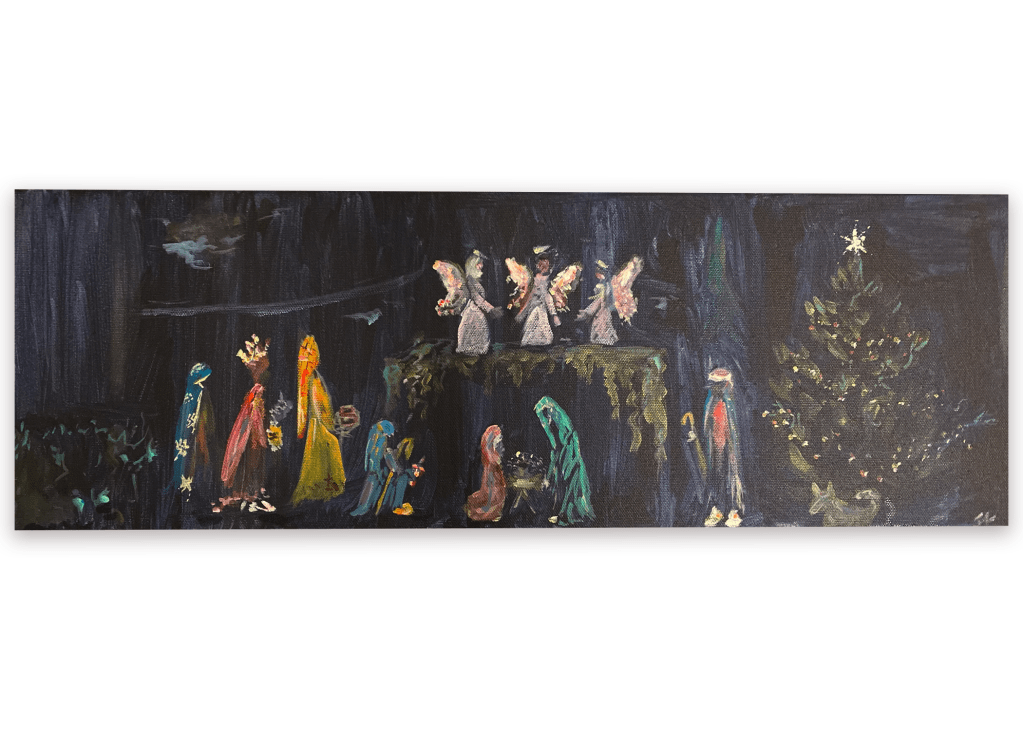
Joyful and triumphant

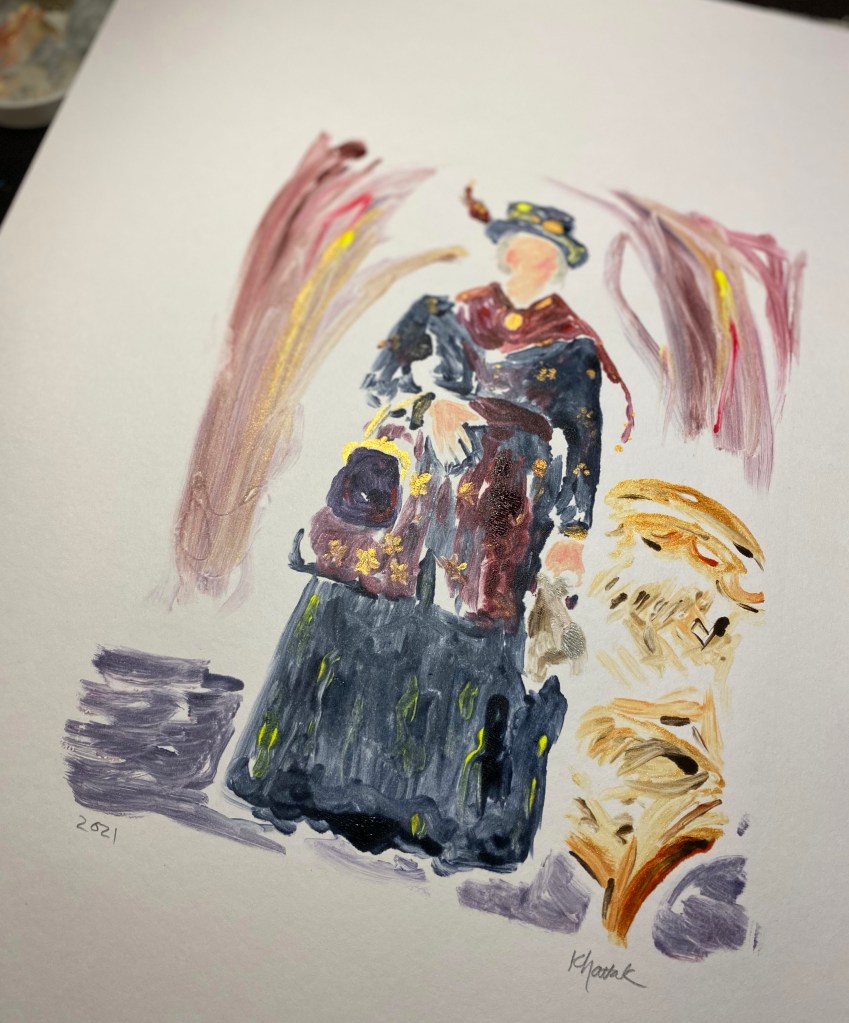
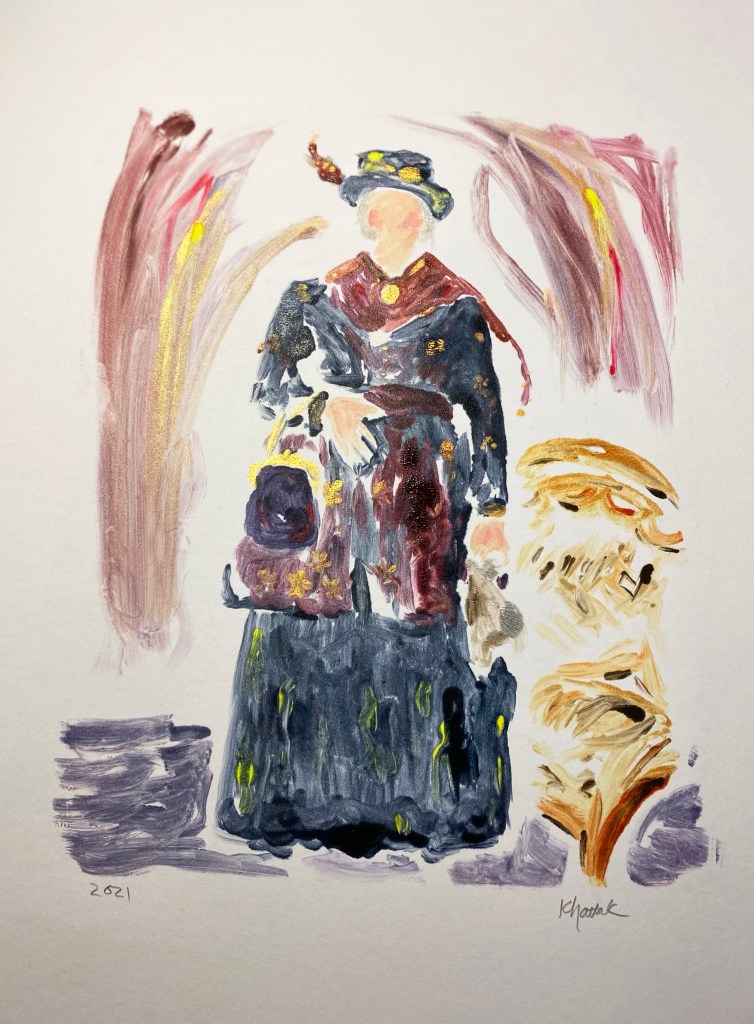
“Joyful and Triumphant,” acrylic on canvas by Stephanie Khattak.

Every year, from the time I was about eight until eleven or 12, our church would produce a live nativity scene. Community members of all ages were instructed to stand like statues for a few freezing cold hours over a weekend while cars from as far away as Lufkin and Nacogdoches slowly drove through the parking lot. No chewing gum or tobacco; no chit-chat; no silly dances, waving or hollering at cars we recognized, nothing. Just stand there.

The first year was contained to the walkway between the church sanctuary and fellowship hall; subsequent productions had shepherd fields out among the trees. The set was constructed from wood scraps covered with moss and other scavenged greenery.

The costumes were old sheets and ripped up cotton fabric; there were sneaker logos shining under robes; at least one king sported a repurposed Burger King crown. Fountain drink cups were barely hidden, as was the inevitable appearance of neighborhood dog. We never stood like statues when there was gum to chew, chit-chat to share and silly dances to perform. The best part of the evening was going inside for a hard-earned hot cocoa when it all got to be too much.

But “joyful and triumphant” are guiding words for the season, and that has never been lost on us.


*I talk a little more about the annual Christmas nativity and other traditions in my 2021 holiday podcast. Yes, I realize it’s now 2022 and almost 2023. The podcast has been down, but not out. Can’t say for sure when I will have a new episode, but it’s still cooking. Just on a back burner for now.

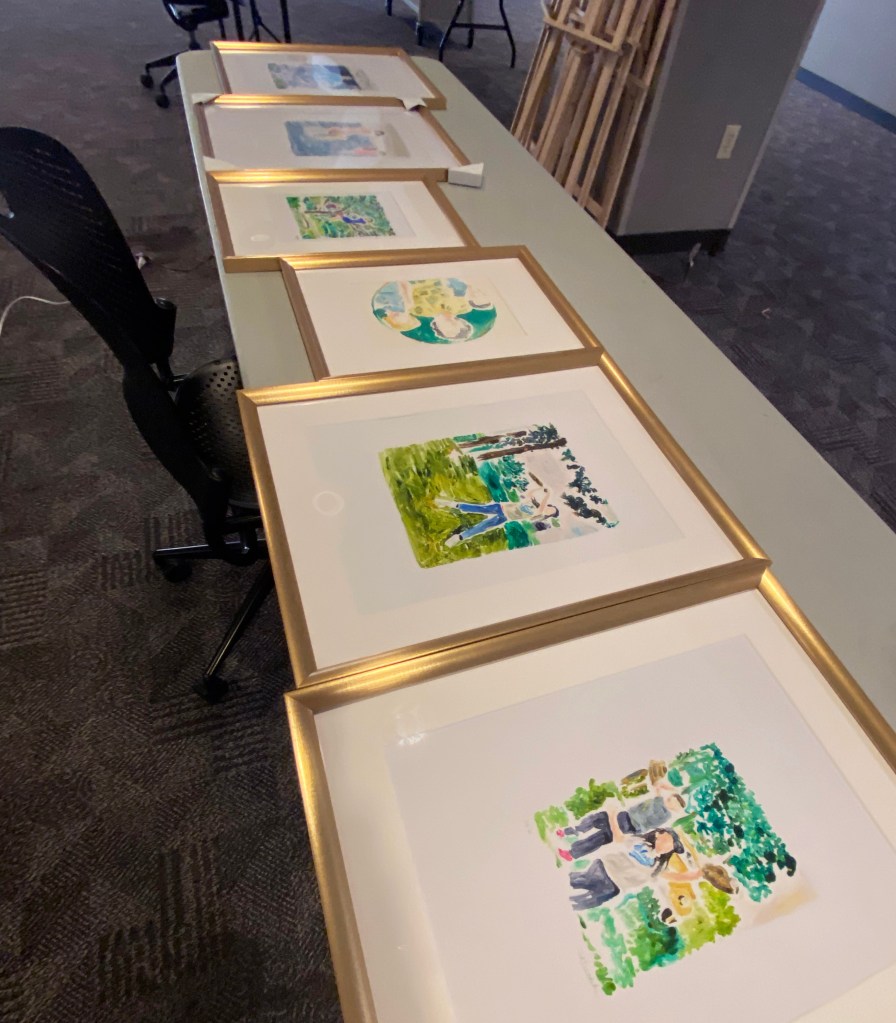
Exhibition: Dallas Public Library

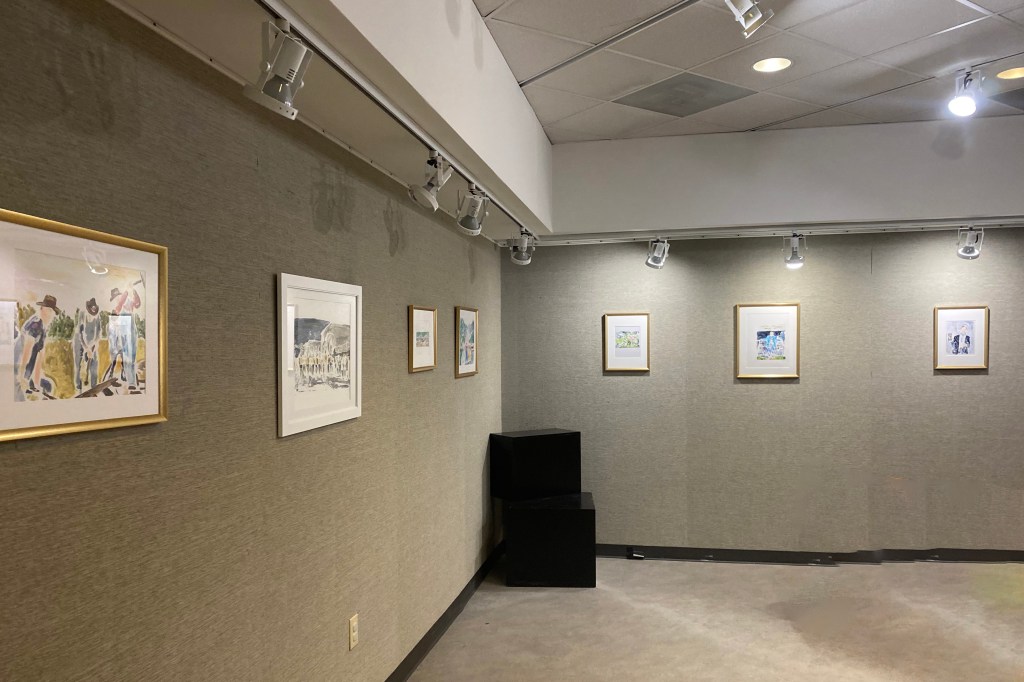
Installed art at the J. Erik Johnsson Central Library, Lillian Bradshaw Gallery.

Last Friday, I made a trip to Downtown Dallas to install my first solo show at the J. Erik Jonsson Central Library. This show was supposed to happen last spring, but schedules could not quite align. Happily, now is a better time, and I have the space for the next month or so.

Although I have been creating some new work since the show was proposed and accepted, monotype prints still comprise the majority of my work, so that’s what’s on view.

I’m still in the “bring your own hammer and hangers” phase of my art career, but unlike my last big show, James was able to help me out, which made it a bit easier.

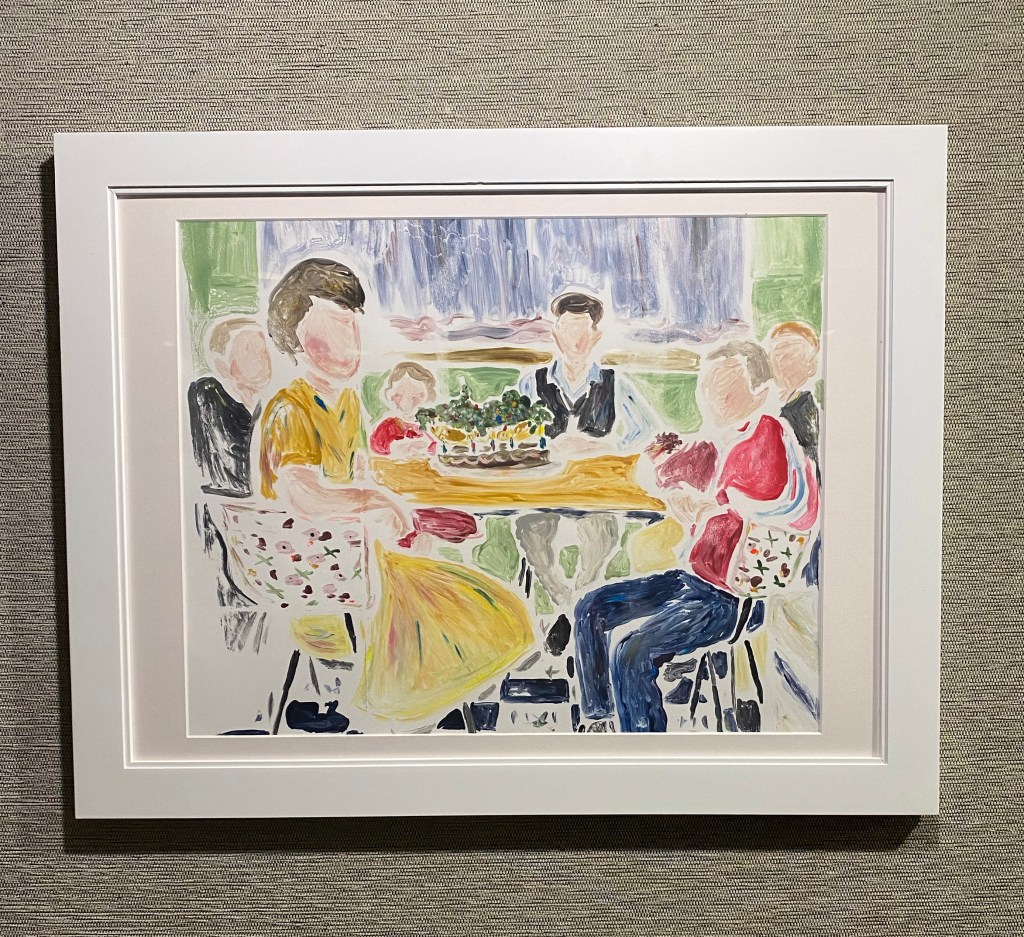
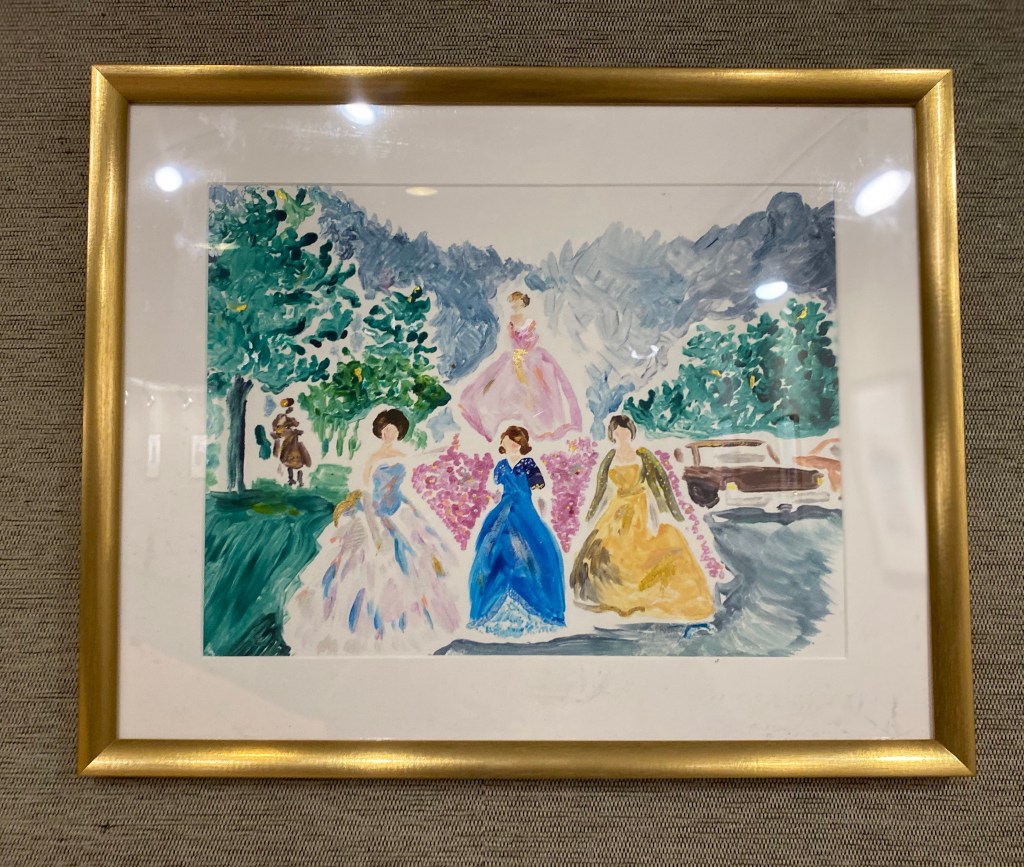
All-in-all, I have 16 pieces up, framed in various sizes. Since it had been a little while since I worked on these prints, it was fun to go back through them to pick and choose which art to display. The majority are from family photos, but one wall’s art highlights the greater Lufkin and East Texas community.

Here are a few that I chose, which link to their accompanying blog posts!

To see the rest, make a trip to the library! (While you’re there, get a library card! If you already have a card, pick out a new book! And if you already have your card and plenty to read, check out the library’s awesome new historical exhibition of archival materials around Big D Reads and “The Accommodation” book! I have to say, it’s an honor to be part of the good work of the Dallas Public Library.


If you see a piece that you are interested in here, at the show, or elsewhere please get in touch. After a break to focus on other things for the summer (did you know I published a travel book?!) I am open again for sales and a limited number of commissions. I am always interested in opportunities to showcase or share about my art, process and research project. Please get in touch if you’d like to learn more.

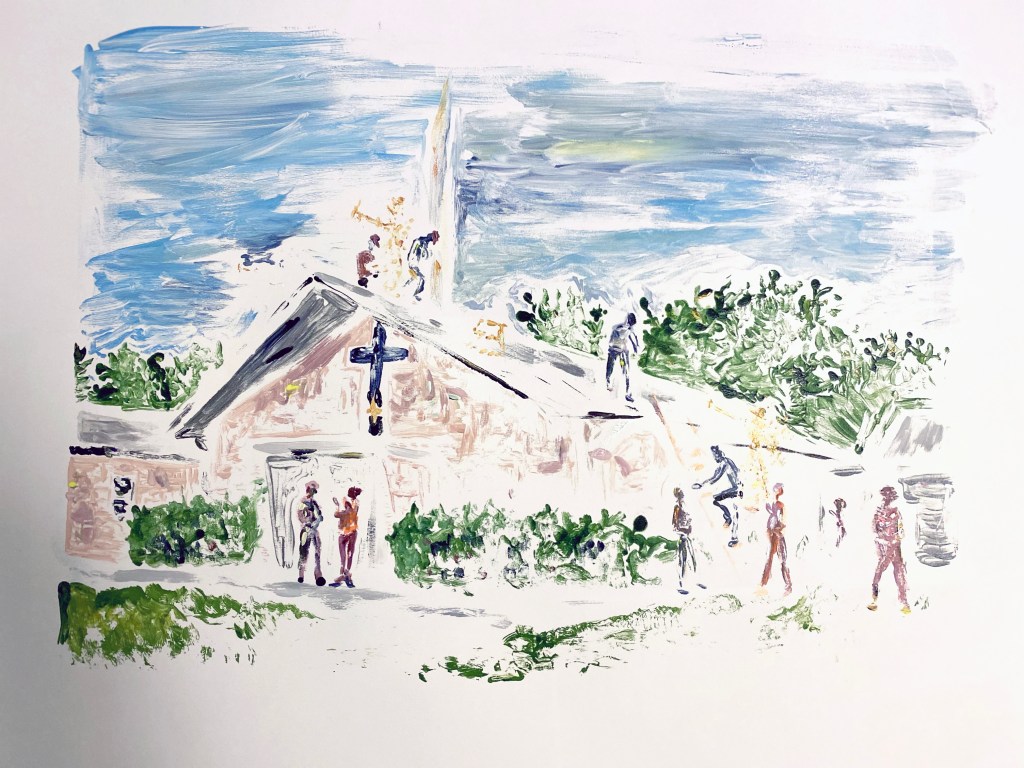
Homer Church Angels

Work in progress.
“Homer Church Angels,” acrylic monotype print on paper by Stephanie Khattak.

Each year, my community church puts up a lighted nativity scene, replacing the live nativity scene that it produced in the 1980s, after everyone got older and more tired. After Thanksgiving, busy groups of people work together to test lights, assemble figures and finally, install them on the church grounds and roof. This piece is based on a photo of that process. (I dare not call it vintage since it was within the last 15 years!)

I purposefully left the figures a little abstract. The main reason is because they’re so tiny that trying to personalize them would not render them recognizable anyway. But also because at gatherings like these, it is less about the individual and more about the group. And I would go further and say it is less about this particular group, and more about the spirit of tradition and faith moving through them, as it has before, after and as it will again.

East Texas Research Trip

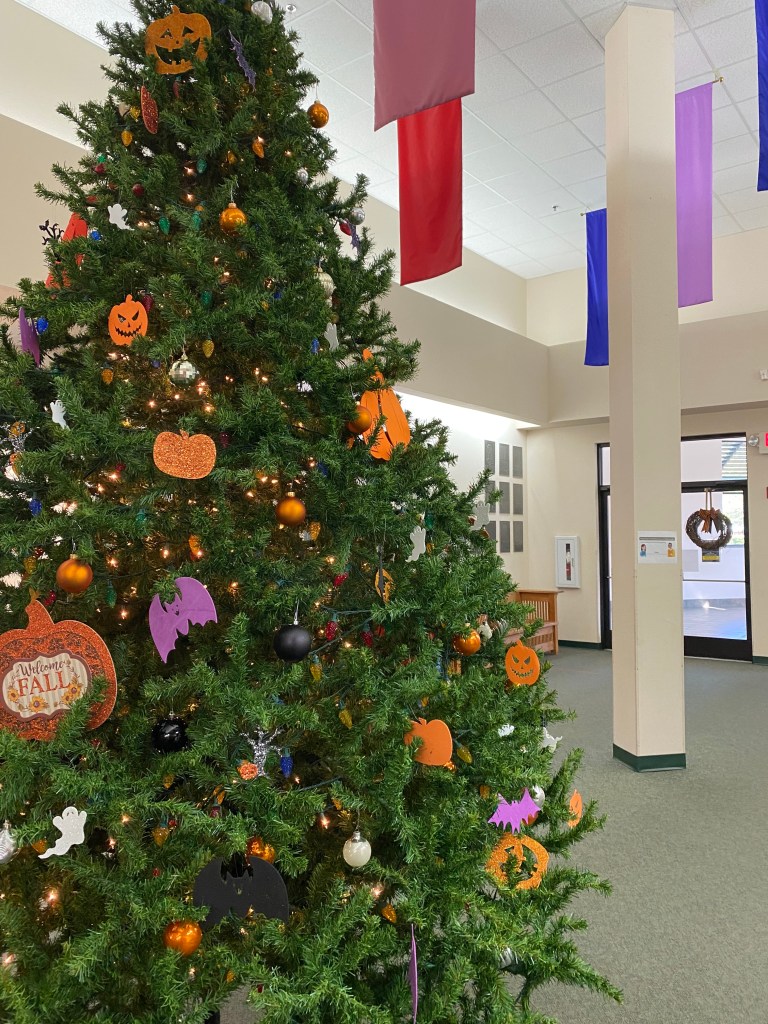
Halloween tree at Kurth Memorial Library, Lufkin, Texas.

I spent the past weekend in and around Lufkin, conducting research and visiting family. I added an extra day to my usual weekend visits to fit everything in, and I still didn’t fit everything in!

Due to the size and complexity of the Pine Curtain Project, I have divided it up into a multi-year roadmap and what I hope are small, manageable chunks. The last time I visited for this work, I focused on some cemetery tours and family oral history. For this trip, I chose two local history centers and narrowed down my research to Old Homer History and the beginnings of a Huntington, Texas history that I am pursuing.

Researching takes a long time, longer than expected and longer than people realize. When I look through archives or do field interviews, I usually have one or two main points I want to explore, but I also have to leave time and “brainspace” for other ideas and topics that I encounter along the way, to either fit them into the narrative or file them away for later. Especially when I am interviewing or consulting someone. This is why you may notice that sometimes my art production goes dark for a few weeks – it is just hard to do everything at once. The past few weeks have been devoted to launching the podcast and preparing for this trip.


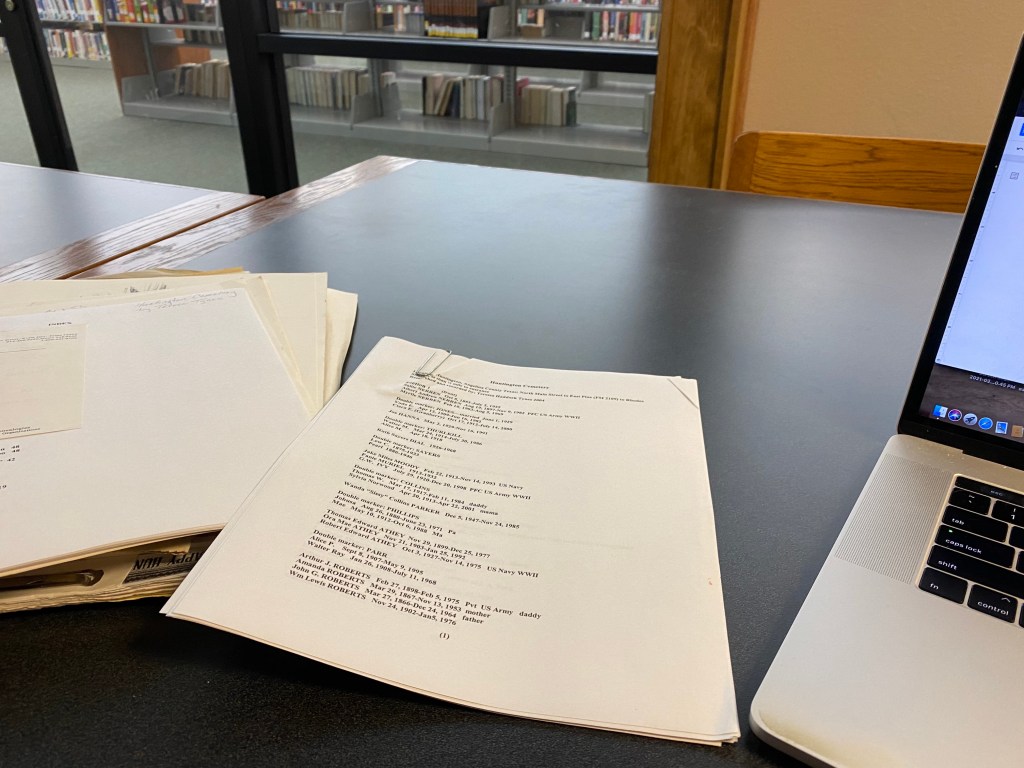
Because the Ora McMullen Genealogy Room hours aren’t compatible with my non-resident schedule, the Kurth Memorial Library team was kind enough to pull stacks of requested materials and set me up in a study room on Friday. I stayed for nearly three hours and only made it halfway through. I spent my time going through three large file folders: One on the historic role of the Masonic Lodge in Homer; one on general Homer history; and one on Huntington, Texas around the 1930s-40s. I have 347 photos from my trip, and most of them are of documents found in these folders, if that tells you anything.

Workspace view and archival documents, Kurth Memorial Library, Lufkin.

Saturday morning, I woke up early and drove out to Huntington, to spend some time talking to Darrell Bryan of the Huntington Genealogical & Historical Society. Darrell is a longtime Homer, Huntington and East Texas historian whose work focuses on armed conflicts, cattle rustling, racism and land disputes. He is also a friend of my father’s, and very nice.

Darrell gave me a tour of the historical society building in Huntington’s Centennial Park, and then spent most of the morning sharing his research finds and opinions; and helping me understand the bigger picture around the incidents I am learning about. I came away with a better idea of the “whys” around the “what happened,” and also new, bigger mysteries to contemplate.

View of Heritage Park from the Huntington Genealogical & Historical Society and Centennial Park, Huntington, TX.

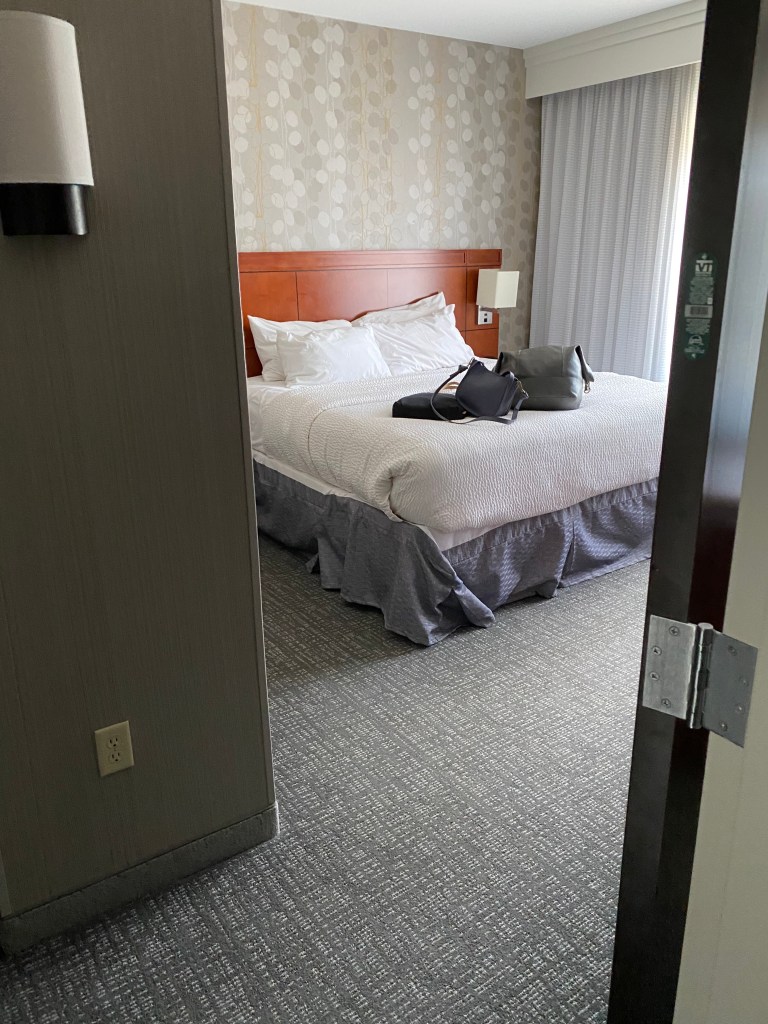
Suite at the Courtyard Marriott in Lufkin.

Since most of my work was in Lufkin proper, I stayed at the Courtyard Marriott. I’m a frequent guest there, and this time they upgraded me to a suite! Score! So, I spent the evenings with lots of space to spread out, organize my notes and snack from the giant bag of gummy candy I bought at Target.

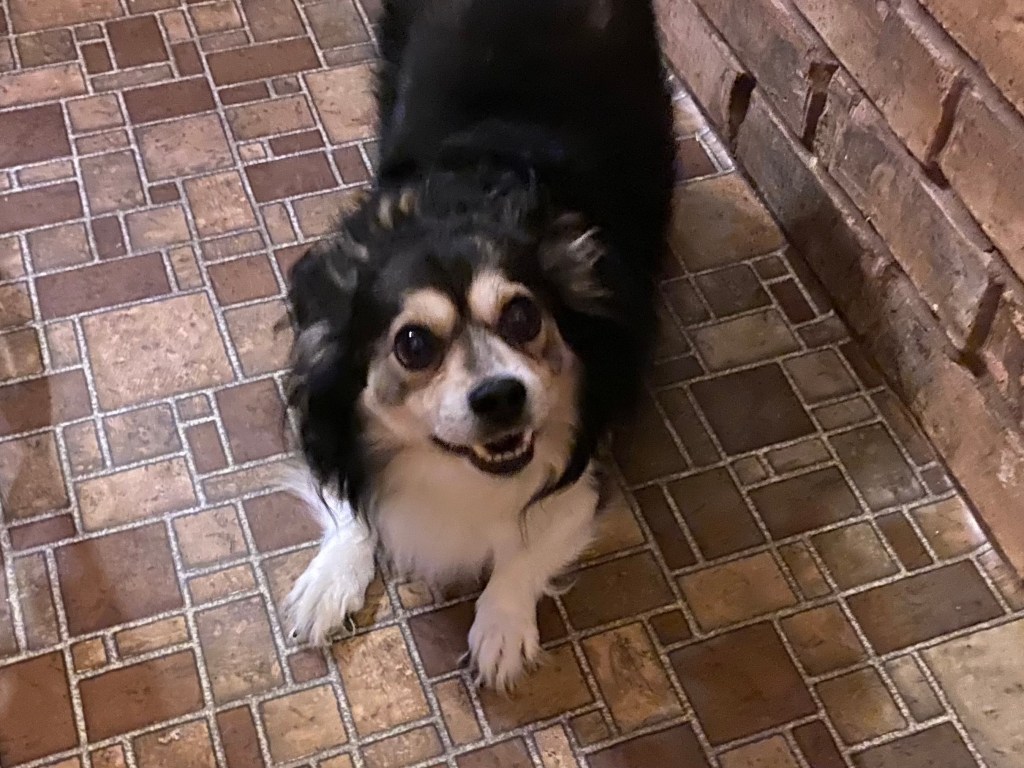
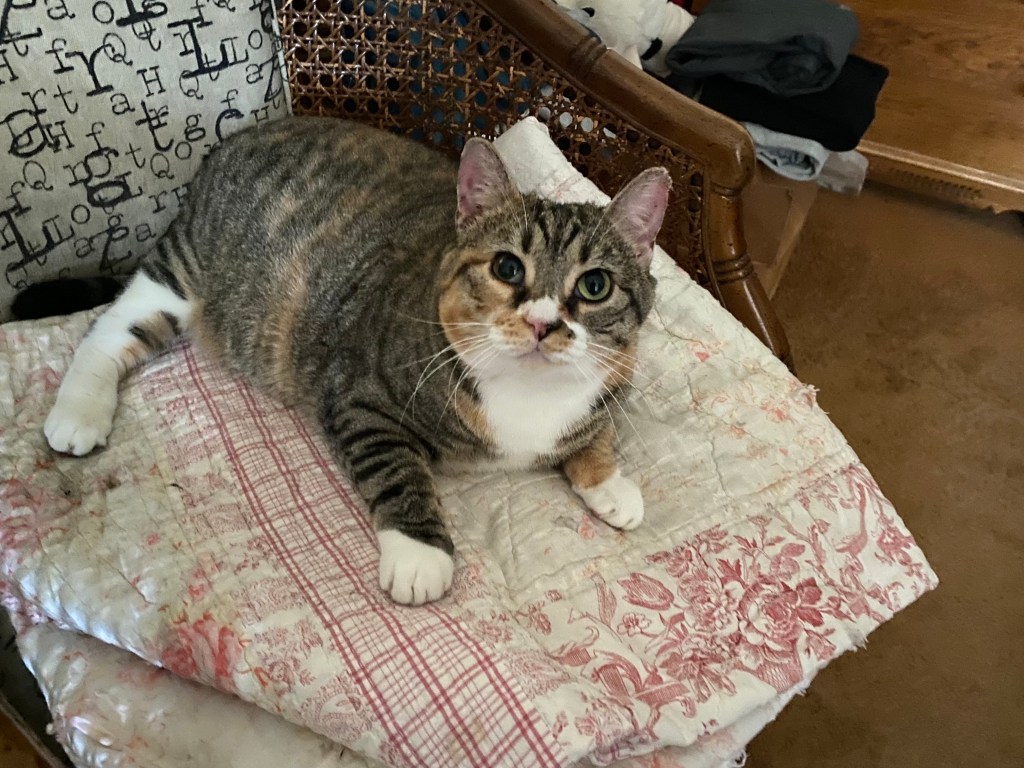
When I wasn’t working or in the hotel, I was at my parents’ house catching up with their animals, and that was pretty cool, too. Less cool is the blighted field across the street from them, that used to have horses, goats, tall grass and trees. Soon, the field will be an all-night gas station and truck stop. An infuriating but important lesson that nothing lasts forever.

Poncho!
Sweet NaNa.
Soon, the construction site here to the left will be an Exxon gas station in Homer. To the right is my grandfather’s front yard. Harder to see – a great big hole at the end of the street to catch groundwater and God knows what else that drains from the site.

Pine Curtain Art: Texas Forestry Museum

“Southern Newsprint,” by Stephanie Khattak

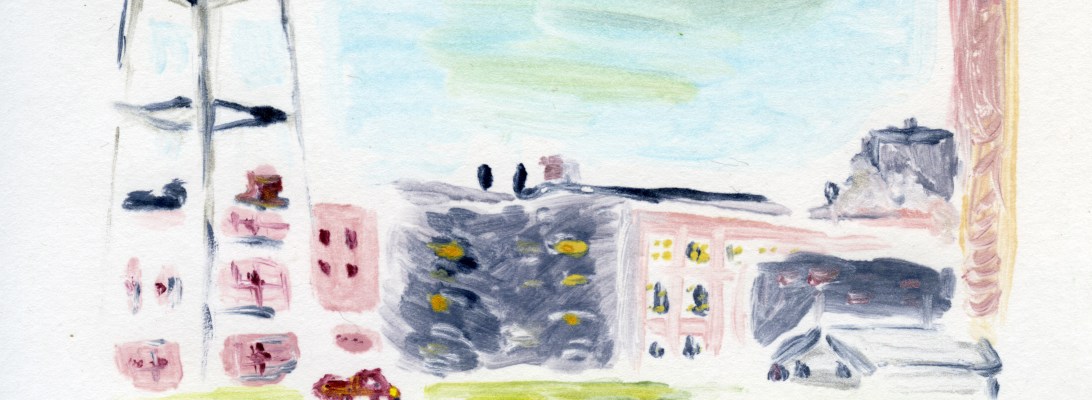
The Texas Forestry Museum invited me to contribute a piece to auction in its annual Feast in the Forest fundraiser. While the end sale would be an original piece, the museum worked with me in a similar process as a commission, providing a few photo options to work from for the end result. This piece is from one of their archival photos, and I chose it to work with because I loved how it set the scene and really brought back a sense of time and place. For my process, I have to prioritize which elements of a photo I want to emphasize on the print and for this one, I wanted to make sure to capture the railroad tracks, the water tower and the smoke coming from the building on the far right. While I knew I wouldn’t be able to capture the detail in every letter on the water tower, I loved the stylized first letters and wanted to retain those. In the original, many of these elements were further enhanced with iridescent and metallic paint.

This project captured all of my favorite things about working on commissions, and it was nice to be able to contribute a piece to an organization that is so important and shares my passion for capturing and preserving the rich history of this part of East Texas.

This was a unique piece, but the Texas Forestry Museum is also a retail partner, so please get in touch with them if you’d like to see another option in their inventory.

Contact me if you’re interested in initiating a commissioned project of your own! If you’re thinking of one for the holidays, its best to get in the pipeline by Oct. 1.

The Namesake

“The Namesake,” Acrylic Monotype by Stephanie Khattak. 12 X 18 on paper.

This monotype print is taken from a vintage East Texas photo of my maternal great-grandmother’s grandmother, Ann. There have been Ann’s in the family ever since, including me. My father’s sister is also an Ann, so the name does double-duty for both sides of the family.

Elizabeth “Ann” was born in 1858 and died in 1948, so of course there aren’t many people left in my family who have direct memories of her. But she’s the originator of the “Panther Tales” that have been told to my great-grandmother, grandmother, mother and me, and everyone remembers those. When she was young and living on Renfro Prairie in East Texas, it seemed like there was a panther behind every tree, waiting to slash someone. She’s kept generations scared straight for a hundred years – none of us ever went far into the woods, and as we still occasionally hear panthers scream in the night there, we are right to stay away!

Research Notes: Ruby & John Avery Lomax

Ruby Terrill Lomax and John Avery Lomax produced folklife documentary work that comes up a lot when I am researching East Texas History. Along with her husband John Avery Lomax, Texas folklorist Ruby Terrill Lomax traveled the state and other Southern regions for the 1939 Southern States Recording Trip. The Lomax’s multi-genre journey documented Southern folk musicians and their communities through sound recordings, photographs and other ephemera, and spends valuable time in communities of Color and documenting the creative contributions of incarcerated people. The collection’s primary home is in The American Folklife Center, Library of Congress.

Here are a few items of interest from the collection:

Disc Sleeve with Notes, American Folklife Center
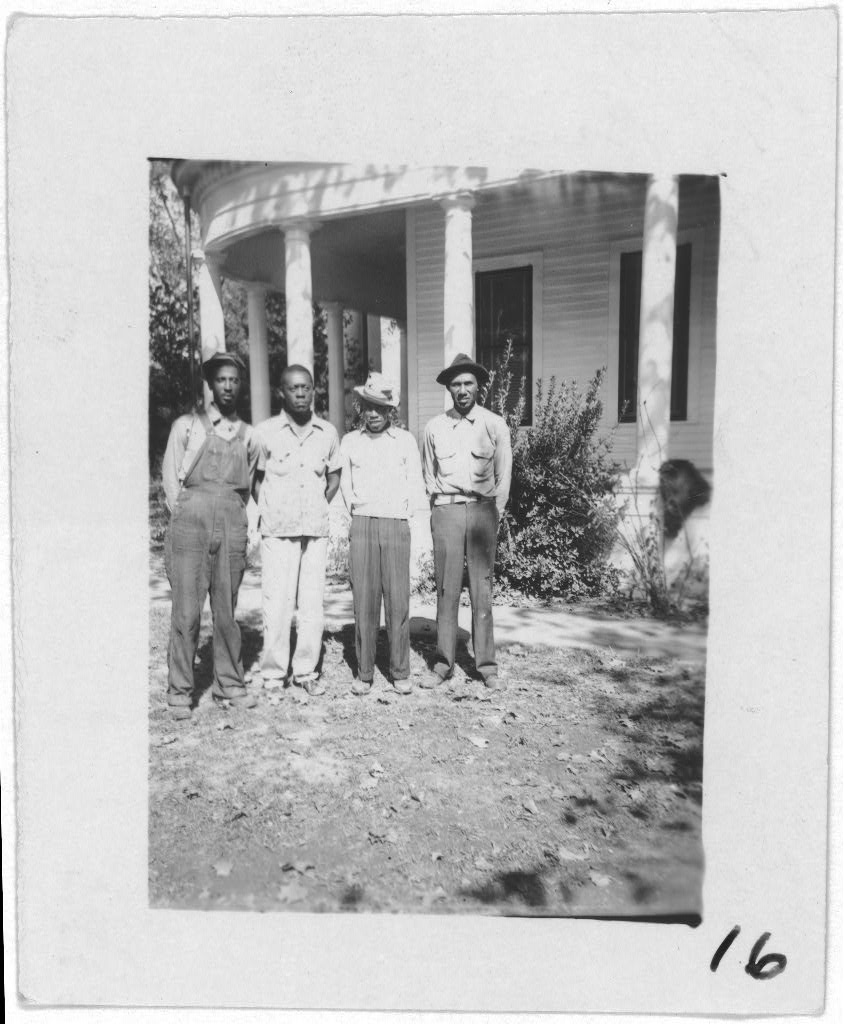
The Angelina Four at Kelty’s Lumber Co., Lufkin, Texas, 1940 Ruby Lomax,
Library of Congress
Enka Square Dance Team dancing at the Mountain Music Festival, Asheville, North Carolina,
Ruby Lomax, Wikimedia Commons

The project’s recordings can be found here: Lomax Iconic Song List, Library of Congress

The Library of Congress also has the 300+ page Field Notes manuscript from this trip, which you can download for easier reading.

Cass County, Linden, TX

Cass County Annex, Linden, Texas. Acrylic monoprint by Stephanie Khattak.

In November, we took a day trip through East Texas to celebrate my husband’s birthday. We had hoped to go to New York, but life had other plans for us (and everyone else in the world!) I, of course, am very familiar with East Texas, even this northern route that we took, as I was a reporter in Marshall briefly in the early aughts. Caddo Lake, Jefferson and city government were my beats, so I spent a lot of time on these roads. But after I moved back to Dallas, I never went back there, so a lot of it was still new to me. And, of course, much has changed over the past twenty years.

On our trip, we began in Mount Pleasant and ended in Marshall, just as the sun was setting over its beautiful courthouse. In between, at the proverbial “magic hour,” we found ourselves in Linden, Cass County. The great thing about the “magic hour” is that it makes everything look, well, magic. Courthouses are stately and busy downtown squares are vibrant largely on their own. But when a certain kind of evening light shines, it can even make a simple civic building into a thing of beauty.