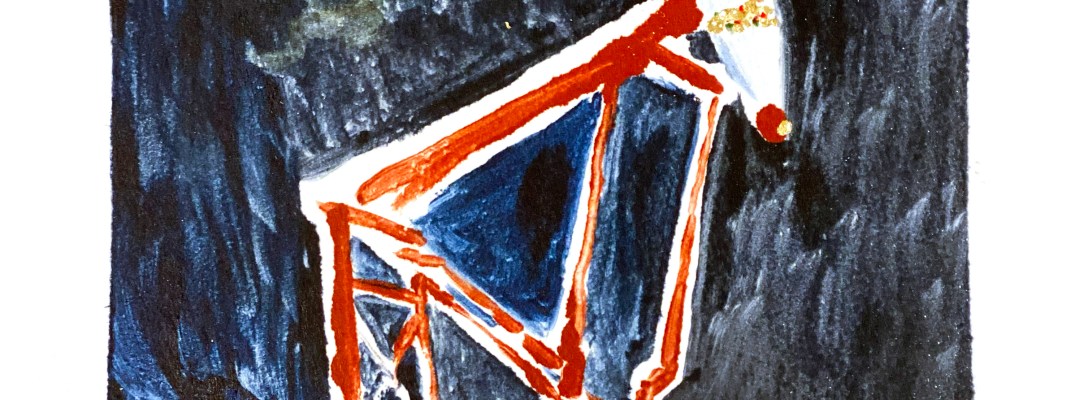
“Lufkin Rudolph” monotype print by Stephanie Khattak.
Each year for as long as I can remember, the holiday season in Lufkin has included “Rudolph the Red-Nosed Pumping Unit,” modified from oil equipment. It has evolved a little over the years and changed locations a few times, but he’s still pumping along!
This year, Rudolph will be lit on Dec. 5, in Downtown Lufkin. Long may he run, even if he doesn’t get very far!
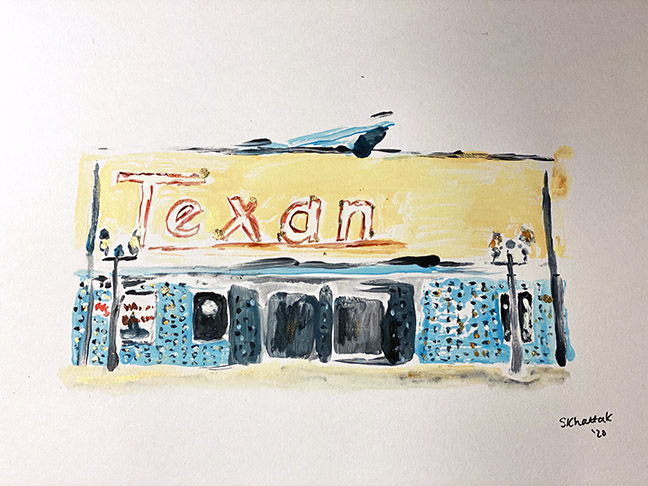
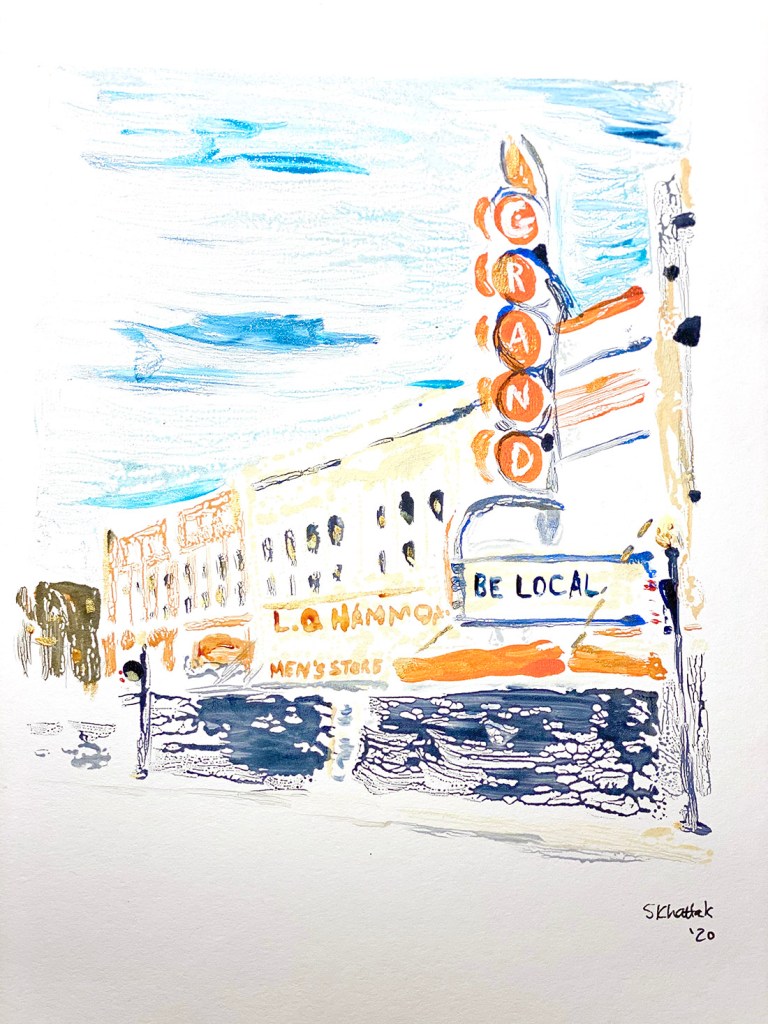
The Texan Theater, Athens Texas. Monotype Print by Stephanie Khattak.Grand Theater, Paris, Texas. Monotype Print by Stephanie Khattak.
I’ve been missing our more ambitious travels, but at the same time, I am enjoying the day trips that my husband and I have taken recently. Because of the pandemic and the fact that we have two rambunctious kittens at home, we are choosing day trips to scratch our traveling art adventure itches.
James enjoys photographing facades, historic downtowns and other iconic scenes of the places we visit. As I looked through the photos and admire the retro details and colors of these buildings, I wondered how they would look translated into a monotype print. I like it!
The Pine Curtain project is still my priority, but it is nice to have creative options, and to extend our travels a little further.
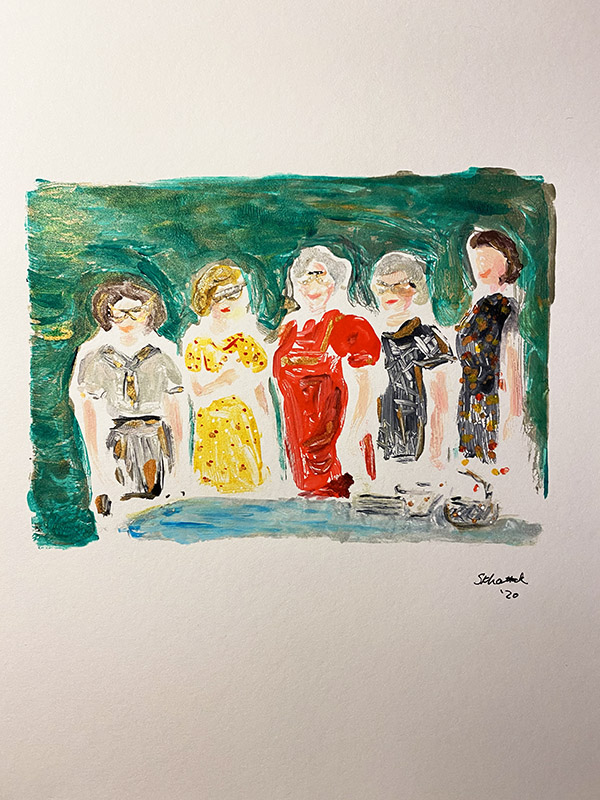
“Multitude of Matriarchs,” Monotype Print: Acrylic and Ink by Stephanie Khattak.
This print was taken from a 1960s baby shower at the Homer United Methodist Church. These were the hostesses, family friends who could always be counted on to spray their hair, polish up their cat-eye glasses and punch bowls, and run the show.
Many, many years after this, I hosted my first shower for my own expectant friend, in the same church fellowship hall where these ladies stand. I remember standing in the church breezeway, cutting gladiola stems, wondering if we had enough tablecloths and feeling a connection to the community of “aunties” who I had seen do the same things over the years. I’m proud to come from a community where it is second nature to show up and celebrate people.
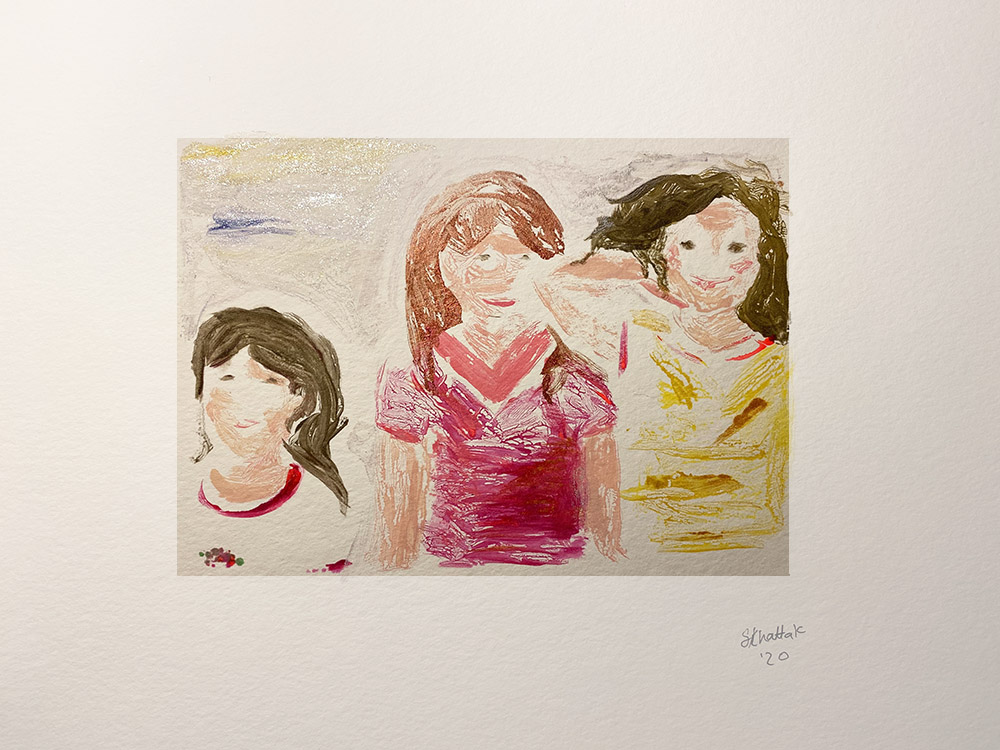
“Besties, 1980” by Stephanie Khattak. Embellished acrylic monotype.
In rural East Texas, your first best friends are your cousins and your neighbors. And often, your cousin IS your neighbor! In my case, my cousin spent lots of time visiting my grandmother, who lived just one stop sign and few houses away. So, almost a neighbor. I’m an only child, and people often ask “Weren’t you lonely growing up?” Because of my cousin and my neighbor, I really can’t relate to that question. How could I be lonely when one bestie lived at the far end of my driveway and the other was conveniently at all family functions? Plus, they’re older than me by a few years, so I don’t know what it’s like not to have friends like them. An upside to being related to and living next door to your best friends is that they’re stuck with you for life. Lucky them! And lucky, lucky me.
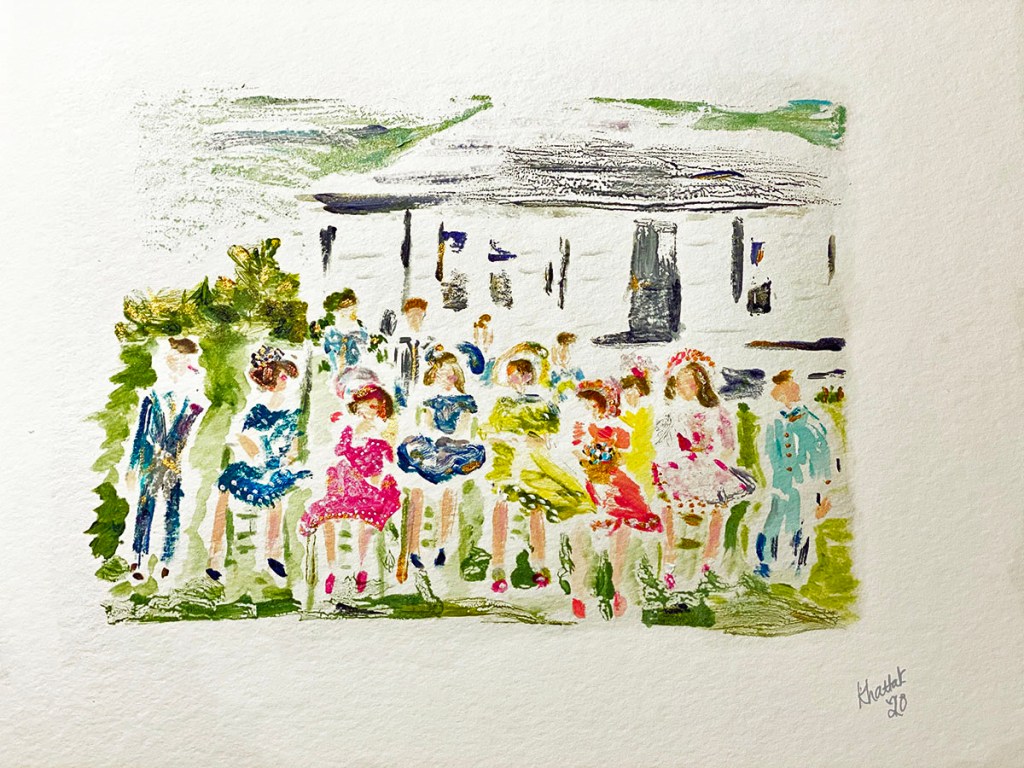
“Homer United Methodist Church, 1961.” Print and Acrylic Paint, Stephanie Khattak.
For generations of my family in East Texas, life centered around Homer United Methodist Church. It functioned (and still does) as part house of worship, part community hub. Sunday services were of equal importance to potluck suppers, holiday events, and youth group get-togethers as well as volleyball games, dances and other non-religious activities. Regardless of how religious you were or weren’t, whether you were a member or a prospective member, or just there to fellowship – ours was a church that just got everyone together for a good time. It was all part of God’s work.
Those good times bound our community through generations. This print is taken from a photo taken outside the first church building in 1961. In the source photo is my mom and a few of her best friends. She still sees many of them every few weeks at least, and not necessarily at church. Many of my friends and I have the same kind of relationships, which were also cultivated through the church but exist outside its walls. We genuinely liked, and still like each other.
The church sits where the Homer “town square” used to be. So, it has a legacy in East Texas history as a place of excitement and energy. The church seen here was replaced with a more modern building in the later 60s, which is still there. My family lived a few doors down from the church, within walking distance. Or, when I was learning to drive, within driving the riding lawnmower distance!


 stephaniekhattak.com