Art,Work and Cats on a Thursday

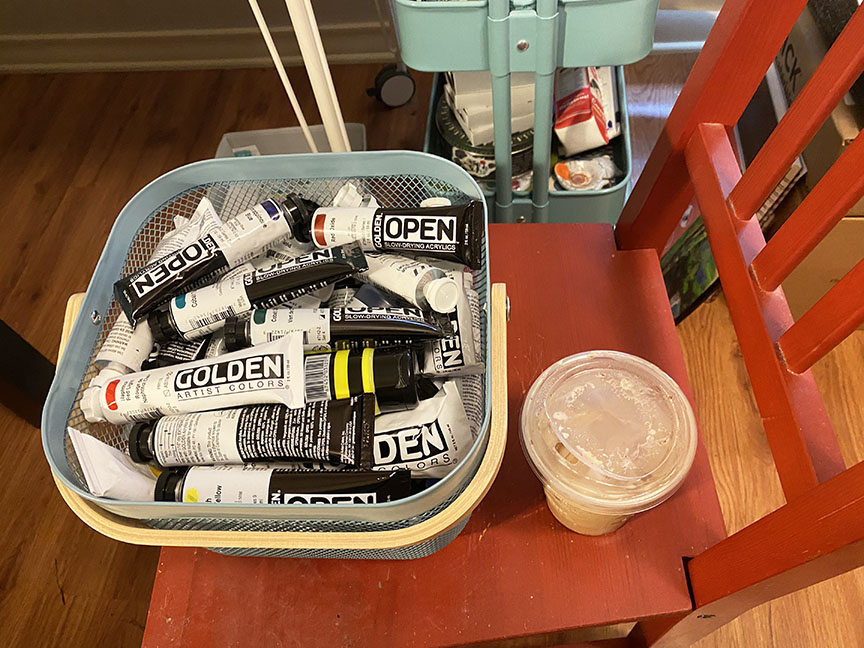
Desktop scene.

I’m always interested in how creative people structure their time, so I thought I’d share a little bit about how I work. Especially since what so many people see is just the finished product, and that is just the tip of the iceberg!

My artwork takes a long time to do. Not as long as, say, a photorealistic oil portrait, but it is very process heavy and needs a lot of protected time, as it is not work that I can start, stop and come back to. If the acrylic dries on the plate, it is unusable for my process, and if I try to rush through and end up with an off-center or flawed print, it’s back to the proverbial drawing board, or literal printing plate, to start over again.

So, printing the art itself is something I usually batch over one or two dedicated days of the week in my studio and in that time I can print roughly four pieces depending on the size and level of detail. (It also helps with cat control, as the kittens still aren’t allowed in there and I don’t like having to shut them out more than necessary. One, it makes me feel bad and two, they bang on the walls and rattle the door. I think the house panther is about three “aha” moments from unlatching the doorknob.)
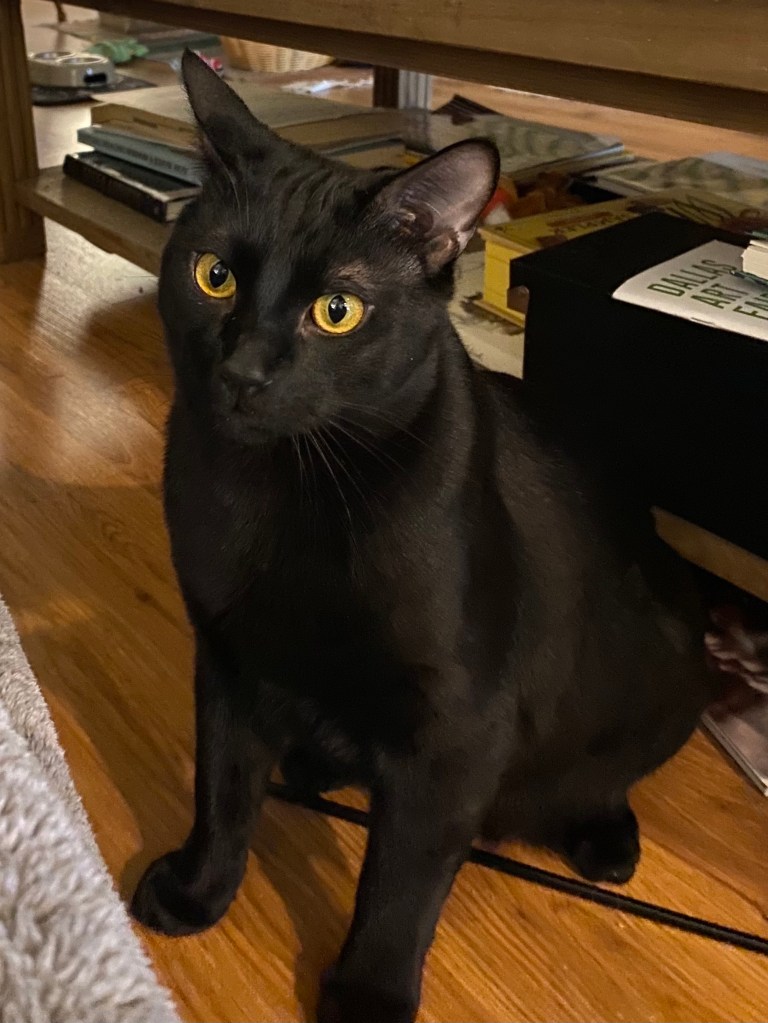
An intelligent stinker.

When I’m not actively printing or hand-embellishing completed prints – either for my own work or commissions from others, I do a LOT of research. I would say that a typical week is 50 percent creating the art, 40 percent research, and ten percent admin/marketing/operations which includes things like invoicing, cleaning my work space, looking for and responding to promotional opportunities, updating digital platforms and responding to commission requests (not all of these tasks need to be done each week, thankfully.)

My days are structured like any other workday, usually getting started around 9-10 am and finishing around 6 pm for family and TV time with the kittens.

Bonnie loves TV. Here she is learning about culinary travel to Costa Rica.

I sometimes work over the weekends, and I’m always reading on my off-hours, and some of that is research time as well. On weekends I try to recharge and work around the house or go see shows by other artists for inspiration. But during the pandemic I have been mostly at home.

Because my work centers on the Pine Curtain Project, I am always on the hunt for compelling vintage images with compelling stories, ideally that contribute not only to my own family history, stories and memories, but also to the larger cultural history of East Texas. As I wrote in a previous post, I’m focusing on a few main topics this year, which is not to say that other images and themes aren’t included as well. But, I am finding so much information just on these topics, that I am very busy researching, reading, cataloging and analyzing information.

Combining my art so closely with writing and research complicates things in some ways, but in most ways, I feel that it leads to a more rewarding experience for me as the artist, and hopefully for the viewer as well. As a person who likes a little more structure in the day, I feel that this project lends itself well to providing that structure while still leaving plenty of room for the flexibility needed for the creative process to do its thing.

East Texas Lumbermen

Painted acrylic gel plate. Stephanie Khattak.
Detail shot, work in progress. Southern Pines Lumberman Team, 1930s. Acrylic monoprint, Stephanie Khattak.
Desktop view, work in progress. Southern Pines Lumberman Team, 1930s. Acrylic monoprint, Stephanie Khattak.

This work in progress is of a logging team, part of the Southern Pines Lumber Co. in the 1930s. The image was pulled from the Diboll History Center, Durham family photo collection. My great-great uncle (my father’s great-uncle) worked on this team and is in this photo, something I didn’t learn until I started to research the image.

This was not a branch of the family tree that I was close to, so learning more about them, and their place in history, has been interesting and a nice surprise.

An image this large and detailed required not only my 16X20 plate (aka Big Betsy), but also a bit of my 8X10 plate to extend the edges. This is the largest and most difficult piece I have attempted in terms of balancing aesthetics, details and expediency so that I can pull the print before the paint dries. It is pretty abstract (keeping with my artistic style) but I wanted to make sure that the horses mostly looked like horses and that the large trees came through.

One reason the source image is so striking is the size of the cut trees against the horses and workmen. When I post the final, I will link to it so you can see for yourself. It’s pretty cool, and there are many other photos in the collection that I want to work from.

Art on a Rainy Tuesday

Today is the first day of fall, and here in Texas it is finally cooler and a bit rainy. “Hygge Weather,” I call it, and for this year at least, at my house late September to late February is “Hygge Season.” No one knows what Halloween and the holidays will look like, but we can be pretty sure that being cozy at home is still the best way to go, at least for those of us city-dwellers. So, I decided to try and take a bit of control over these things we can’t control, and embrace the positive.


Yesterday, in my Instagram archive, an interesting post popped up from seven years ago. I was in East Texas at The History Center in Diboll, TX, researching for the novel I was working on at the time. (And technically still am, as I put it away with about a third of it left to finish.) My research was centered on the more salacious bits of East Texas history, not something I’d really make into a print. At the same time, that research is still very valid, as I still go back to the materials I copied to check my facts around locations, names and milestones as I create art around and write Pine Curtain Stories. I put my novel away when my professional career started to ramp up, and I didn’t have any time to devote to it. I had often regretted not finishing that story. Now, with the benefit of hindsight, I have many fewer regrets because I see that time wasn’t wasted. The work I put in then is helping me now, and who knows, maybe I’ll eventually drag my book back out and finish it, too. So, if you’re struggling or feel like you’ve wasted creative time on a project that fizzled out, don’t worry so much. Put it aside and revisit it from time to time, and life may surprise you.


As I keep returning to Homer as a creative focus, the concept of Ghost Towns rattles around in my head. Ghosts of the past, ghosts of what might have been. Literal ghosts? Some say yes. And yet, to me, it never really felt sad or like it has dwelled in missed opportunities. Homer’s population is small, for sure. It has hovered between 350 and 500 for most of my life. But it has always been so busy and vibrant. At the same time, it was definitely insular, “the bubble” as I call it, and I did have a hard time acclimating as my life got bigger. So, in a way, those woods and fields are also full of ghosts I loved and then left behind.


So, how does this circle back to art? As I have mentioned before, for me, art helps me make sense of things that are hard to process and harder to articulate. When I am making a print or painting, especially for this project, it opens up new parts of my mind to communicate with, and to communicate without overthinking. At the same time, art begets art, and when I am working on a piece, thinking about the story behind it, my mind is more open to ideas about future pieces, or stories, or research I want to go back to.


Do not now seek the answers, which cannot be given you because you would not be able to live them. And the point is, to live everything. Live the questions now. Perhaps you will then gradually, without noticing it, live along some distant day into the answer.”

Rainer Maria Rilke

Art on a Monday

Abstract floral monotype by Stephanie Khattak.

“Art enables us to find ourselves and lose ourselves at the same time.”
― Thomas Merton , No Man Is an Island

It’s Monday in “Studio No-Name,” and I’m still thinking on what to call my creative space. It won’t be Studio No-Name!

The process of naming my studio makes me think of the saying, “you must name it to claim it.” I have struggled with “claiming” my identity as an artist over the years, for all the reasons that many people do. I’m not conventionally educated. It’s not my primary income. I’m just not “there yet.” It doesn’t feel like “work”. But art is art and artists are artists. I think it’s important to take steps to legitimize the work that we do, whether our pieces are hung in galleries, displayed proudly at Mom’s house or decorating our own spaces. I’m trying to be better at claiming my practice, and so should you! (Even if we’ve never met, if you’re an artist, I suspect that you can relate to this.)

With that in mind, earlier today, I renewed my Texas Visual Arts Association membership and made a spreadsheet for places to submit work to in the next few months. This isn’t something I have done before, and I’m excited to try! It’s not an easy season of life to be an artist, especially an emerging artist, but opportunities are still there.


I have started a series of work that will be ready for sale in October. I closed my store at the beginning of the year, but I miss having it as a goal to work toward. The sales are nice, of course, but so is the self-directed goal of making enough work to post.

Because my Pine Curtain project is so specific, those pieces won’t be for sale, at least not right away. So, that frees my mind to switch to different subject matter and processes for a while. The above abstract floral is one of a few smaller works on paper that will be available, and I am also working, for the first time, on some larger pieces!

Art Studio Joy

Desktop view

“We don’t make mistakes, just happy little accidents.”
Bob Ross

There is so much room for JOY in art, something that I too often mentally push to the side, overpowered by the daily details and challenges of being an artist and owning an art-centered business. But, when I step inside my studio, see something amazing at a museum or gallery, or discover a new artist whose work speaks to me, even if I’m low on motivation or inspiration, joy appears.

Recently I discovered a local artist’s blog. They write about their studio time, commissions they are working on, sketchbooks and inspiration. No monetization links or newsletter subscription pop-ups, no “thought leadership…” just a working artist who likes to make art, write about art and share their art. How much more simple could it be? But how compelling it is! As soon as I see that the artist has posted a link to their blog on Twitter, I click to read it. This person is not an art influencer in any sense of the word (and that’s a compliment) but I so love to live vicariously through them. And they have inspired me toward a different perspective.


Writing and art. Thoughts. Ideas. That’s what it is, for me and for you and for everyone who creates online, really. These are your creative treasures, don’t reduce them to “content.” And it’s important to remember that just because you create something doesn’t mean you have to to attach a performance metric to it.

But like many other creatives making their way in this digital world, I find that those are hard habits to break. For me personally, it’s hard to pursue an interest or new project without immediately thinking “can I monetize that?” “Can I build consulting services around it?” Which is great for the business side of my life, but not so much the creative.

At the end of last year, I thought that 2020 would be a “sabbatical year,” and well, you know, LOL to that. I picked a word for the year in March and then just didn’t do anything else. And, it’s fine, mostly. But there are still a few months left in 2020, the world still spins (for now!) and I can still add something positive to my life.


My husband continues to work from home and the kittens still live with us, so I’ve been doing a lot of hopping from room to room with my laptop, phone and reading glasses throughout the workday. One goal I have in the spirit of art bringing joy, is to spend more time in my studio not only as a place to make art, but also just as a place to be; to work and write and enjoy life. It’s small and messy, but it has big windows and a comfy couch, and I should be in here more often, if only because being here makes me happy.

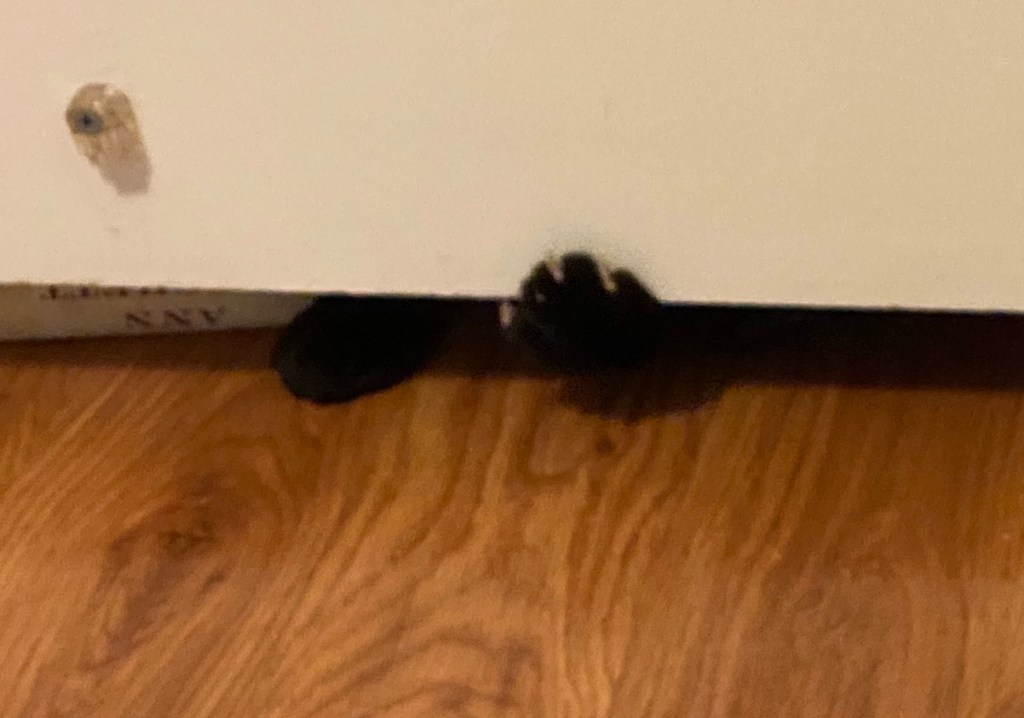
The kittens are too little to be invited in, but my little house panther wants it so badly! He bangs on the door and one by one, pulls down the stack of books I’ve placed in front of it to avoid seeing his paws and face in the crack and feeling guilty. It is like being in the panic room of a horror movie when the goblin is bashing its way in. I do see his paws and I do feel guilty! But too bad, Beans! I’m claiming my space and tuning you out, or putting you in the cat room for a few hours. Your sister, too, because you both cry when we separate you. Sometimes it’s okay to redirect distractions, not to be more productive, but just to be happier.

Panther Paw

I just love art, and it started to feel silly and disconnected for me to approach my personal art, experiences and thoughts as only things to build a business around or market my work through. How about building a joyful, creative life, which is really what we artists and art lovers long to do? Regardless of the subject matter (not all art is joyful, of course) we love our happy little art accidents, the game-changing breakthroughs and successes, the inspirational discoveries we happen upon and the communities that we work in. Why undermine those joys just because we also want to support ourselves?


Going back to my new favorite art blog; the artist recently named their studio, and I’m inspired to do the same. It’s a fun thought exercise, and really helps add to the sense of place. I haven’t decided on a name yet. In my very early days, I was MollyPop Studios (RIP). I’m not sure that fits anymore.

For the next little while, as I create and read and think, I think it will be fun to consider, not necessarily in regards to a business name attached to the art itself, but as the physical place where I work from. A word or phrase that resonates with me as an artist. A place that feels like home.

Print Portraits

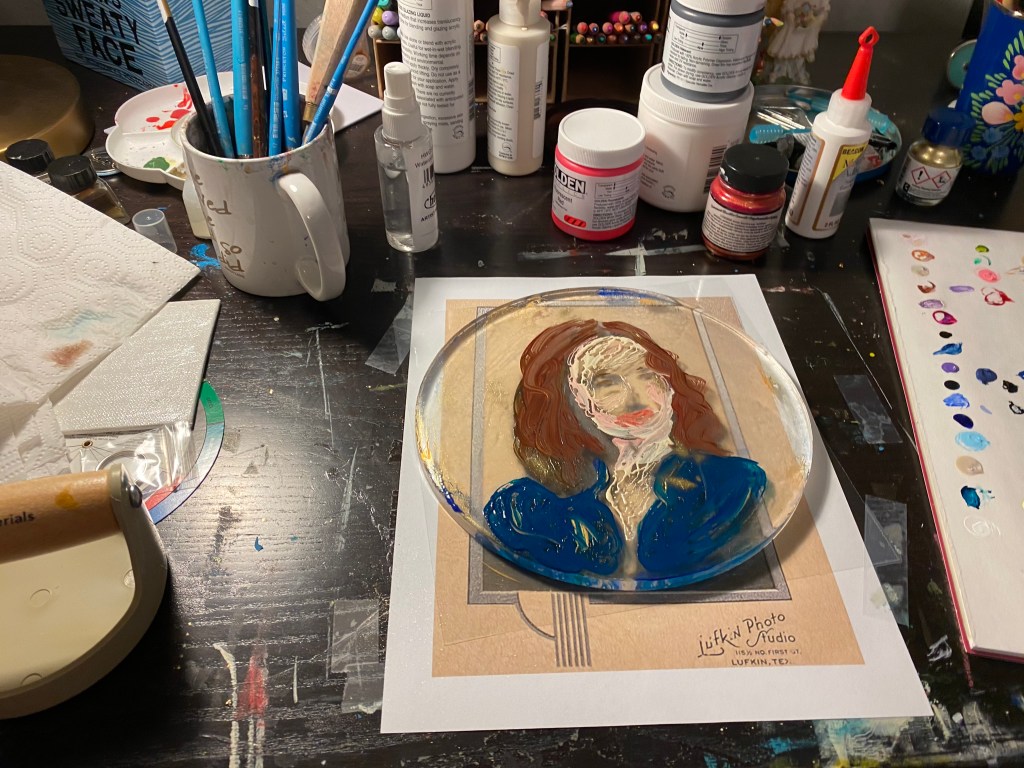
Acrylic monotype print in progress by Stephanie Khattak

My mom came for a short visit a few weekends ago, and brought another stack of family photos. It included these 1940s-era portraits of my grandmother and great-aunt, both of whom I was very close to.

Creatively, I thought that the portrait style would work well printed from my round Gelli plate. Personally, I enjoyed making these because it gave me the opportunity to remember my MiMi and Auntie, and think about what their lives may have been like when they posed for these photos and all the hopes and dreams they had for themselves at that time. My Auntie outlived my MiMi by 32 years, but I think they both had really good lives that they enjoyed and were proud of. That’s comforting to know as I am painting and printing their portraits and thinking of them, and still missing them, too.

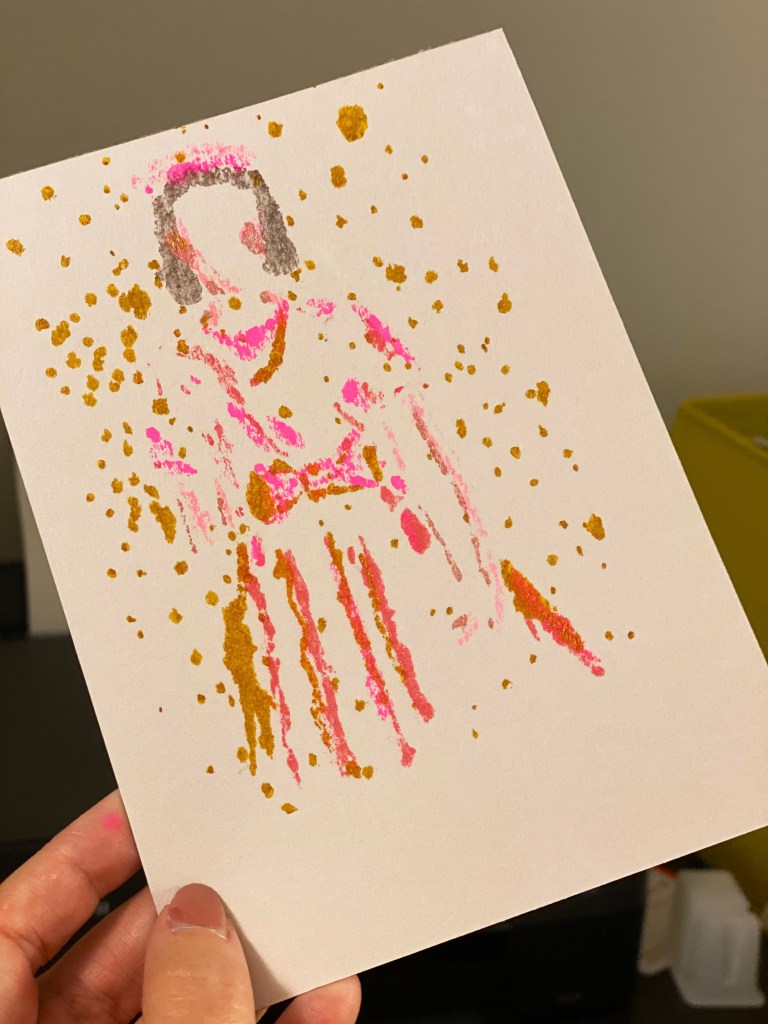
Posca Marker Print

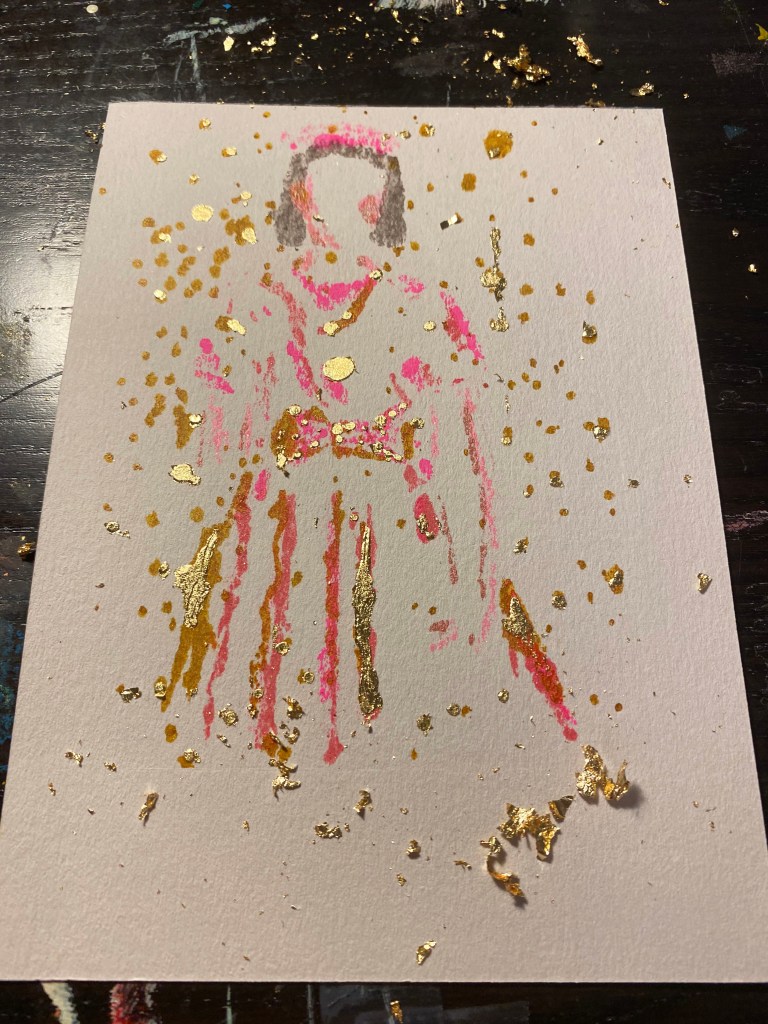
As I continue to experiment with print processes, I have enjoyed trying out new items to use for plates and printing material. This print was made using Uni Posca markers on Grafix Dura-lar. Using the same process as my plexiglass prints, I placed a source image under the Dura-lar, then drew over it with the Posca markers. I think it worked well, came out a little lighter than the other method but it is fun to be able to mix up the look of the art. I did have to work faster, as the markers dry a bit faster than acrylic or printing ink. This method is great for quicker projects when you want to do something creative or try an idea without making a mess, having to take out a lot of supplies, or using a full sheet of plexiglass. The Dura-lar is also easy to cut to size, making it an affordable option for smaller prints.

I focused on the figure in this print, as I felt the marker would be too light to make a background look good. Instead, I used a dot pattern for some extra visual interest.

Of course, I embellished it with gold leaf at the end.

Monoprint using Grafix Dura-lar and Posca Markers by Stephanie Khattak.

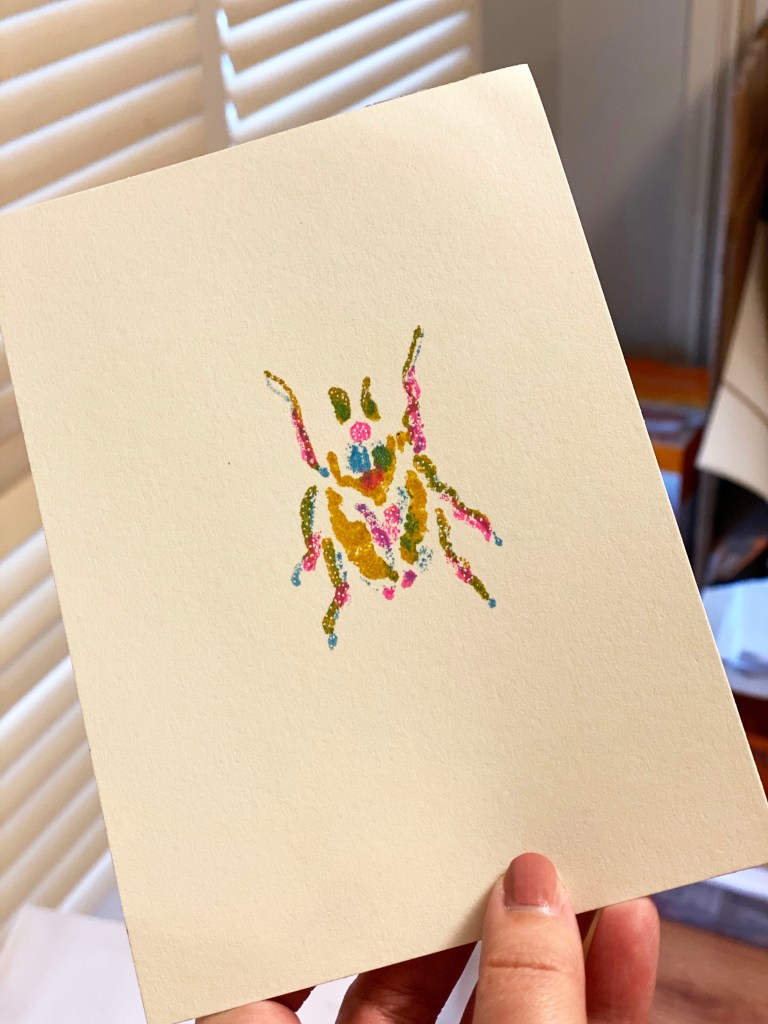
Some works in progress

More printmaking experiments! These are Posca marker on Dura-lar. It’s a different look than the paint on plexiglass, but same process. This was a nice alternative for a quick visit to my studio when I didn’t have the time or focus to get out my paints/inks or work from a large plate. I still have some extras to add, but in general, I like the direction they’re headed.

Printed Family Portraits

As I get older and time passes, I am always exploring ways to use art to communicate and share my East Texas roots and young adulthood. I write about some of this in my occasional Pine Curtain Stories project, but have also been thinking of ways to make art around the theme that is a little less illustrative. But I am not a portraitist or skilled in realistic painting , and I want to keep some of the figurative/narrative theme.

Since I have so enjoyed my recent plexiglass printmaking, I decided to expand that work to make abstract prints of family photographs. The first one is of my grandfather and uncle, sometime in the 1960s. It’s a work in progress, as I still need to do some embellishing.

I love making these, and using family and community images gives the work a deeper purpose. I also like this type of printmaking, because the final result is nothing like the original guide piece. It comes out more blurry in some ways, brighter in others. Fitting for such memories.

Plexiglass plate over a copied photo. I add the color one layer/spot at a time and quickly pull two prints, touching up the paint a little in between.
Background prints.
Print process complete. Next step will be to add some finishing touches with pastel and ink.