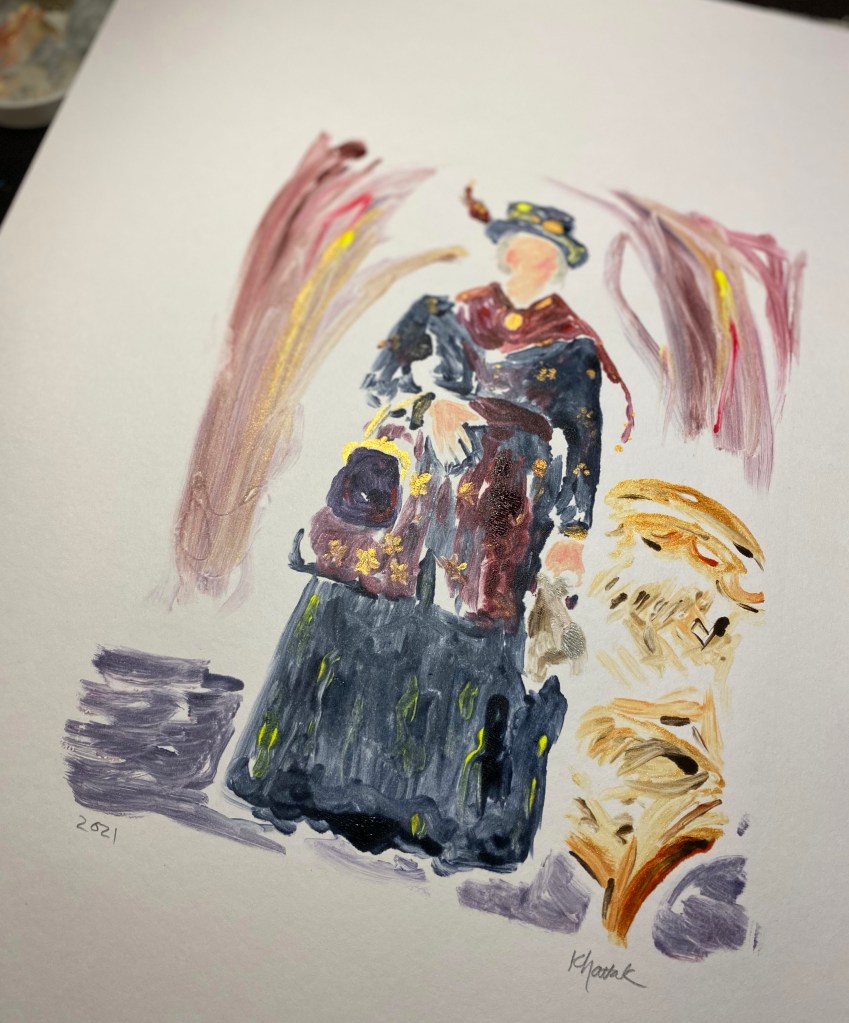
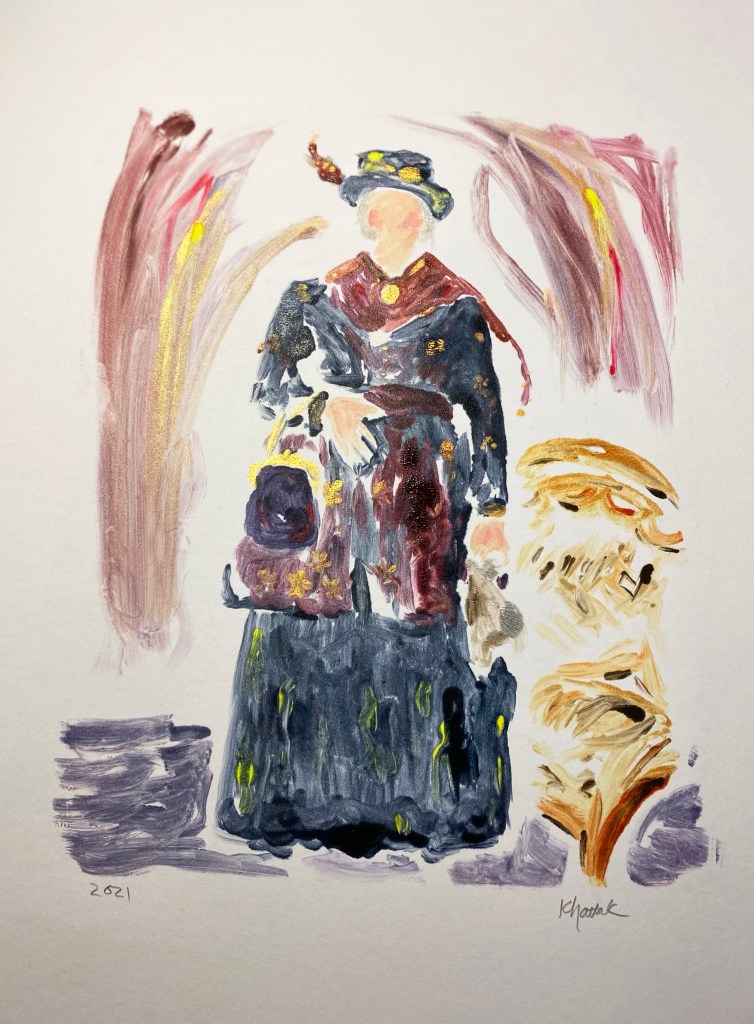
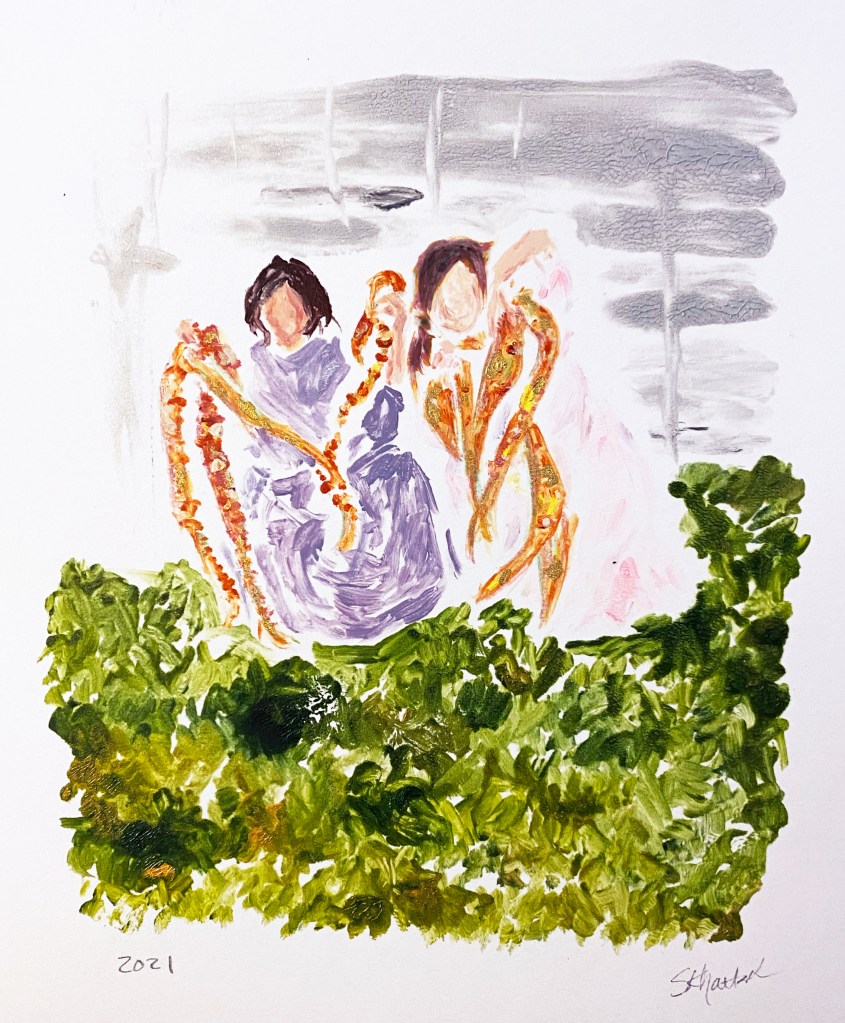
“The Namesake,” Acrylic Monotype by Stephanie Khattak. 12 X 18 on paper.
This monotype print is taken from a vintage East Texas photo of my maternal great-grandmother’s grandmother, Ann. There have been Ann’s in the family ever since, including me. My father’s sister is also an Ann, so the name does double-duty for both sides of the family.
Elizabeth “Ann” was born in 1858 and died in 1948, so of course there aren’t many people left in my family who have direct memories of her. But she’s the originator of the “Panther Tales” that have been told to my great-grandmother, grandmother, mother and me, and everyone remembers those. When she was young and living on Renfro Prairie in East Texas, it seemed like there was a panther behind every tree, waiting to slash someone. She’s kept generations scared straight for a hundred years – none of us ever went far into the woods, and as we still occasionally hear panthers scream in the night there, we are right to stay away!
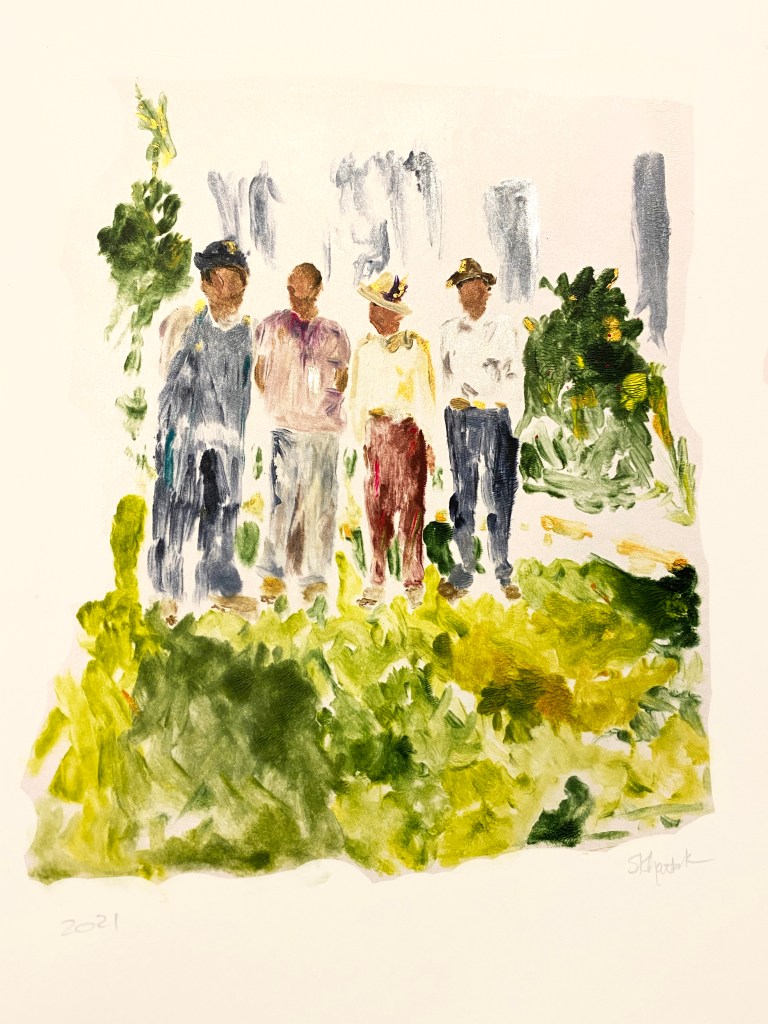
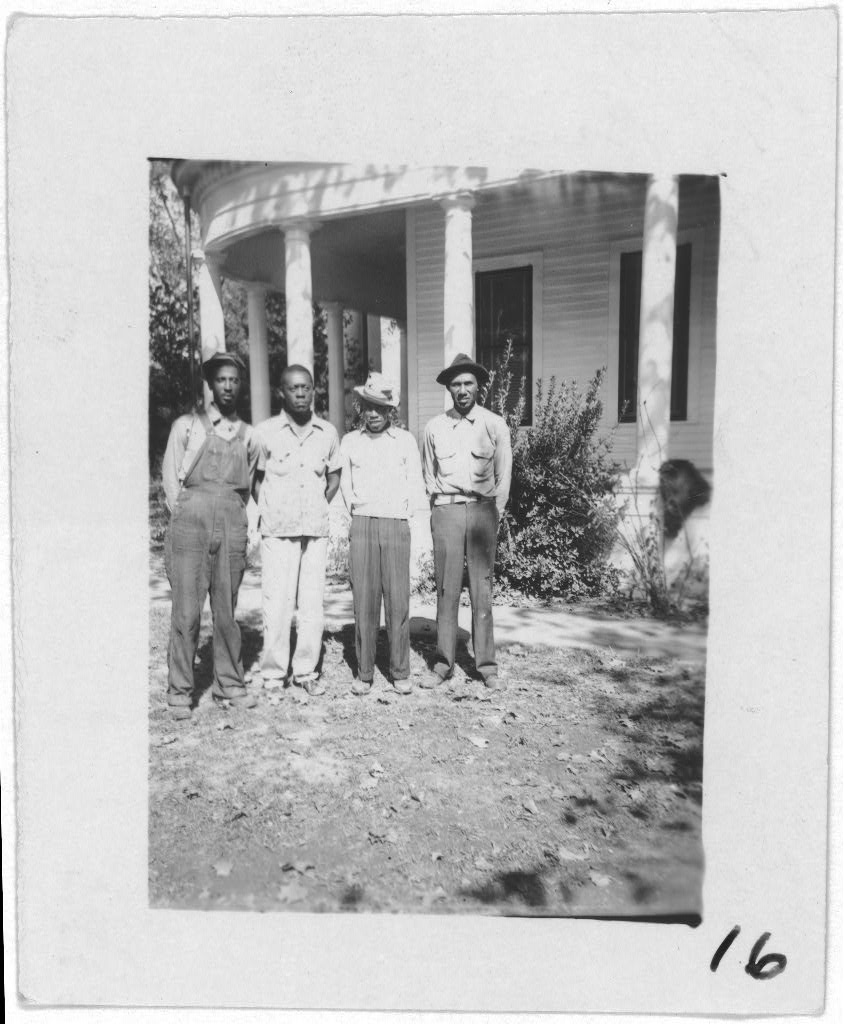
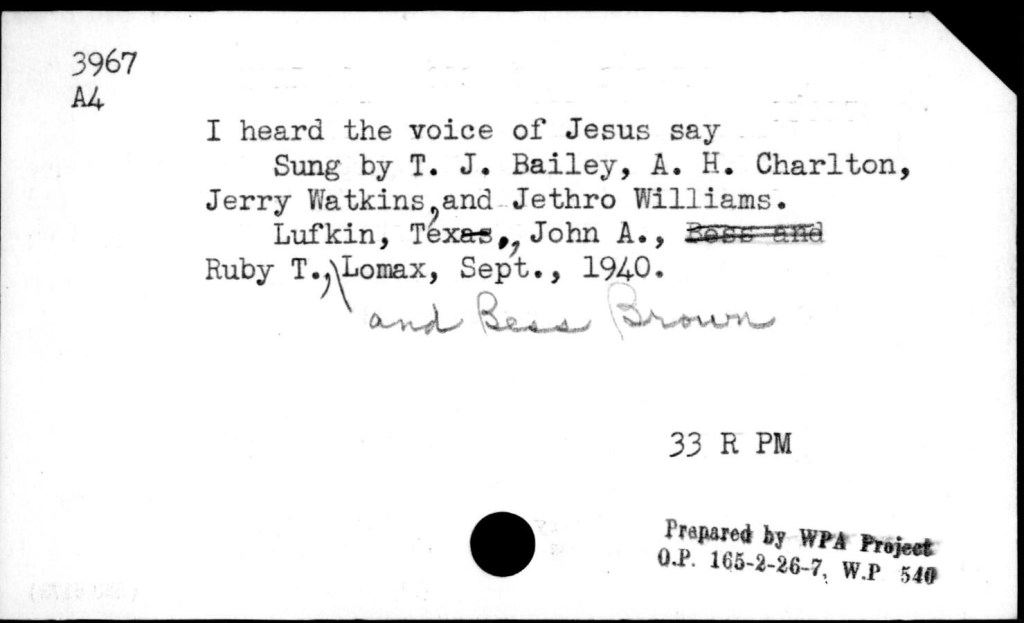
The Angelina Four at Kelty’s Lumber Co., Lufkin, Texas, 1940 Ruby Lomax, Library of Congress. Alphonso “A.H.” Charlton; Tom “T.J.” Bailey; Jerry Watkins, and Jethro “Jabbo” Williams.
I’ve mentioned these guys before when writing about the work of John Avery and Ruby Lomax, but thought that they needed their own spotlight.
The Angelina Four was a quartet of men who were employed by the Angelina County Lumber Company in Keltys, a community outside of Lufkin. The East Texas musicians recorded 15 pieces, a “singing commercial” – Angelina Longleaf Pine, – and 14 songs that included popular, gospel and spiritual music with rich harmonies.
Notes from Lufkin Recordings. American Folklife Center, Library of Congress.
Please explore these links forcitationsand further reading:
Lomax, J. A., Lomax, R. T., Bailey, T. J., Charlton, A. H., Watkins, J. & Williams, J. (1940) Angelina Longleaf Pine. Lufkin, Texas.
*Some of these sources document outdated and now-unacceptable language, policies and ideas around race. Like the authors of these academic works, I do not condone or wish to ignore potential negative impact by reporting or linking to them. In writing about history, I often must weigh the benefit of sharing the “entire picture” against the potential harm in doing so. In this case, I felt that it was important to tell the whole story of the Angelina Four, understanding that the entirety of their lived experiences likely contributed to their creative work and place in history.
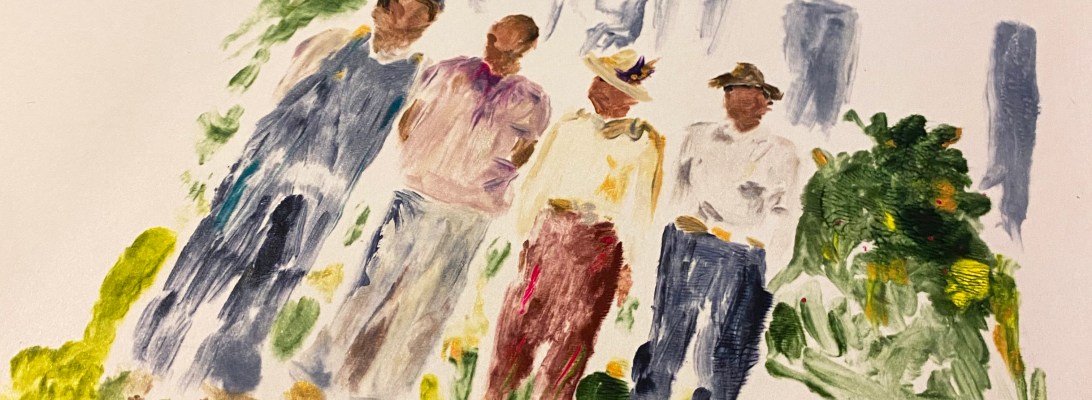
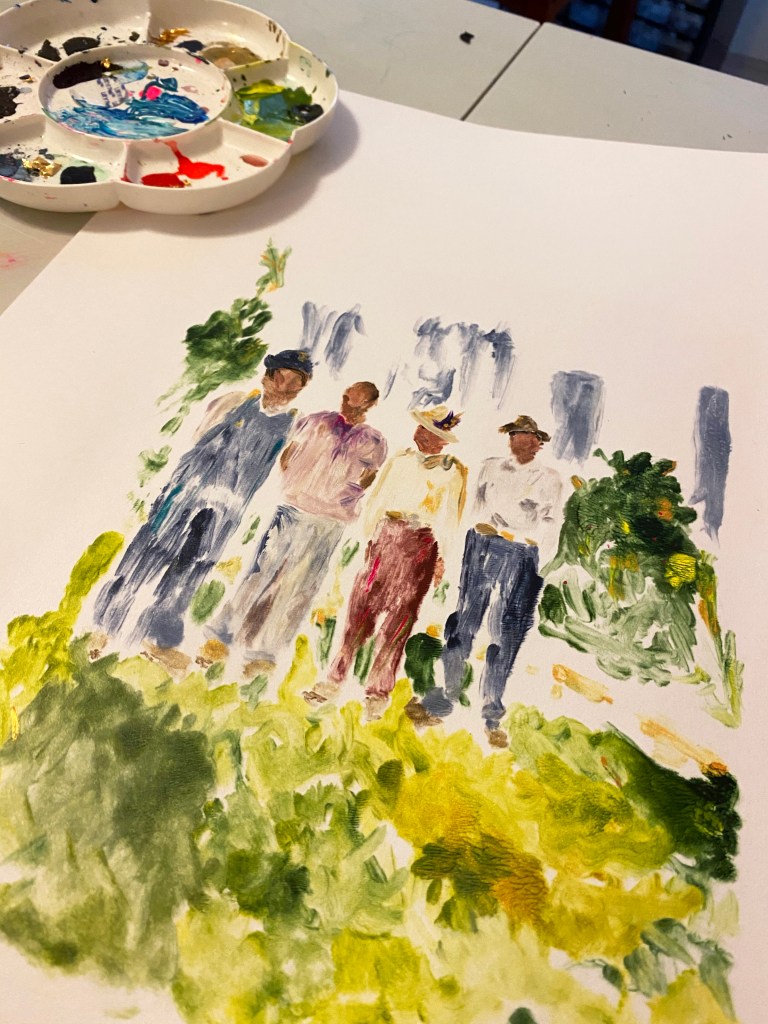
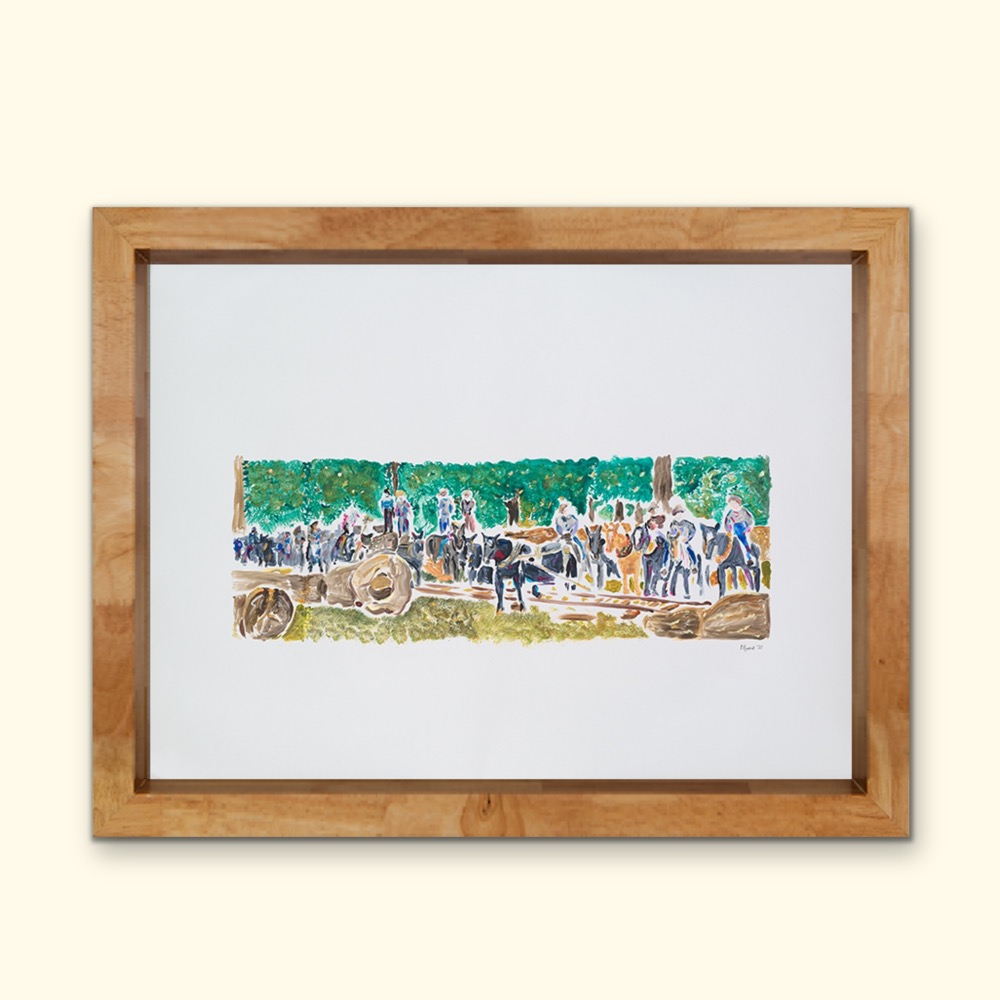
“Logging Crew,” by Stephanie Khattak. Acrylic Monotype, 8X10 on paper.
A few months ago, the Texas Forestry Museum in Lufkin contacted me about providing a limited-edition of hand-embellished reproductions from my “Logging Crew” print for its gift shop! This is really exciting, because not only is the Forestry Museum a really solid East Texas history and cultural center, it’s also in my hometown and I have many happy memories of visiting it over the years.
If you are local in East Texas, I encourage you to go in and visit the museum’s newly updated space! If you’re not local, or not quite up to in-person visits, drop them a line for more information.
This wonderful collaboration kicks off my wholesale art program. If there’s a local museum gift shop, CVB or specialty retailer with a strong local focus where you would love to purchase my work, please tell them about me! I don’t sell reproductions of my work directly, so this program is a really great way for customers to purchase the pieces they like and support independent, local businesses at the same time.
This art is professionally reproduced on BFK Rives fine art quality paper, and each one is hand-embellished, making it a piece of truly unique East Texas art for sale. They’re sold unframed, so that you can display them to perfectly fit your taste and decor.
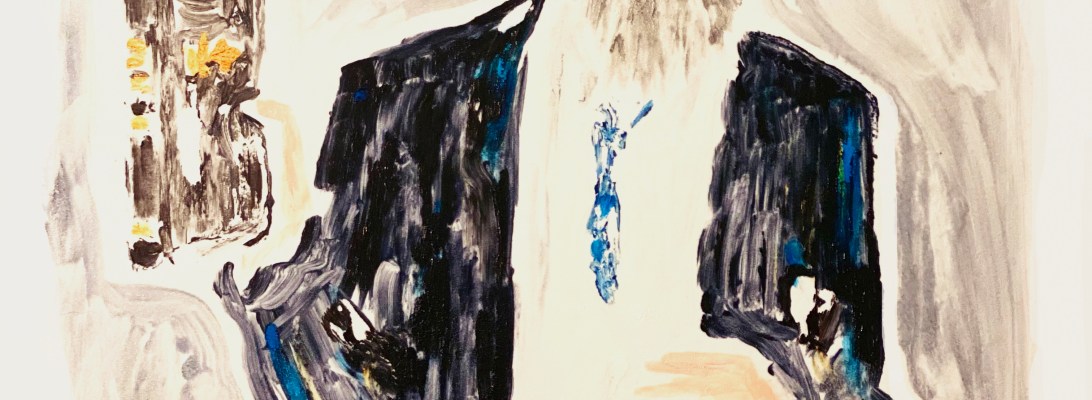
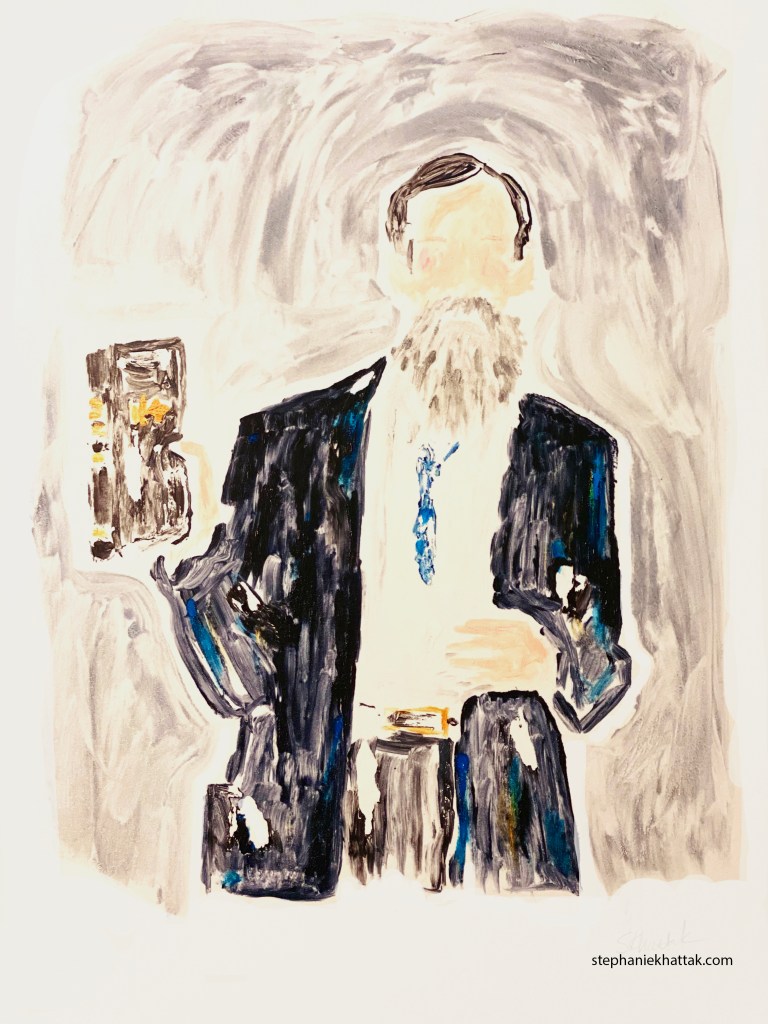
“The Reverend.” 12 X 18 on paper. Acrylic monotype by Stephanie Khattak.
This monotype print is taken from a photo of my grandfather’s grandfather, the patriarch and a preacher in Deep East Texas. He had 24 children with two (consecutive) wives, and when he passed in 1940, he had a three-day funeral. I asked my father about this man’s story, because he was the first that I know of to preach “independently” in my family. I was told that after many years of preaching in one of the main denominations, Rev. Durham became dissatisfied with it. According to my dad, he then “sat under a tree and fasted for three days.” When his fast was complete, he had decided to break from that denomination and form his own East Texas church, which remains today in one of the area’s outlying communities. One-hundred years later, it is still maintained as a church and community center by his descendants, many of whom who are still active in the area as preachers and musicians.
This is the earliest preacher I can identify in this family line, and the religion he preached is hard to categorize. A bit evangelical – one of his sons claimed to walk on water and did, until local pranksters dismantled the underwater ramp he used in his demonstrations. At the same time, this side of the family has a very accepting philosophy of life and a “live and let live” attitude towards others. Music is central to the ministry, and I understand that sermons could go on and on and on…
While he was building his legacy as preacher, his brothers and nephews were busy feuding and fighting all over East Texas. I have found three feuds so far, two of them deadly, and I am sure there are more. I have a lot of thoughts about that, but it’s another post for another day.
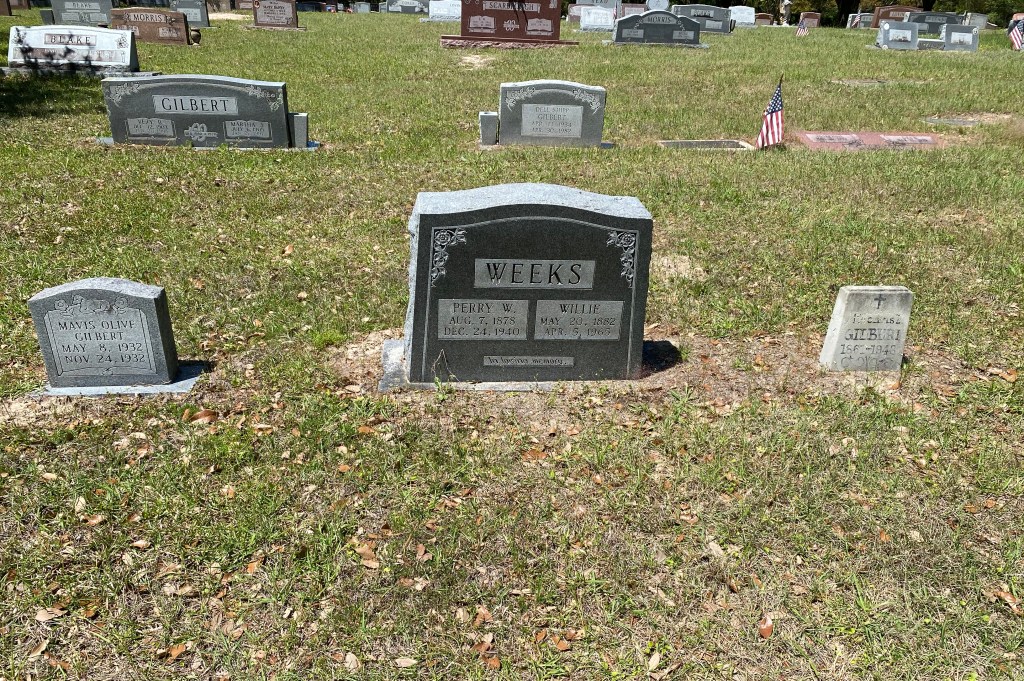
Bluebonnet Field in the Huntington Cemetery, Huntington, Texas.
While most of my immediate family have been laid to rest in one cemetery, my home community has many, many others, which hold not only my long-ago ancestors but also those of my friends and neighbors. Growing up, cemeteries were a part of life and close to home. A place to go and feel closer to past loved ones, to tend to their grave sites and spend a peaceful moment. There was nothing scary about cemeteries, and aside from the occasional spook-tacular fall hayride, they weren’t particularly amusing, either. They were just there. They were places of reverence, peace and community touchstones. I’m not even one for zombies or skeleton imagery. Even at Halloween, I prefer to decorate with things like black cats or silly monsters. There are a few reasons for this, but it’s mostly from being a realist. Because no one knows what our souls are capable of, but our bodies are where they are going to be. Once they’re interred, they’ll never sit on a bench, chase a teenager or hug a pumpkin again. (Sad, but true!)
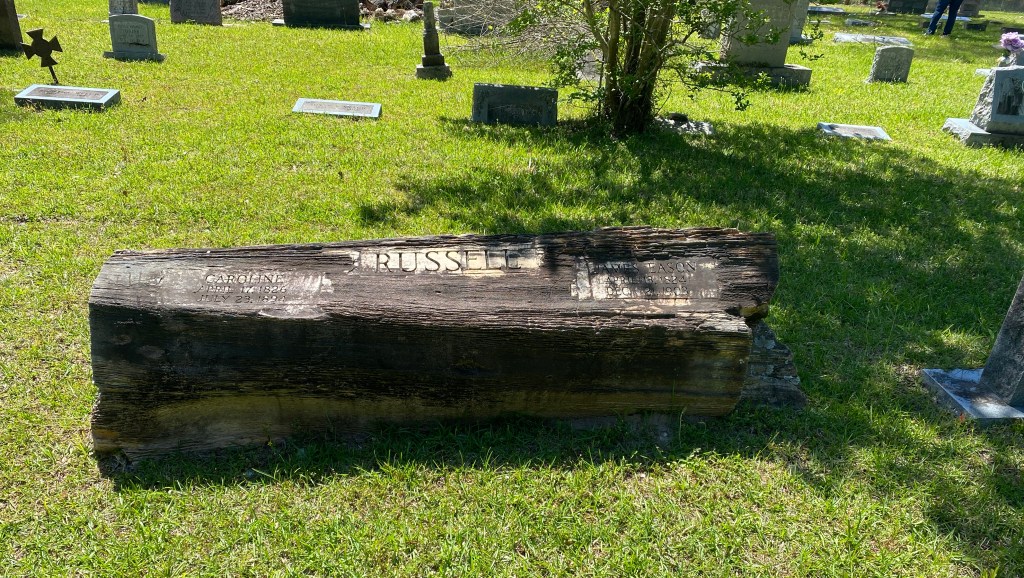
Texas has many historic cemeteries, defined as “any cemetery 50 years or older that landmarks the presence of a family or community.” In my family story, I can think of at least eight, and I am sure there are more. The largest and most modern one is still in use, but we still visit and maintain the ones in the outlying areas, too. In many cases, the cemeteries are all that’s left of those communities. Some are named after the places they commemorate (such as Homer, Huntington, Rocky Hill) and some are named for families (Renfro, Durham.) The Texas Historical Commission is a great resource for learning more about and preserving these places in the state, and Saving Places from the National Trust for Historic Preservation has valuable information, too.
And there’s nothing morbid about researching, studying, or visiting them. These cemeteries and their place in my community have been very helpful in my creative genealogy projects and interest in Texas history.
Before I committed to an ancestry.com membership, I did a lot of research through Find a Grave, an online ancestry records search tool that is free and quite useful for genealogists, historians and family history search. Not only does it deliver results for names and locations of current and historic graves, it also publishes obituaries, along with names that the original record might be linked to. Here’s my grandmother’s record as an example. Lots of info, although she’d be incensed that a photo linked to her good name had an overturned plant in it. Who knows when this photo was taken or who the photographer is, but I feel like I should drive home immediately and check to make sure that plant has been fixed.
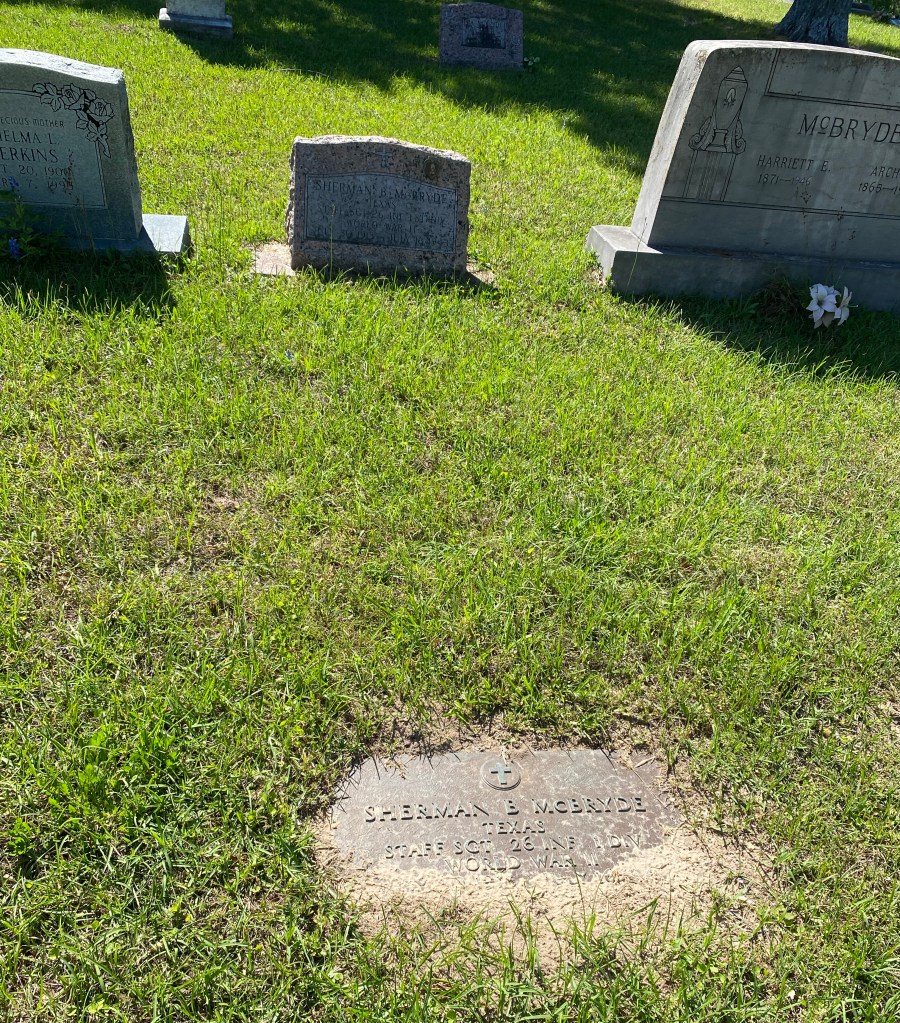
But, as with everything else, the best sources of information have been my family. As I mentioned before, I have been so fortunate to have had long-lived relatives, and few older folks who are living still. On my last trip home, I went to three East Texas cemeteries, two with my grandfather who happily pointed out his (and I suppose, my own) family members: grandparents; great-grandparents, aunts and uncles, and his infant brother who I had not known about before now. I visited the resting place of my great-uncle Sherman McBryde, saw his honor plaque, and learned that while he never married, he did have a sweetheart in Boston. That he was a kind and gentle person who my grandfather really loved. Some of these things I could learn by researching or reading, but for the best parts, as they say, you just have to be there. Or as close to being there as you can when you’re getting know family who lived generations before.
This “cemetery tour” covered my maternal grandfather’s side of the family. My dad has been making phone calls and setting up meetings for me and other family historians, and next time I’ll visit two cemeteries that hold his paternal ancestors. Later in the fall, when it is not boiling hot (just regular Texas hot), I’ll continue on to Renfro Prairie, Rocky Hill, and Mount Hope, if I can find it. Perhaps I’ll be able to circle back to the tiny and old McBryde Cemetery, but that will be more difficult because it’s on private property now.
And there’s another, not insignificant reason for my Texas cemetery tour. As I have spent the better part of last year looking through, learning about, and making art from these people’s lives, photos and personal documents, I realize that I owe them a great debt.
In the literal sense, I owe them my life, because who are we of, if not of our family? All the nice people and mean people, hard-workers and hucksters. The multitudes that they contain. Those who we find commonalities in interests, temperaments and hobbies and those who make us say “I would never!” Ancestors who gave us our pretty eyes or our hard-to-comb hair. Family who only our oldest relatives can remember and even those who are now names in stories, or even a database.
Jonesville Cemetery, Huntington, Texas.
More personally, I owe them thanks for the gifts that the Pine Curtain Project has given to me. Through it, even those who are long gone are still helping their granddaughter, great-granddaughter, great-great-granddaughter, so on and so forth. They still have so much to share. It’s like a complicated group project with some really remote contributors who you can never align time zones with. But it works.
So, when I walk through a historic East Texas cemetery, I say “Thank You” to Beatrice, who loved me before I could really know her. To Charlie aka Grandy who lived long enough for his youngest great-grandaughters to fistfight at his feet and imperil his oxygen tank. To Paul aka Paw who I am more like than I realized in his lifetime. To Pete and Ernestine, for who, though they recently left after long and beloved lives, there are still not enough Thank Yous. I say “they never forgot you” to the infant who lived for a day in 1927; and “Well, you’ve certainly caused a stir” to the alleged backwoods Lothario from the 1800s. “I think I understand” to my great-great-uncle in the late 1930s whose story I am eager to tell when the time is right.
I say “none of you people ever threw anything away, and I have come from your future to vindicate you for that.”
Fielder’s Cemetery, Homer, Texas.
How do you connect with a loved one? Go where they are, wherever they are. Above ground or below it. Maybe their only known place is in your heart. That’s okay, too. But go there and say “Thanks.” Say “I love you.” Say “I’m here.”
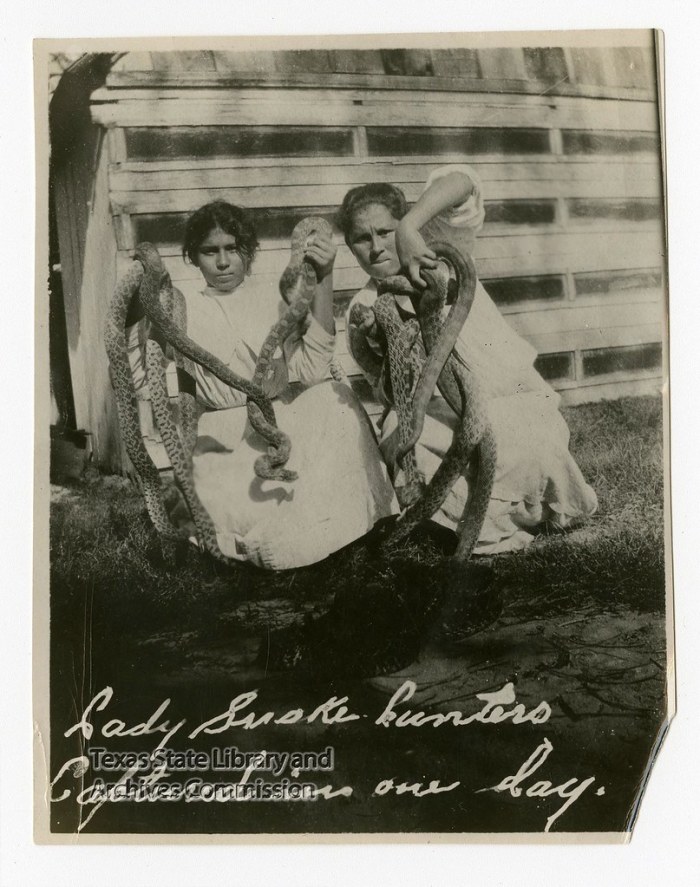
This photo is so visually arresting! And, the more I researched and learned about it, the more compelling its story was. The image was found in the William Deming Hornaday collection on the Texas State Library and Archives Flickr page (a great resource that I use a lot!). This photo stood out to me, and I immediately knew that I wanted to learn more and create my own work inspired by it. But, without much to go on from the Flickr caption, where to start? This is where the process gets fun for me.
As I learned more about William Deming Hornaday, I discovered that he was a photojournalist and eventually the public relations director for UT Austin, and that most of his Texas work was in Central and South Texas. Moving beyond the TSLAC Flickr Page, I went into the Texas Digital Archive and started searching through his work, focusing in on geographic areas and using the “Search Within” function until I found a set that had a lot of snakes in it. I enlarged those files until I found this image, and the one below, which identifies the ladies as Mrs. W.A. King and her sister.
“Mrs. W.A. King and Sister. Expert snake hunters.,” William Deming Hornaday. Texas Digital Archive.
Here’s where it gets REALLY interesting! I took to Google with a simple keyword search, and pulled up this family’s story. These Lady Snake Hunters were part of a huge snake business in Brownsville, Texas, providing the reptiles for circuses and other traveling animal acts.
According to his biographer and other documents, William Abraham Leiberman was a Russian/Polish Jewish-American businessman in New York who saw unusual business opportunities along the Rio Grande and moved to the then rural border town of Brownsville, Texas to open “Snakeville”, a “roadside facility to breed, sell, and show off snakes for tourists and interested clientele around the world.” Leiberman eventually changed his legal name to William Abraham Snake King.
Texas-born Manuela Cortez King was the snake king’s wife, and evidently quite the talented snake handler, herself. I can’t find exact confirmation on the sister who is pictured here, but Mrs. King’s obituary names two sisters: Matiana Walker and Luisa Samaron. Perhaps it is one of them.
Please explore these links forcitationsand further reading:
This video shows W.A. and Manuela Cortez King in a “snake catching contest” in 1914, a contest which they won in 3 minutes and 45 seconds.
*As an animal lover, I acknowledge that this story contains some dated attitudes around animal welfare and exhibition that are not acceptable today. I found “Snakeville” to not be not just a fascinating tale of entrepreneurship that brought to life a unique time, place, and personalities in Texas history, but an exciting opportunity to find a name and deeper identities for this photo.












 stephaniekhattak.com