


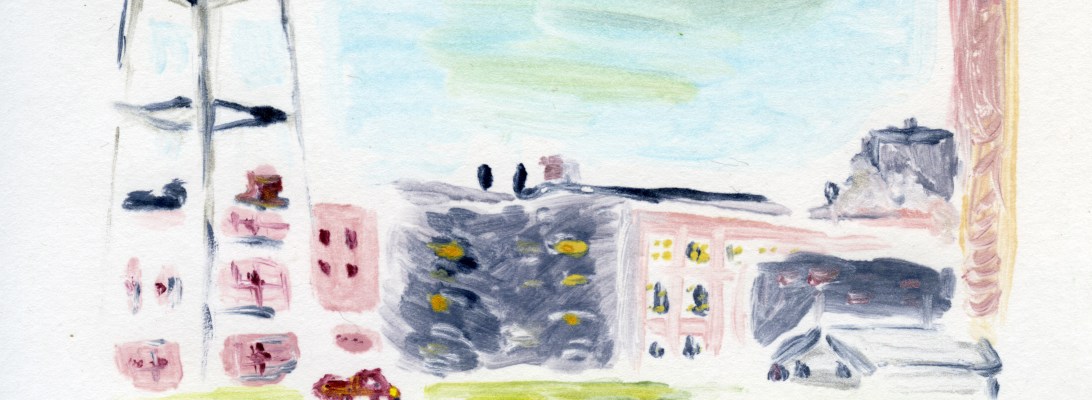

The Texas Forestry Museum invited me to contribute a piece to auction in its annual Feast in the Forest fundraiser. While the end sale would be an original piece, the museum worked with me in a similar process as a commission, providing a few photo options to work from for the end result. This piece is from one of their archival photos, and I chose it to work with because I loved how it set the scene and really brought back a sense of time and place. For my process, I have to prioritize which elements of a photo I want to emphasize on the print and for this one, I wanted to make sure to capture the railroad tracks, the water tower and the smoke coming from the building on the far right. While I knew I wouldn’t be able to capture the detail in every letter on the water tower, I loved the stylized first letters and wanted to retain those. In the original, many of these elements were further enhanced with iridescent and metallic paint.
This project captured all of my favorite things about working on commissions, and it was nice to be able to contribute a piece to an organization that is so important and shares my passion for capturing and preserving the rich history of this part of East Texas.
This was a unique piece, but the Texas Forestry Museum is also a retail partner, so please get in touch with them if you’d like to see another option in their inventory.
Contact me if you’re interested in initiating a commissioned project of your own! If you’re thinking of one for the holidays, its best to get in the pipeline by Oct. 1.

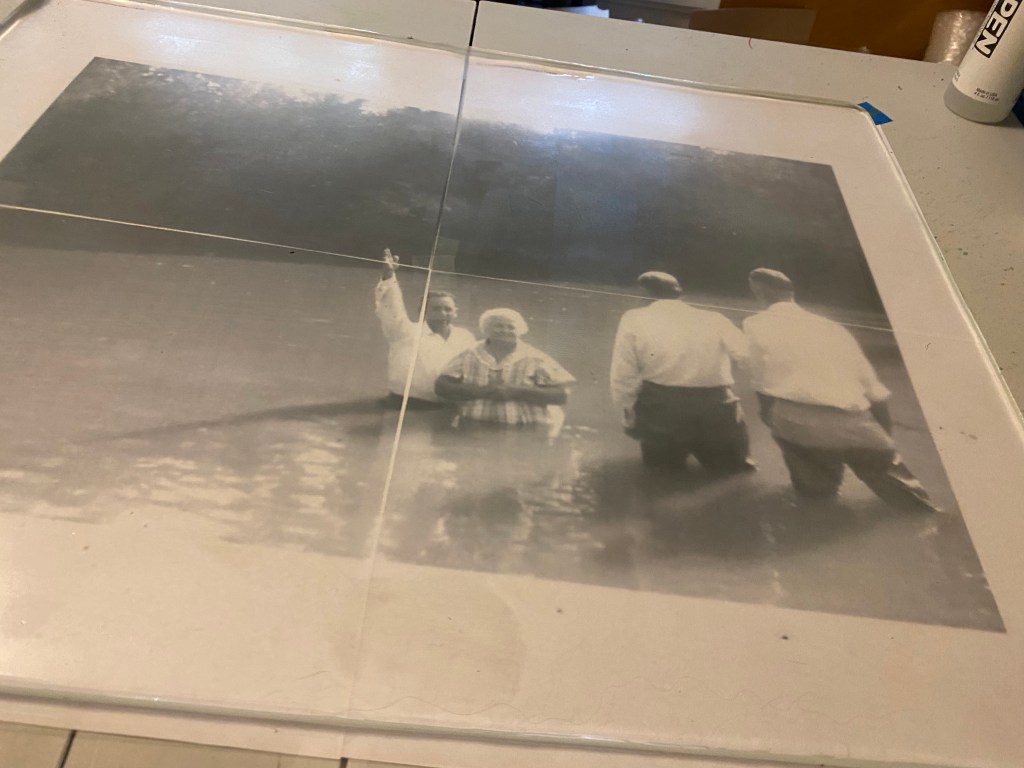

I’ve started working on larger monotype prints, which is fun. It takes a little bit of problem solving, since I don’t have a large format printer and wouldn’t want to spend money to have something printed professionally that’s just going to be a reference piece. So, in order to get the photo large enough, I open Adobe Acrobat and print as a poster, which enlarges across multiple sheets of paper. I put them together sort of like a puzzle under my large plate (or plates if the finished product will be larger than 16X20.) It is a little extra work, but I love how these look at a larger scale when I can bring out more of the entire scene.

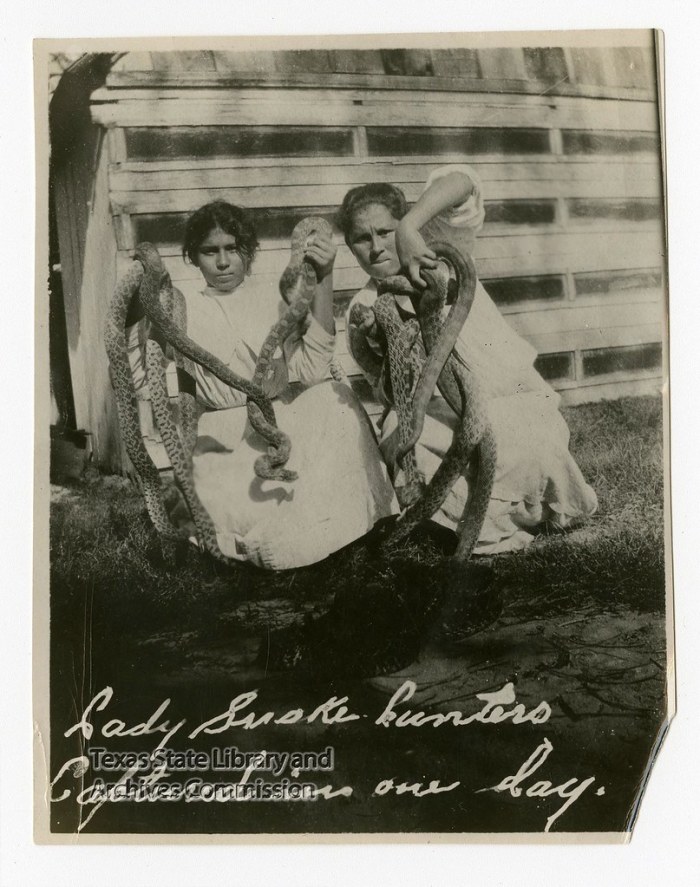
This photo is so visually arresting! And, the more I researched and learned about it, the more compelling its story was. The image was found in the William Deming Hornaday collection on the Texas State Library and Archives Flickr page (a great resource that I use a lot!). This photo stood out to me, and I immediately knew that I wanted to learn more and create my own work inspired by it. But, without much to go on from the Flickr caption, where to start? This is where the process gets fun for me.
As I learned more about William Deming Hornaday, I discovered that he was a photojournalist and eventually the public relations director for UT Austin, and that most of his Texas work was in Central and South Texas. Moving beyond the TSLAC Flickr Page, I went into the Texas Digital Archive and started searching through his work, focusing in on geographic areas and using the “Search Within” function until I found a set that had a lot of snakes in it. I enlarged those files until I found this image, and the one below, which identifies the ladies as Mrs. W.A. King and her sister.

Here’s where it gets REALLY interesting! I took to Google with a simple keyword search, and pulled up this family’s story. These Lady Snake Hunters were part of a huge snake business in Brownsville, Texas, providing the reptiles for circuses and other traveling animal acts.
According to his biographer and other documents, William Abraham Leiberman was a Russian/Polish Jewish-American businessman in New York who saw unusual business opportunities along the Rio Grande and moved to the then rural border town of Brownsville, Texas to open “Snakeville”, a “roadside facility to breed, sell, and show off snakes for tourists and interested clientele around the world.” Leiberman eventually changed his legal name to William Abraham Snake King.
Texas-born Manuela Cortez King was the snake king’s wife, and evidently quite the talented snake handler, herself. I can’t find exact confirmation on the sister who is pictured here, but Mrs. King’s obituary names two sisters: Matiana Walker and Luisa Samaron. Perhaps it is one of them.
Please explore these links for citations and further reading:
This video shows W.A. and Manuela Cortez King in a “snake catching contest” in 1914, a contest which they won in 3 minutes and 45 seconds.
“Rattlingly Yours…Snake King,” by W.A. King, Jr.
“The Snake King of Brownsville,” Valley Morning Star, Harlingen, Texas. (Gated content)
*As an animal lover, I acknowledge that this story contains some dated attitudes around animal welfare and exhibition that are not acceptable today. I found “Snakeville” to not be not just a fascinating tale of entrepreneurship that brought to life a unique time, place, and personalities in Texas history, but an exciting opportunity to find a name and deeper identities for this photo.


I’m always interested in how creative people structure their time, so I thought I’d share a little bit about how I work. Especially since what so many people see is just the finished product, and that is just the tip of the iceberg!
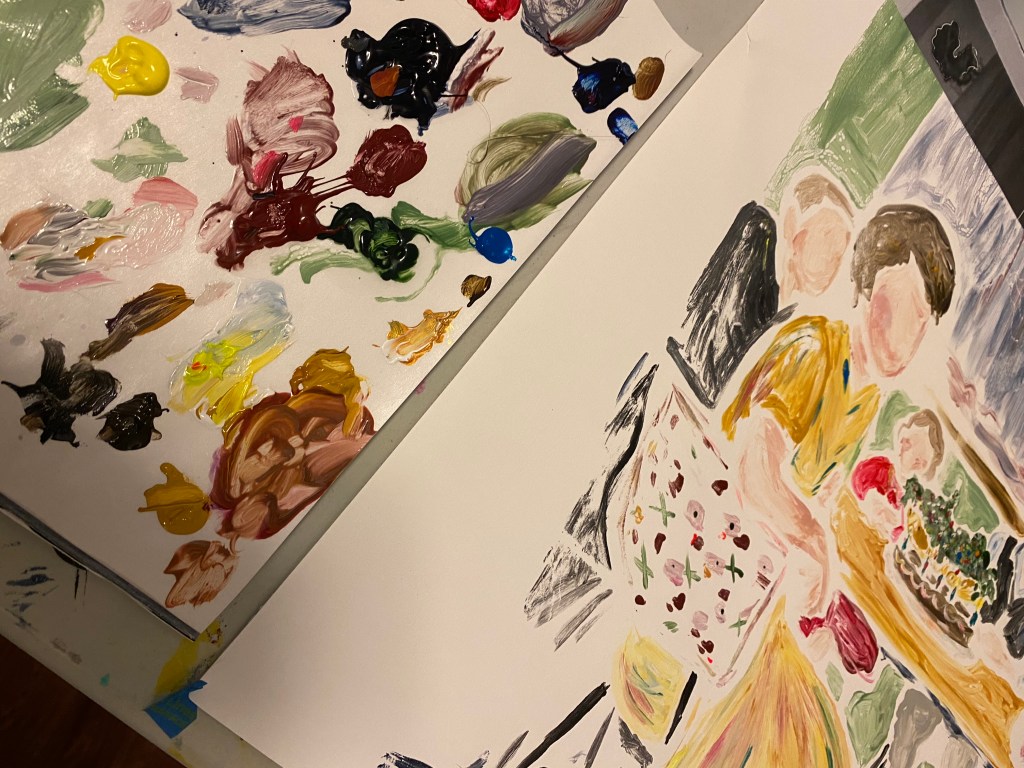
My artwork takes a long time to do. Not as long as, say, a photorealistic oil portrait, but it is very process heavy and needs a lot of protected time, as it is not work that I can start, stop and come back to. If the acrylic dries on the plate, it is unusable for my process, and if I try to rush through and end up with an off-center or flawed print, it’s back to the proverbial drawing board, or literal printing plate, to start over again.
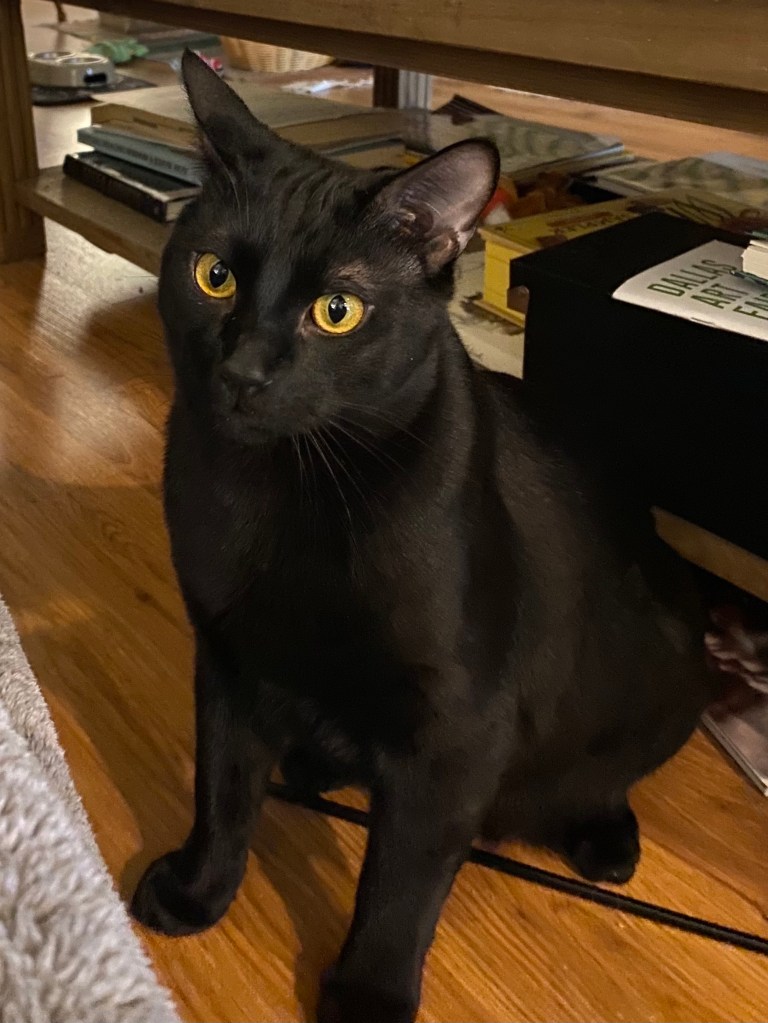
So, printing the art itself is something I usually batch over one or two dedicated days of the week in my studio and in that time I can print roughly four pieces depending on the size and level of detail. (It also helps with cat control, as the kittens still aren’t allowed in there and I don’t like having to shut them out more than necessary. One, it makes me feel bad and two, they bang on the walls and rattle the door. I think the house panther is about three “aha” moments from unlatching the doorknob.)
When I’m not actively printing or hand-embellishing completed prints – either for my own work or commissions from others, I do a LOT of research. I would say that a typical week is 50 percent creating the art, 40 percent research, and ten percent admin/marketing/operations which includes things like invoicing, cleaning my work space, looking for and responding to promotional opportunities, updating digital platforms and responding to commission requests (not all of these tasks need to be done each week, thankfully.)
My days are structured like any other workday, usually getting started around 9-10 am and finishing around 6 pm for family and TV time with the kittens.

I sometimes work over the weekends, and I’m always reading on my off-hours, and some of that is research time as well. On weekends I try to recharge and work around the house or go see shows by other artists for inspiration. But during the pandemic I have been mostly at home.
Because my work centers on the Pine Curtain Project, I am always on the hunt for compelling vintage images with compelling stories, ideally that contribute not only to my own family history, stories and memories, but also to the larger cultural history of East Texas. As I wrote in a previous post, I’m focusing on a few main topics this year, which is not to say that other images and themes aren’t included as well. But, I am finding so much information just on these topics, that I am very busy researching, reading, cataloging and analyzing information.
Combining my art so closely with writing and research complicates things in some ways, but in most ways, I feel that it leads to a more rewarding experience for me as the artist, and hopefully for the viewer as well. As a person who likes a little more structure in the day, I feel that this project lends itself well to providing that structure while still leaving plenty of room for the flexibility needed for the creative process to do its thing.
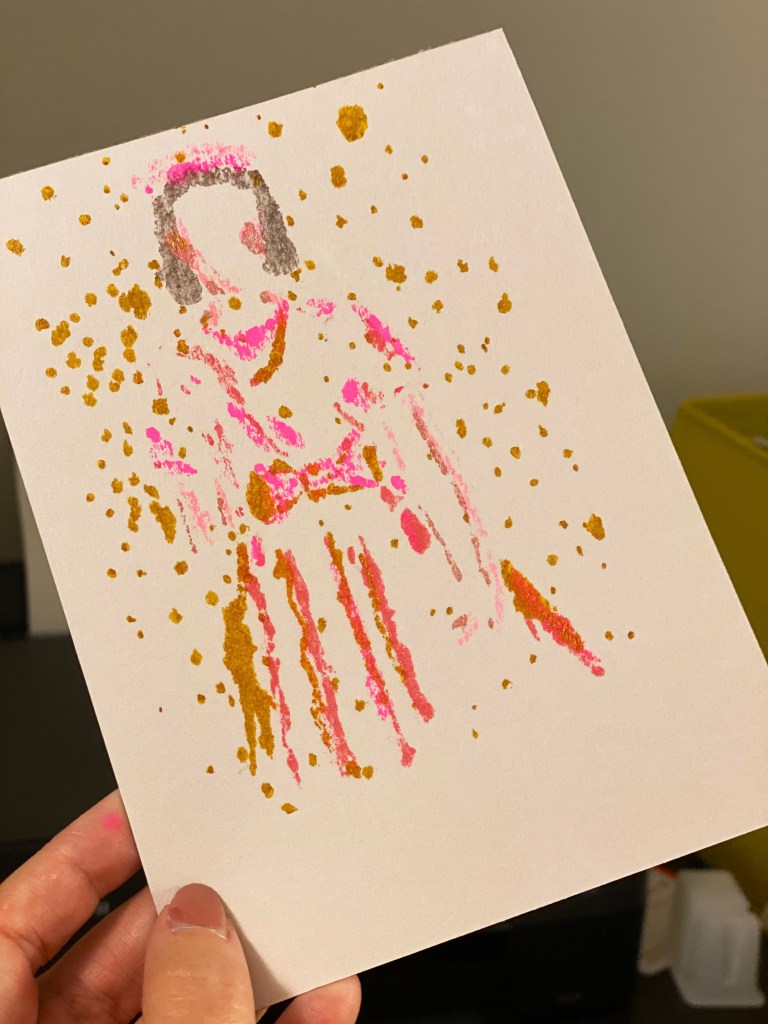
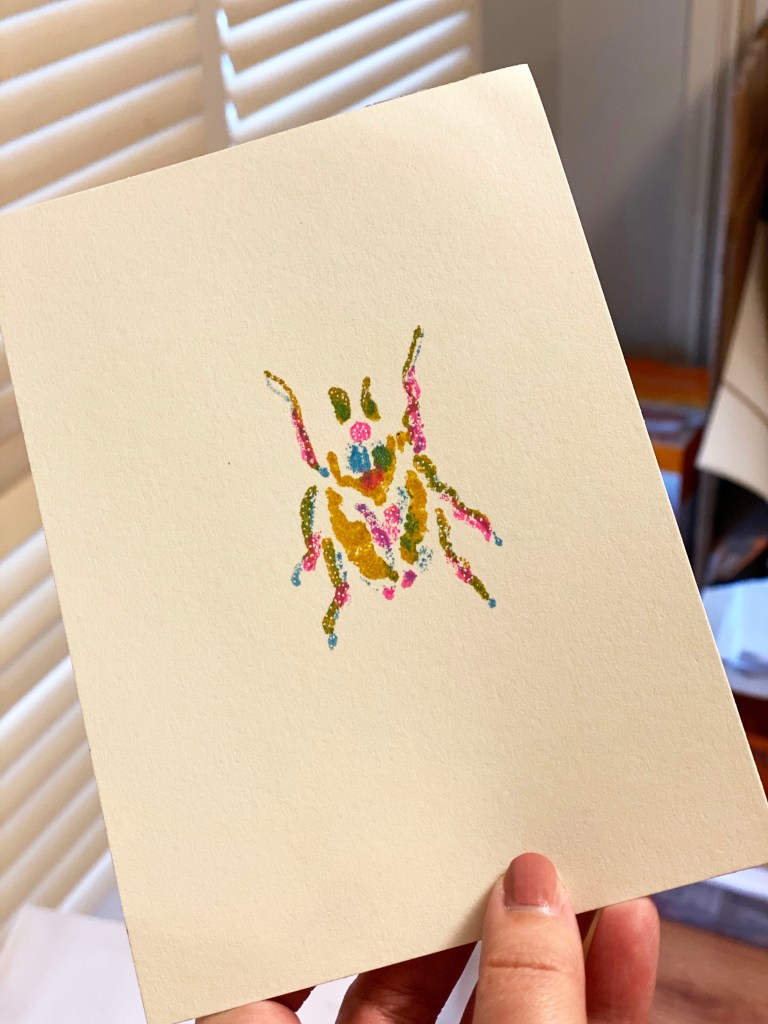
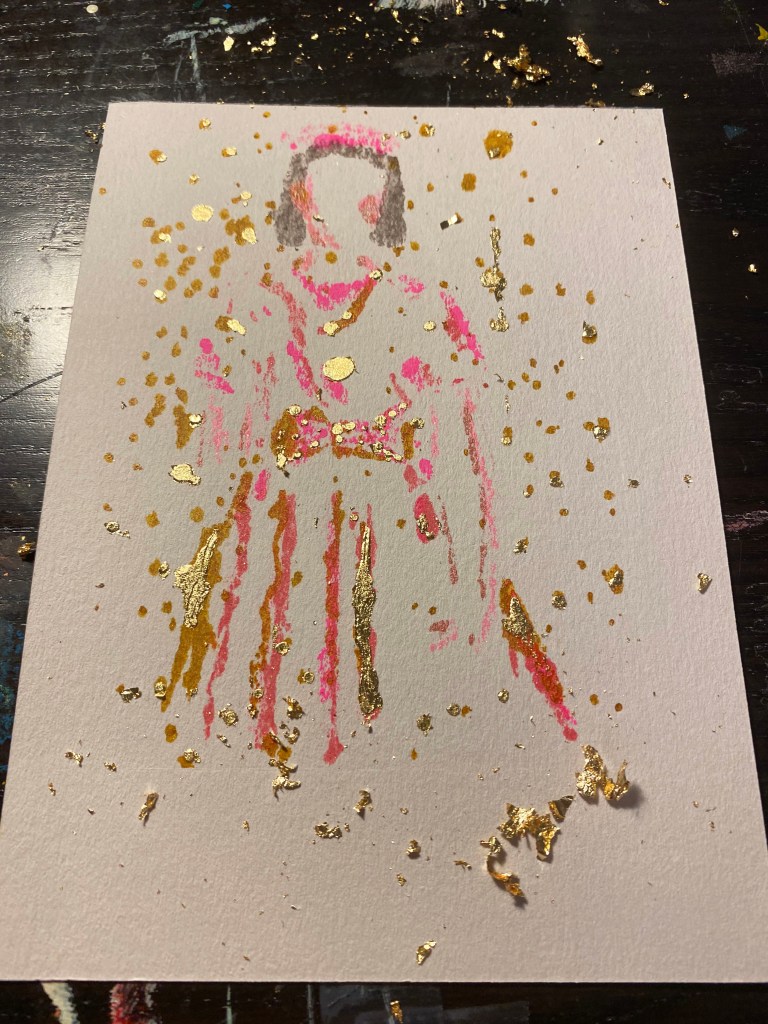
More printmaking experiments! These are Posca marker on Dura-lar. It’s a different look than the paint on plexiglass, but same process. This was a nice alternative for a quick visit to my studio when I didn’t have the time or focus to get out my paints/inks or work from a large plate. I still have some extras to add, but in general, I like the direction they’re headed.
Late last year, I posted about taking a “sabbatical year” to focus on my personal and professional creative work. Whether you call it Murphy’s Law or the universe saying “hold my beer,” my good intentions left the rails almost immediately.
In January alone the cat died, James’ aunt died, James spent a week in Las Vegas with his work and I lost what felt like an entire day in a suburban Chico’s while my mom tried on various “perfect black pants” that all looked exactly the same. We went to East Texas and drove to the beach for a day with my parents. I worked, kept up the house, saw friends when I could, read a bit, watched some TV and then it was February and time to plan my first art tour. And so on, and so on. I felt like I inhaled at the end of December and exhaled sometime in the last week or so.
Great sabbatical mindset, right?
But some things have gone well. I use social media and my mobile devices less and less, which feels better and better. I still don’t pick up my phone or iPad until after I have had coffee and read a bit. That has been nice, and as a bonus, helps navigate and give perspective to the wild news cycles.
I also had time to think about a word for the year, or for the next ten months rather, since it was almost March by the time I got around to it. “Establish.”
Last year’s word was “Forward.” At the start of 2019 I was sitting with a lot of uncertainty over things that weren’t moving as they should, proverbial centers that I knew simply would not hold. So in the trend of picking a theme word for the year, “Forward” was a good touchstone, an idea to make decisions around, and a reminder to take risks and just make the decisions I needed to be somewhere other than I was, and get back to liking my life.
In my last corporate job, I was responsible for building IT processes and setting global business priorities. This involved taking a great deal of data and qualitative input from our markets around the world, accounting for risks and uncertainties, and organizing that information into policies that our entire global ecosystem would agree to participate in and abide by for tasks like bug resolution, feature implementation and new initiatives requests. It was extremely difficult, and I say this as someone who also had to manage a complex, high stakes, multi-vendor, multi-time zone code update around the devaluation of the Belarusian ruble. (Understand why I work in art now? Haha.)
I loved discovering, analyzing and organizing all the information, but some of the other details…not so much.
But I am a framework person, and frameworks help my creative and personal life just as much as they helped my big, messy corporate life. They keep information from overwhelming me and also build in things to look forward to. I can’t predict what positive results will be, but I truly believe that by following healthy habits, positive results will come. And that is exciting.
2019 was so “Forward” that it blew past the finish line and into 2020, I guess. But after a well-earned few weeks to rest and reset, better late than never, I am ready to “Establish.”
Where does this fit into the idea of a sabbatical year? Establishing a solid foundation directly supports the creative, personal and professional goals that I have for 2020. Establishing gives me a concrete, manageable idea to focus on, and a consistent, larger goal when individual priorities compete or become confusing. It is also a logical next step from “Forward.” While I wouldn’t want to pick 2021’s word so early, I am hoping that I’m preparing myself for years to come in which I can launch.

In my other life, I have an art blog and work in the art sector. This means that I have spent the past few years being practically submerged in the art world, learning about it and how people find, engage with and collect art. I don’t really mix the two streams because I am not looking to be a professional artist in that respect. I am happy to work to help others engage with and discover art, and keep mine just for fun with the occasional transaction.
With that said, sometimes the inspiration does overlap. Particularly when I see a beautiful piece hung on the wall and think how it might work in a different way.
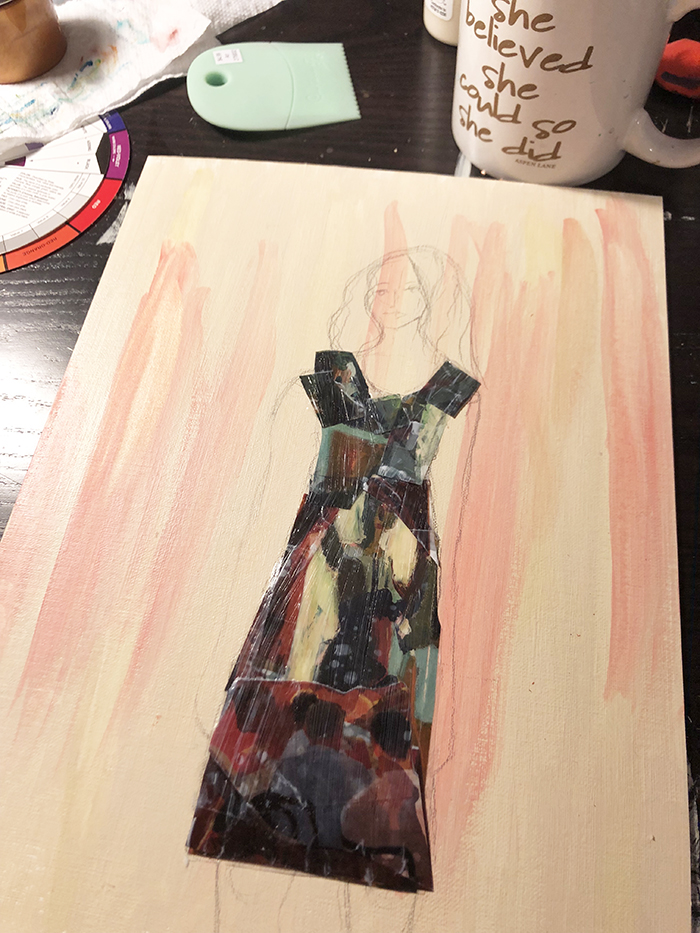
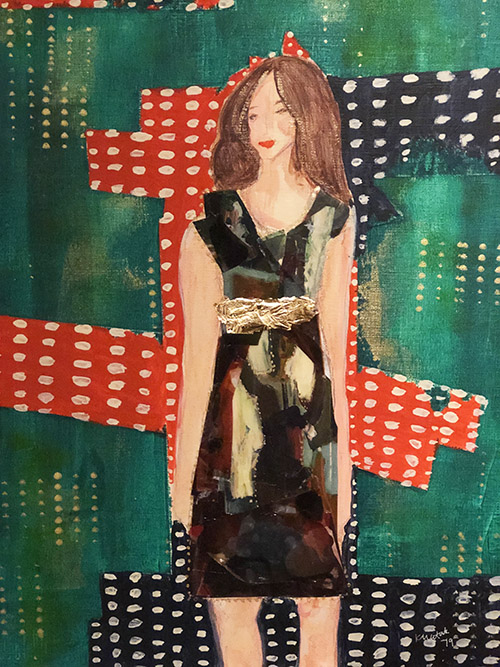
These thoughts have inspired what I call the “Gallerinas.” They’re mixed-media pieces that incorporate fine art pieces as collage, either repurposed or just reused. I take the images from magazines, ads or promotional brochures and cut them up to form new shapes.
Here’s the first “Gallerina.” If you look closely, her dress is a collage of David Park paintings. I saw Park’s retrospective at the Modern Art Museum of Fort Worth earlier this summer and loved it. (It’s up until Sept. 22 if you’re near D/FW or can get here.)


 stephaniekhattak.com