Artifacts

I’ve written a lot about the many phases of the gas station saga, the spark and motivation of the Pine Curtain Project and my attempt to document, work though and move forward (and help move my family forward) as things change so much around them. It has been a while since I provided an update — for a long time nothing really happened. And then, kaboom.
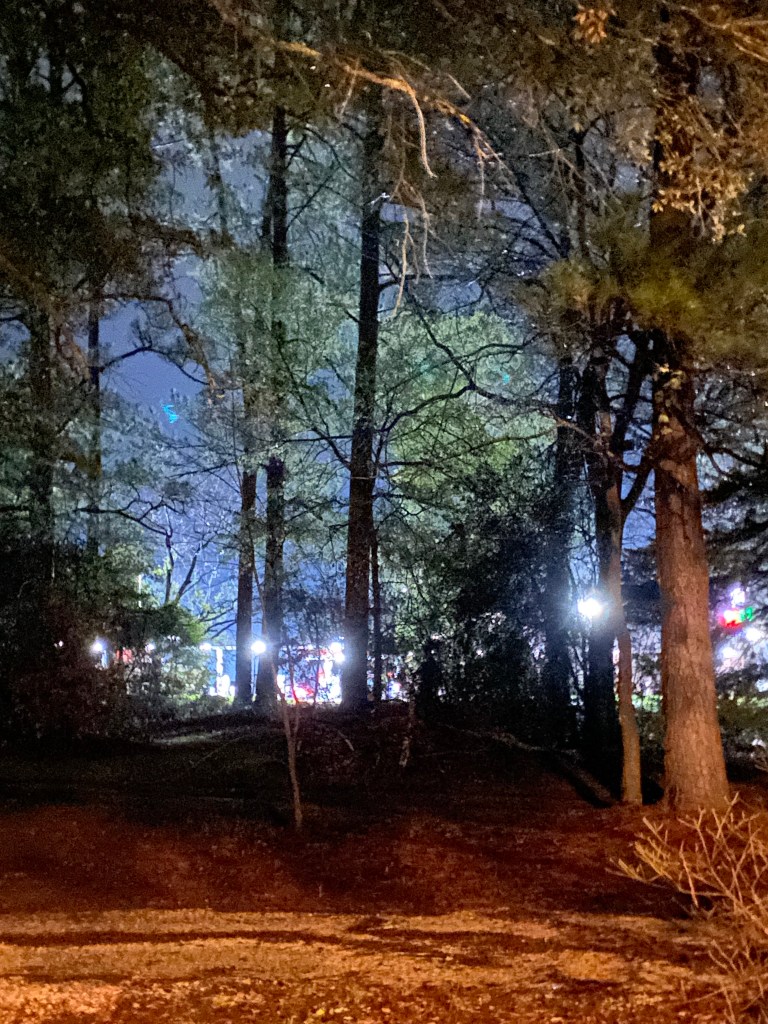
There’s the gas station. When I took this photo, I was standing in my parents’ yard. Not at the edge of it, in their garage. It’s worse in front of my grandfather’s house. Around the time the gas station was finishing construction, other parcels of land began to sell around my families’ homes. It has become a (somewhat expensive and complicated) game of whack-a-mole, with my extended family members and my parents trying to figure out what’s for sale, is it worth buying themselves, is it a good investment, etc. just to maintain some sense of normalcy for a little bit longer. When I was home last, in early May, the area was hard to recognize. Trees have been cleared in all directions, new construction is going up, three or more houses on lots that used to hold space for just one. As these changes have happened, there has been a predictable increase in petty crime like loitering, trespassing and break-ins. And so begins the letting go.

My parents are still coming to terms with what happens next, and because they’re mentally and physically independent, I try to just stay out of the way let them do what they do. And then I look for a bag to breathe into.

They, and my cousin, uncle and grandfather are all handling things in their own way. My grandfather, who lives practically in the gas station parking lot, is getting by with blackout curtains and a good sleep mask. My cousin, the practical one, has bought up some property to delay the inevitable, but has also been making trips to where they all want to resettle to scope it out. My uncle is the only one to actually cross the store’s threshold, because they make a good slushie. My parents are in archaeologist mode.


Every so often, my mom will show up for a visit with a plastic tub of my old stuff. Some of it’s relevant to my research but mostly it’s a hodgepodge. My dad is taking a different approach and finding random old things to refurbish. And I do mean random.

Mom: “Your dad found your bike to fix up for you.”

Me: “What bike?”

Mom: “The little cowboy one. Maroon.”

Me: “The one I had in third grade?”

Mom: “Yes! That one,”

Reader, I am 47. I am almost six feet tall. I don’t have kids and I don’t know any little kids. My cats will never be able to ride that bike.

Mom: “So, do you want it?”

Me: “Umm, why don’t you guys keep it for me a little bit longer.”

A few weeks later.

Mom: “Guess what we found?”

Me: “What?”

Mom: “Your Barbie Dream House!”

Me: “From 1982!?”

Mom: “Yeah, do you want it?”

A few weeks later.

Mom: “I found something you might want in the old barn.”

Me. “??”

Mom: “Your recorder!”

Me: “From elementary school? Like, the ‘Hot Cross Buns’ recorder?”

Mom: “Do you want it or not?”

Other things they’ve “found” and fixed up for me include some kind of ancient weed tiller thing from my late grandfather’s farm, a little deer hide chair from the 1800s, a foot-pedal sewing machine, a 1970’s Ford, a 1960s Mercury Comet and a 1992 Chevy S10. (To be clear, I already have a car!)

I know this is them working through what they need to work through, and who knows, maybe one day I will want to play the recorder again. I think my bestie Missy reclaimed her own Barbie Dream House in a similar scenario, so maybe we can set them up and play, like old times.


The next phase is one that I deeply dread. I have long-promised to help my mom clean out my room, and after years of kicking that can down the road, the day is fast approaching. I do not want to do this. Not only is it going to be an absolute a$$-whip of a project, I know what all is in there.

In the tubs that my mother has brought, the ones she’s piled into my car as its driving away, and the many more that remain, there are stacks of old notes, old writing, old mementos, yearbooks, and photos. Painstakingly folded notes that air one side of long-ago grievances, photos of me looking weird, photos of me trying too hard. Crispy-dried prom corsages. A hand-painted egg from a junior high family science project, still unbroken, resting in its little plastic basket. Diaries that contain God-knows-what about God-knows-who. Tube tops and plastic barrettes and probably all my vinyl pants from the nineties. Notebooks with doodles, directions and things to remember from long-ago trips and my time in New York, when Google didn’t exist and I had to rely on my wits. All of it there, just waiting to bite me.

I know that the cleanest break is to just throw things away. Stop digging, wash my hands, move on. But I can’t. I have to look through these boxes, even the ones that I know will hurt. Because we all know the myth about boxes, and how sometimes, even when pain flies out, there’s still hope left inside. Maybe I’ll find something good.
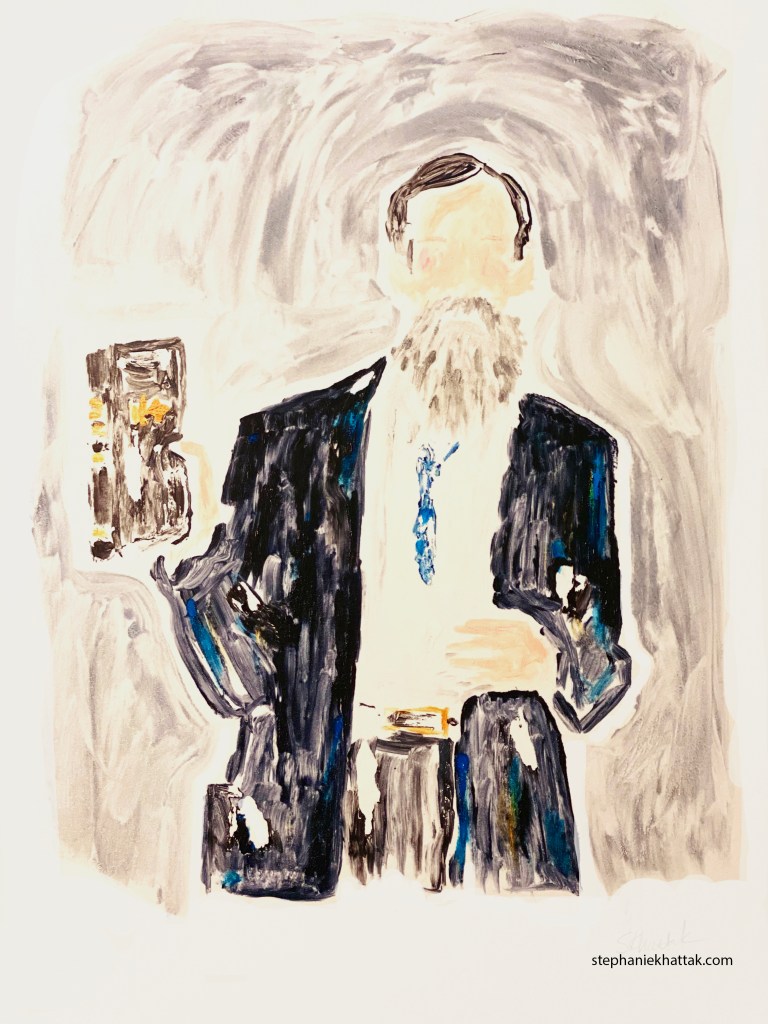
The Reverend

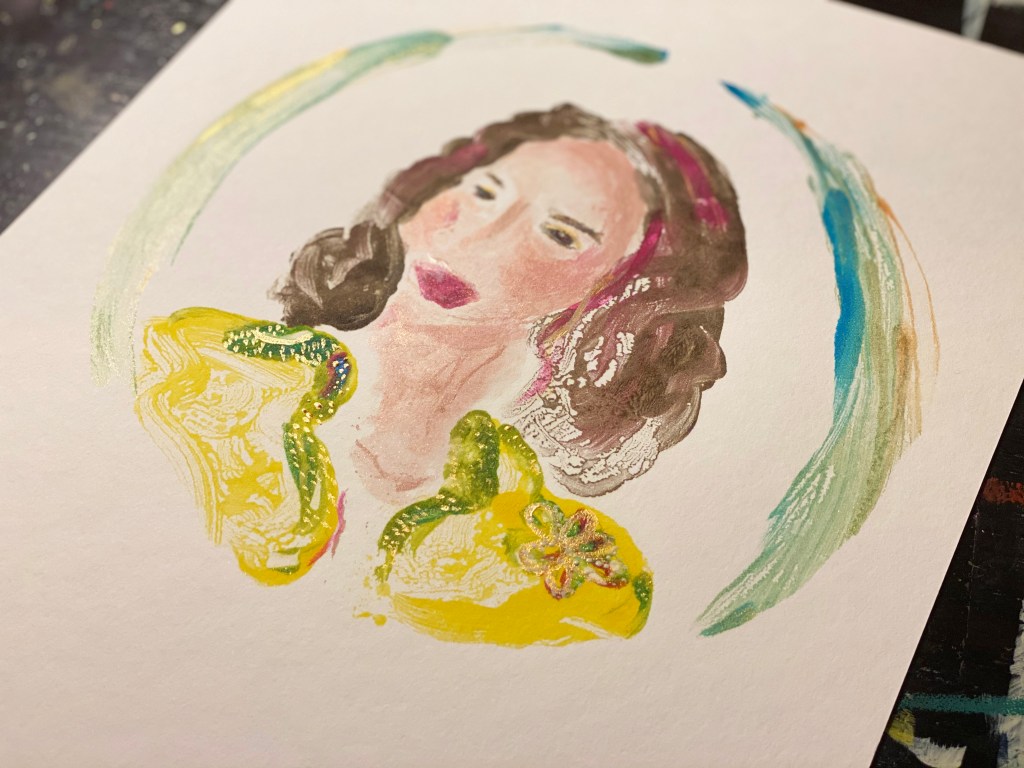
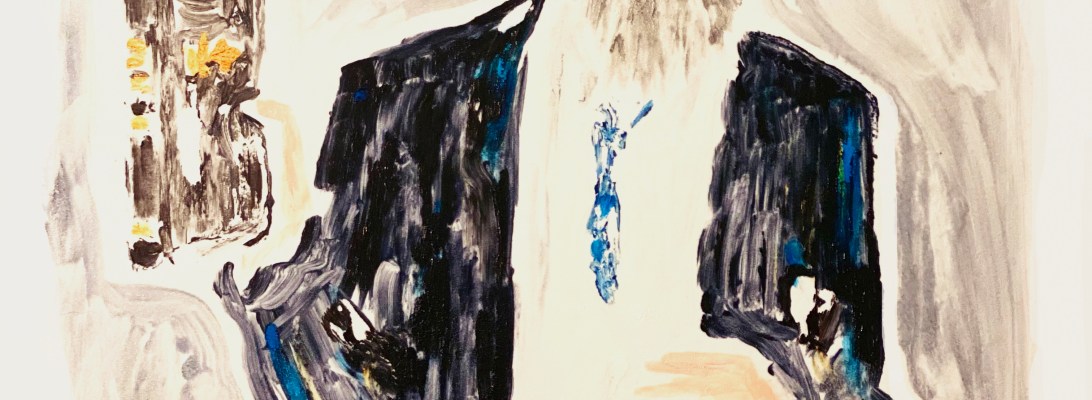
The Reverend.” 12 X 18 on paper. Acrylic monotype by Stephanie Khattak.

This monotype print is taken from a photo of my grandfather’s grandfather, the patriarch and a preacher in Deep East Texas. He had 24 children with two (consecutive) wives, and when he passed in 1940, he had a three-day funeral.⁠

I asked my father about this man’s story, because he was the first that I know of to preach “independently” in my family. ⁠

I was told that after many years of preaching in one of the main denominations, Rev. Durham became dissatisfied with it. According to my dad, he then “sat under a tree and fasted for three days.” When his fast was complete, he had decided to break from that denomination and form his own East Texas church, which remains today in one of the area’s outlying communities. One-hundred years later, it is still maintained as a church and community center by his descendants, many of whom who are still active in the area as preachers and musicians. ⁠

This is the earliest preacher I can identify in this family line, and the religion he preached is hard to categorize. A bit evangelical – one of his sons claimed to walk on water and did, until local pranksters dismantled the underwater ramp he used in his demonstrations. At the same time, this side of the family has a very accepting philosophy of life and a “live and let live” attitude towards others. Music is central to the ministry, and I understand that sermons could go on and on and on…

While he was building his legacy as preacher, his brothers and nephews were busy feuding and fighting all over East Texas. I have found three feuds so far, two of them deadly, and I am sure there are more. I have a lot of thoughts about that, but it’s another post for another day.


Portraits on Silk

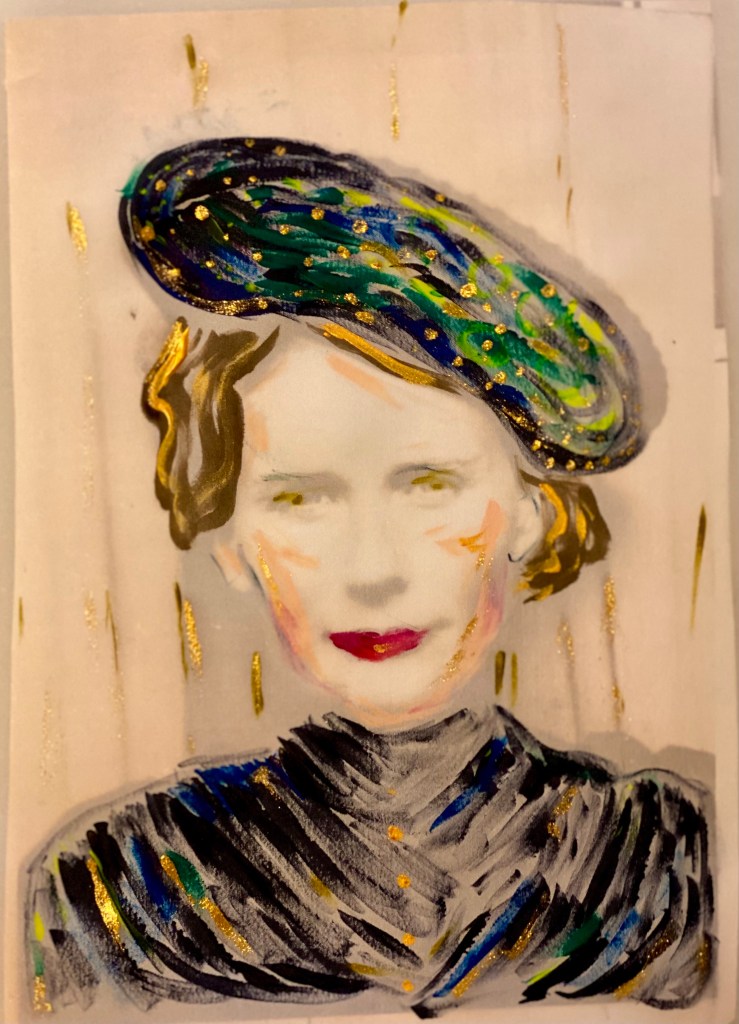
“Beatrice,” acrylic and pigment on silk over vintage photo, by Stephanie Khattak.

This is my great-grandmother on my mom’s paternal side. She passed in February 1978, before I was two years old, so she knew me, but I didn’t really know her. My mom says that they would bring her to my grandparents’ house to spend time with me, and that she really enjoyed that. I like to believe that I enjoyed our short time together, too.

Outside of the Beauty Shop

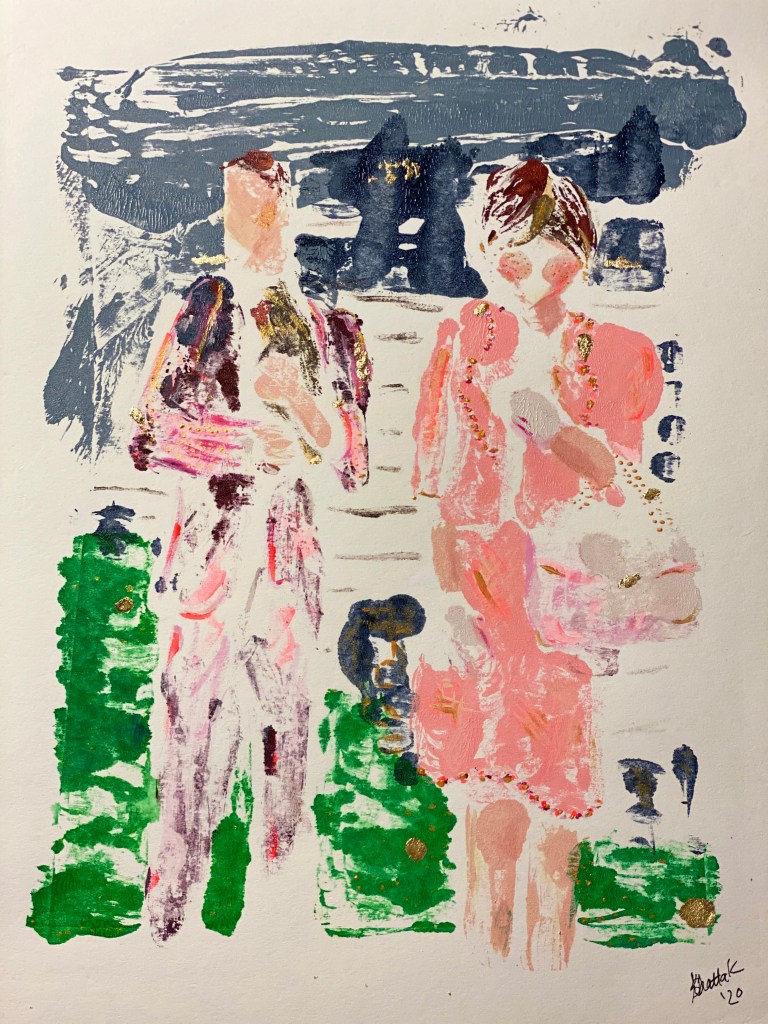
These are the final prints from the third piece in my Pine Curtain Stories project. They feature my father and my aunt, most likely in the 1960s. They’re standing outside my grandmother’s beauty shop, a business addition to their home.

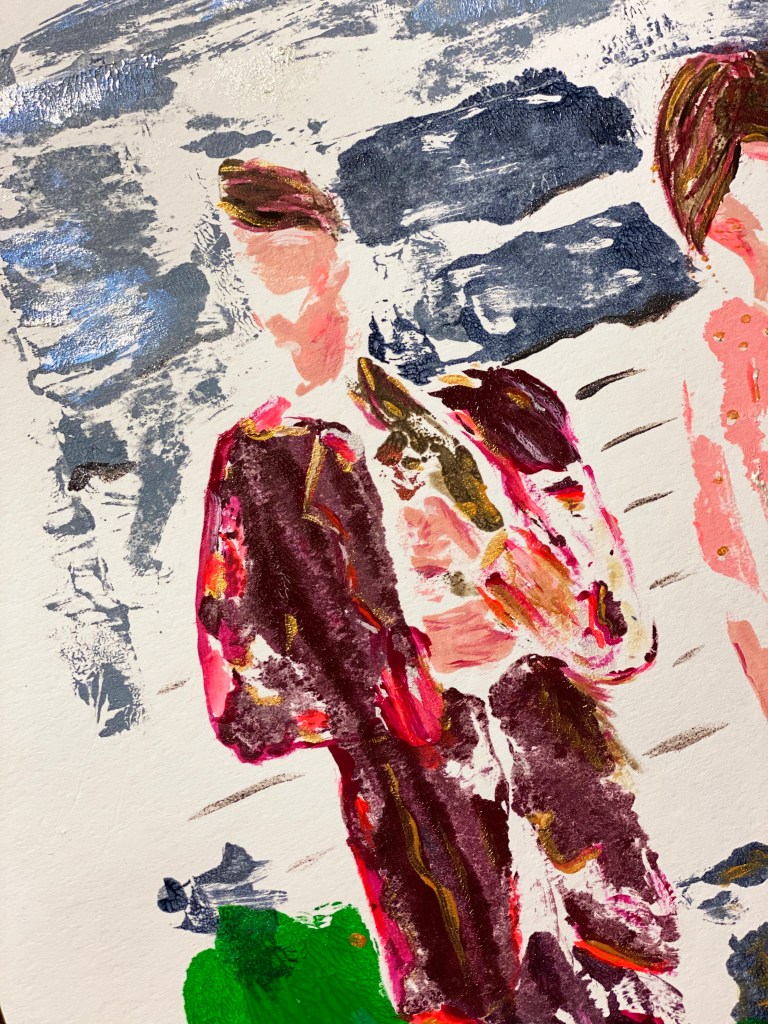
My favorite parts of these prints are my aunt’s pink purse and the dog that my dad is holding, a chihuahua named Pinky who lived long enough to emerge from under my grandmother’s couch and glower at me when I was a baby in the 70s. With the styling of the print, this Pinky looks more like Poncho, a long-haired chihuahua who my dad is probably at home holding right now.

There are subtle differences in the print, and I only added gold leaf to one. The other, I “shined up” with metallic, iridescent and inference acrylics.

“Outside the Beauty Shop, 1/2” by Stephanie Khattak.
“Outside the Beauty Shop, 2/2” by Stephanie Khattak.
Detail shot of dog.

Relational Abstraction

“I have been continuously aware that in painting, I am always dealing with… a relational structure. Which in turn makes permission ‘to be abstract’ no problem at all.”
Robert Motherwell

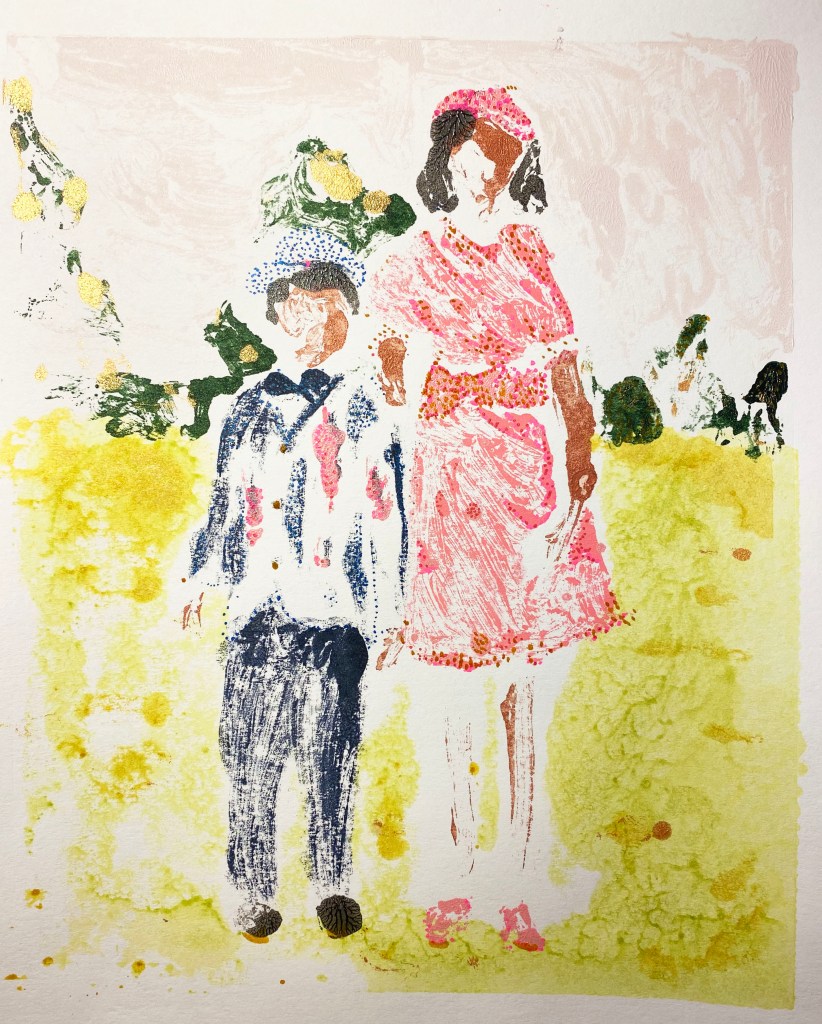
This is another plexiglass print based off an old family photo. Pictures don’t do it justice, but I am still comfortable and happy with the idea that the abstraction is a bonus, if not the entire point. With that in mind, when I embellish the pieces (this time with Posca markers) I try to do so using texture or pattern versus filling in the blank spots or going over the lines to make them look more real.

I like this Motherwell quote and feel that it does a good job of summarizing what I’m doing with this art project. Relational structure vs. a copy or exact representation. In this print, for instance, the way the two figures relate to each other and the lilac sky’s relationship to the gold grass are the important parts of the work. The colors invoke not only the vintage photograph source material, but also a very specific type of “magic hour” that you get in East Texas, when the light is warm, soft and golden. The figures, my mother and uncle, are dressed up and posed in their Sunday best, the clothing and details are abstract, but I believe their relationship to each other and the moment is captured pretty well. (If I say so myself, haha!)

Printed Family Portraits

As I get older and time passes, I am always exploring ways to use art to communicate and share my East Texas roots and young adulthood. I write about some of this in my occasional Pine Curtain Stories project, but have also been thinking of ways to make art around the theme that is a little less illustrative. But I am not a portraitist or skilled in realistic painting , and I want to keep some of the figurative/narrative theme.

Since I have so enjoyed my recent plexiglass printmaking, I decided to expand that work to make abstract prints of family photographs. The first one is of my grandfather and uncle, sometime in the 1960s. It’s a work in progress, as I still need to do some embellishing.

I love making these, and using family and community images gives the work a deeper purpose. I also like this type of printmaking, because the final result is nothing like the original guide piece. It comes out more blurry in some ways, brighter in others. Fitting for such memories.

Plexiglass plate over a copied photo. I add the color one layer/spot at a time and quickly pull two prints, touching up the paint a little in between.
Background prints.
Print process complete. Next step will be to add some finishing touches with pastel and ink.