East Texas Research Trip

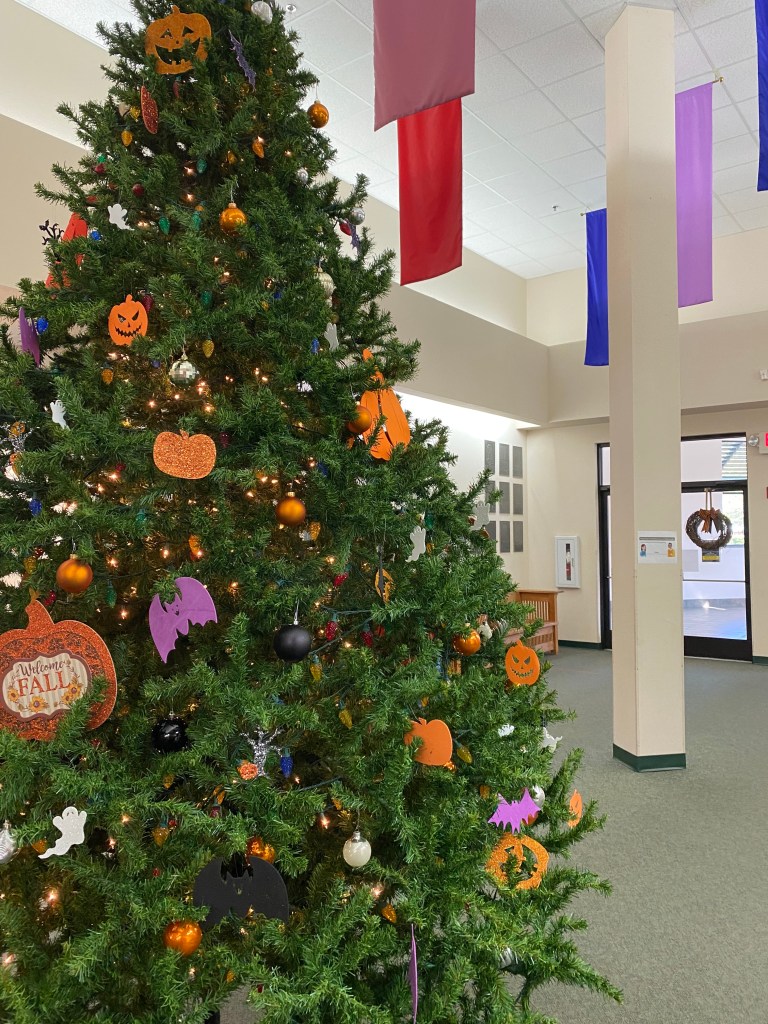
Halloween tree at Kurth Memorial Library, Lufkin, Texas.

I spent the past weekend in and around Lufkin, conducting research and visiting family. I added an extra day to my usual weekend visits to fit everything in, and I still didn’t fit everything in!

Due to the size and complexity of the Pine Curtain Project, I have divided it up into a multi-year roadmap and what I hope are small, manageable chunks. The last time I visited for this work, I focused on some cemetery tours and family oral history. For this trip, I chose two local history centers and narrowed down my research to Old Homer History and the beginnings of a Huntington, Texas history that I am pursuing.

Researching takes a long time, longer than expected and longer than people realize. When I look through archives or do field interviews, I usually have one or two main points I want to explore, but I also have to leave time and “brainspace” for other ideas and topics that I encounter along the way, to either fit them into the narrative or file them away for later. Especially when I am interviewing or consulting someone. This is why you may notice that sometimes my art production goes dark for a few weeks – it is just hard to do everything at once. The past few weeks have been devoted to launching the podcast and preparing for this trip.


Because the Ora McMullen Genealogy Room hours aren’t compatible with my non-resident schedule, the Kurth Memorial Library team was kind enough to pull stacks of requested materials and set me up in a study room on Friday. I stayed for nearly three hours and only made it halfway through. I spent my time going through three large file folders: One on the historic role of the Masonic Lodge in Homer; one on general Homer history; and one on Huntington, Texas around the 1930s-40s. I have 347 photos from my trip, and most of them are of documents found in these folders, if that tells you anything.
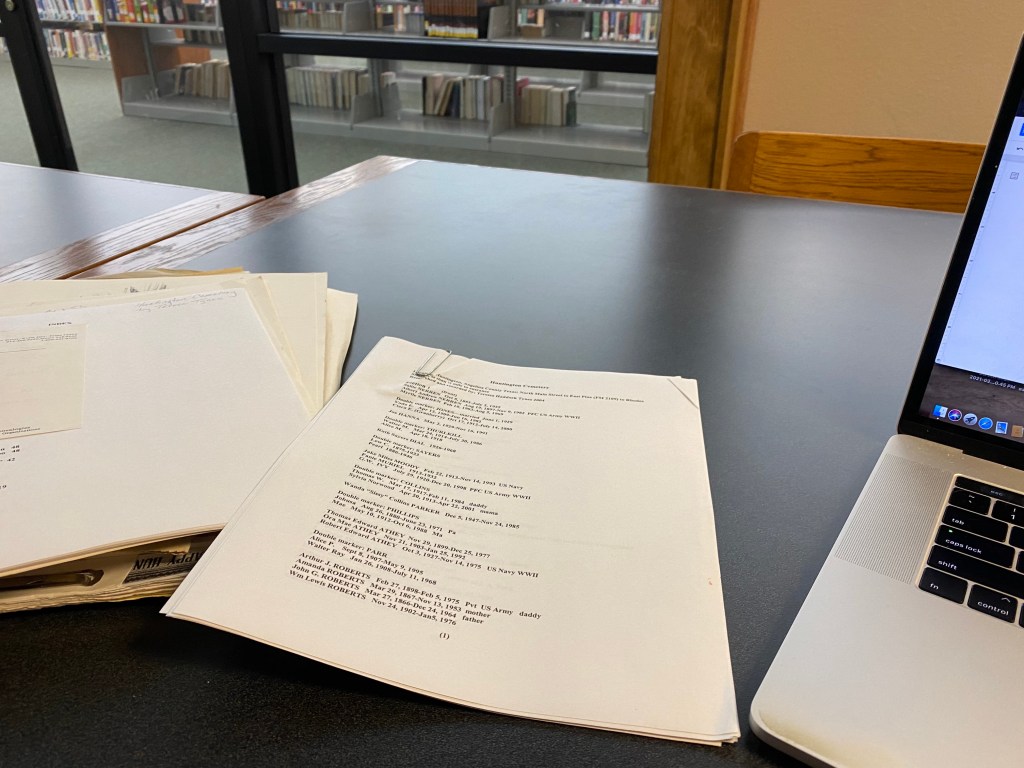
Workspace view and archival documents, Kurth Memorial Library, Lufkin.

Saturday morning, I woke up early and drove out to Huntington, to spend some time talking to Darrell Bryan of the Huntington Genealogical & Historical Society. Darrell is a longtime Homer, Huntington and East Texas historian whose work focuses on armed conflicts, cattle rustling, racism and land disputes. He is also a friend of my father’s, and very nice.

Darrell gave me a tour of the historical society building in Huntington’s Centennial Park, and then spent most of the morning sharing his research finds and opinions; and helping me understand the bigger picture around the incidents I am learning about. I came away with a better idea of the “whys” around the “what happened,” and also new, bigger mysteries to contemplate.

View of Heritage Park from the Huntington Genealogical & Historical Society and Centennial Park, Huntington, TX.

Suite at the Courtyard Marriott in Lufkin.

Since most of my work was in Lufkin proper, I stayed at the Courtyard Marriott. I’m a frequent guest there, and this time they upgraded me to a suite! Score! So, I spent the evenings with lots of space to spread out, organize my notes and snack from the giant bag of gummy candy I bought at Target.

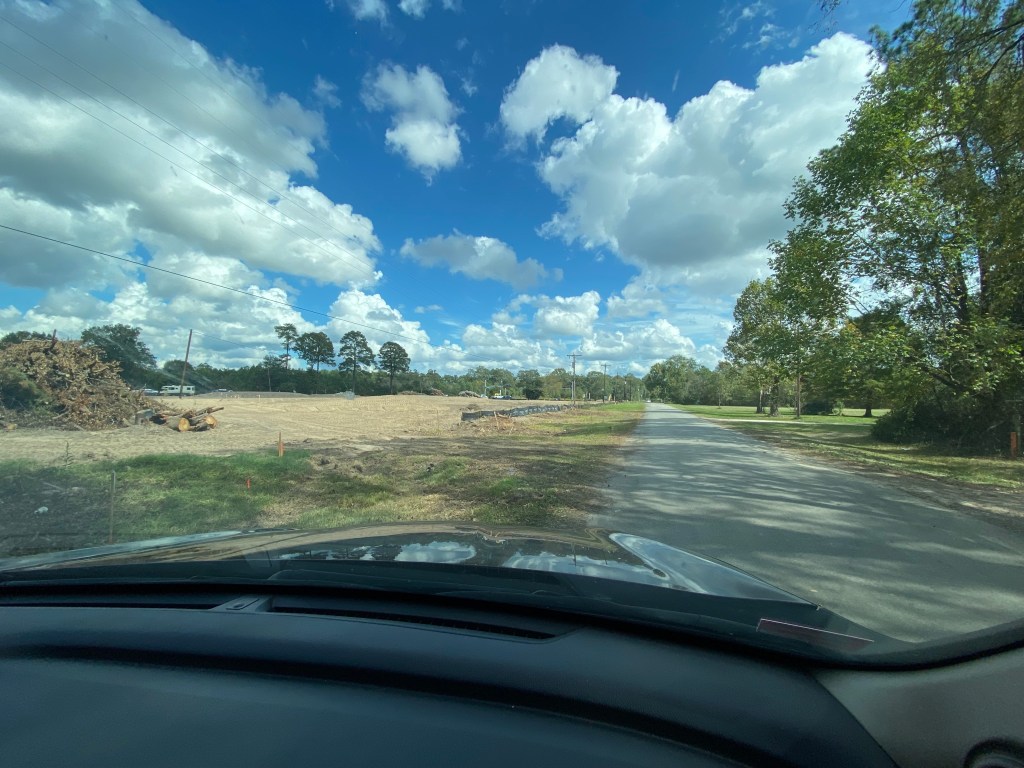
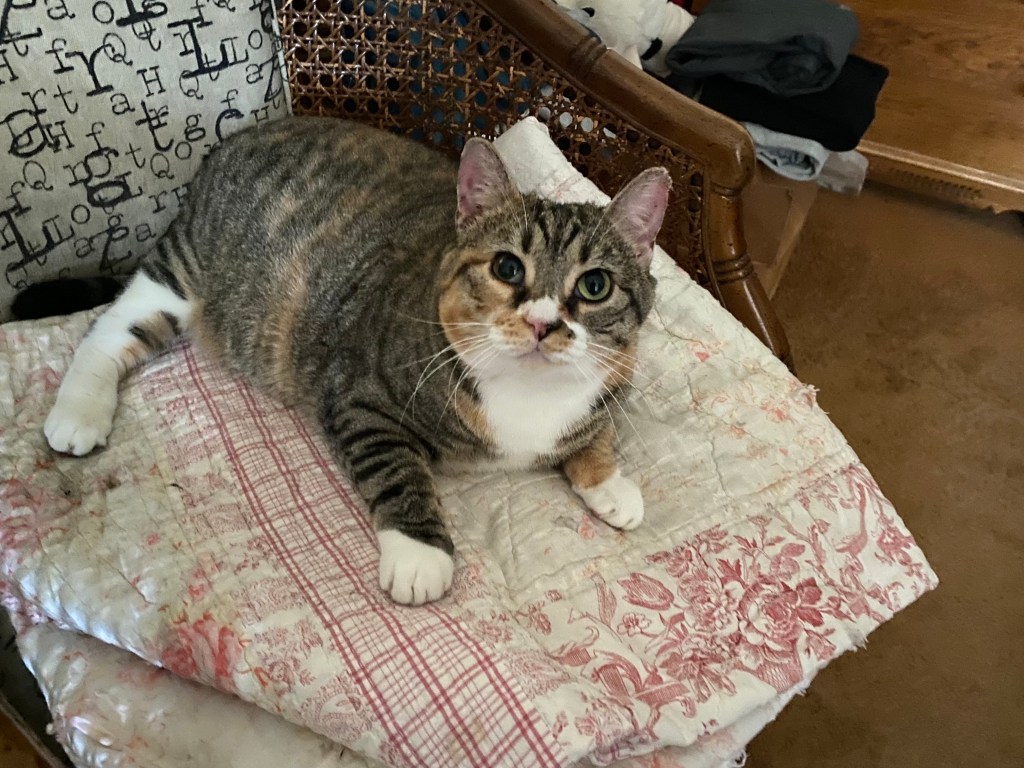
When I wasn’t working or in the hotel, I was at my parents’ house catching up with their animals, and that was pretty cool, too. Less cool is the blighted field across the street from them, that used to have horses, goats, tall grass and trees. Soon, the field will be an all-night gas station and truck stop. An infuriating but important lesson that nothing lasts forever.
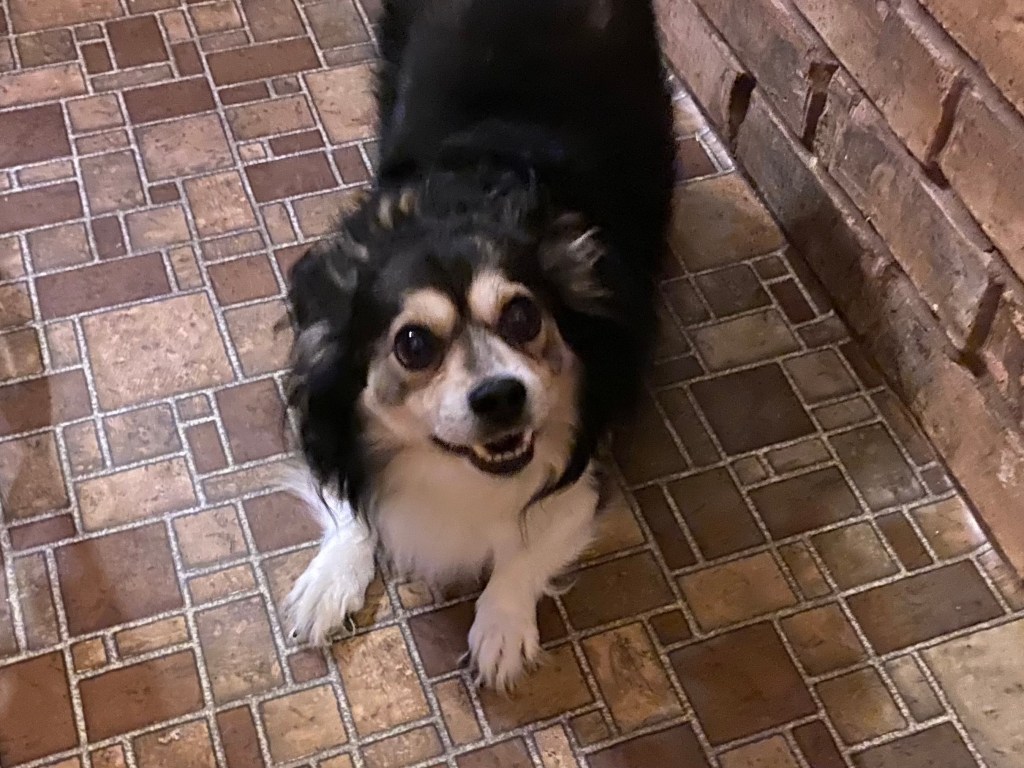
Poncho!
Sweet NaNa.
Soon, the construction site here to the left will be an Exxon gas station in Homer. To the right is my grandfather’s front yard. Harder to see – a great big hole at the end of the street to catch groundwater and God knows what else that drains from the site.

Ready to Fly

“Ready to Fly,” by Stephanie Khattak

My grandmother’s cousin was a career flight attendant. She worked for Braniff International in the swinging sixties, among other notable things, and retired from American Airlines in the mid-nineties after a long and interesting career. Now she lives across town from me with a designer cat and a bunch of friends who are (almost) as fabulous as she is.

Here she is with her mother in their yard. I would estimate the year as somewhere in the late 50s. This was definitely not a Braniff outfit, so I’m guessing it was early in her career. All of her Braniff photos are at her house, and I’m sure she will share them when I pester her about it enough.

East Texas Video Archive

I’m not the first amateur archivist in the family. My dad, for as long as I can remember, has documented community and family life in East Texas, first with reel-to-reel recorders and Super 8 videos, then with a huge brick of a VHS camcorder (which went on every family vacation, duct-taped and cumbersome, until the late 90s, when the battery kept falling out at Graceland.) Now, like everyone else, he uses his iPhone and sometimes the video functionality on his digital camera. But he kept EVERYTHING, and a few years ago gifted me with a box of roughly 30-40 discs, each with 4-5 events captured on it. Best of all, he had long before captured the Super 8s onto the VHS, a painstaking process where he set up the screen in the living room, put on his oldies records, and videoed the screen while my mom and I tiptoed around the set-up and tried not to knock anything over or share incriminating gossip that might be picked up on audio. He later transferred those videos to DVDs as well, so they’re also in the box.

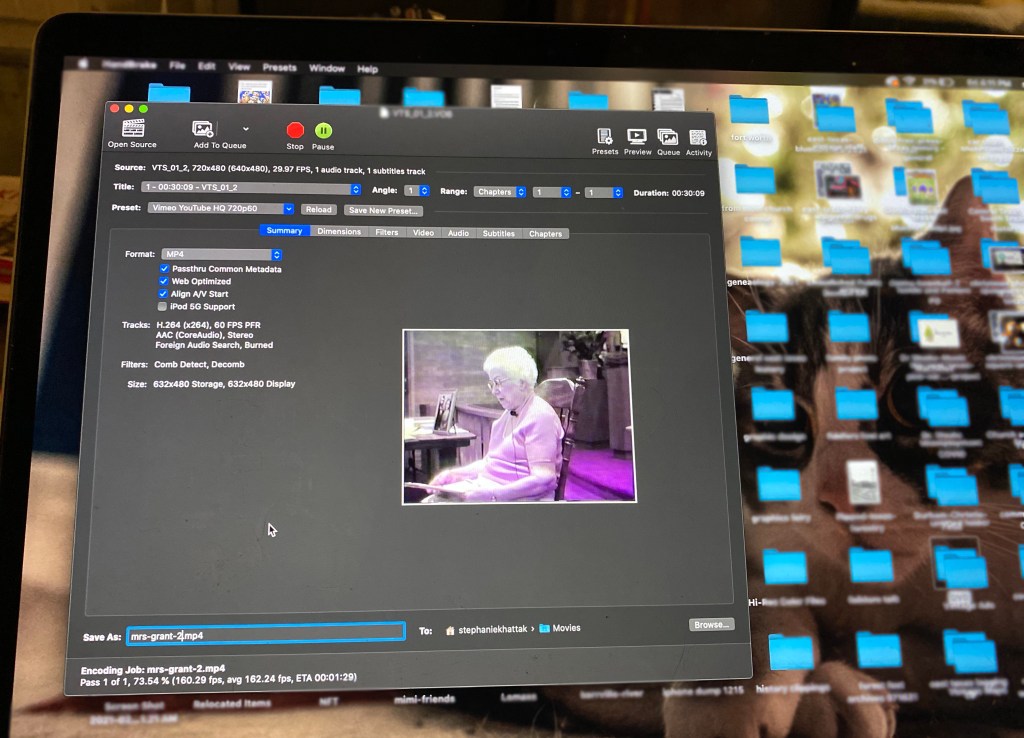
As modern technology evolved, I eventually found myself with no DVD player, and also no real way to copy those discs to a digital format. But they are treasures, and I knew that in particular, there was a Homer history talk by the OG Homer Historian, Mrs. Ruth Grant, in an event at our church in the early aughts. Because I don’t know of a labled map of old Homer, I needed to see if she mentioned any locations or had other information that I could use in my upcoming folklore presentation. So, I went on Amazon, bought some new equipment and started my journey down memory lane.

The good news is that it all works perfectly and I have been having a great time seeing so many memories again. I did find Mrs. Grant’s lecture, and it provided some missing links and also, since she was an expressive talker, I am able to estimate some of the important landmarks of old Homer based on which direction she pointed as she spoke.

This is really exciting for me, not only for this particular event I am preparing for, but also in general to see how I can use more multimedia content to create for and enhance the Pine Curtain Project.

The missing link!
The family dog’s haircut and then his funeral. Not on the same day. RIP Tater.
Not sure what happened at the Smokey Bear museum, but it must have been unpleasant!
My patron saint these days. She’s done all the hard work, I’m mostly just sifting through and organizing it.
How I wish she was still with us to discuss these things in person!

Research Notes: Balinese Room

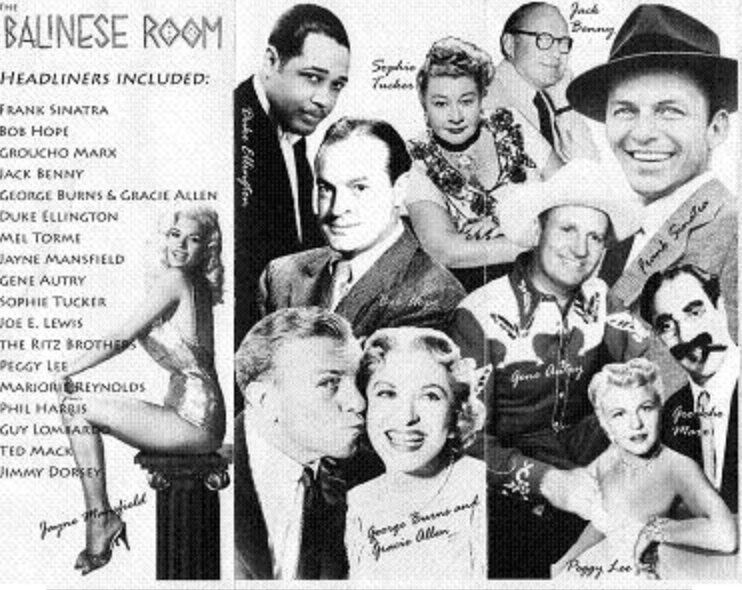
One of the family history threads I’ve been researching leads to Galveston, Texas in the 1930s-40s and the Maceo family, and by extension, Galveston’s Balinese Room. This spot was super-popular in its heyday, attracting visits and performances from celebrities like Frank Sinatra, Duke Ellington, Peggy Lee and others. Apparently it was quite the place to be – and a dance hall and illegal casino stretching over the Gulf of Mexico does sound pretty cool!

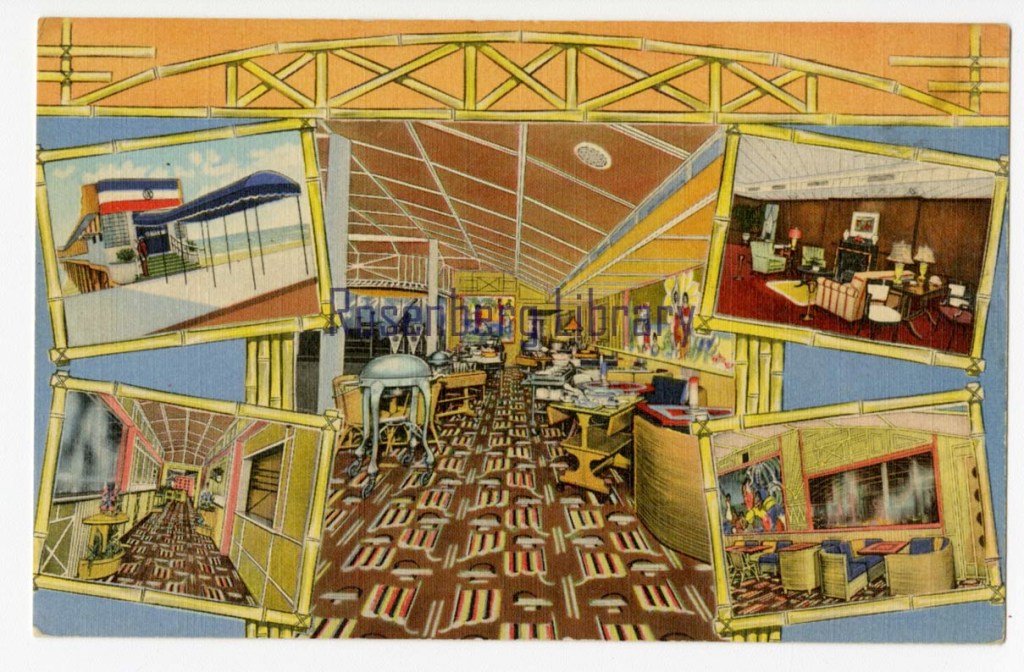
“On January 17th, 1942, the Maceos opened their Galveston jewel, the Balinese Room. The interior had been remodeled in a South Seas motif and the pier had again been expanded, this time to 600 feet. Its private back room was equipped with the most modern gaming equipment, and long before Vegas attracted the big names, the Maceos lured high rollers to “Play on Galveston Island.”” – via Galveston Island/Facebook

Unfortunately, time and Galveston’s famous tropical storms and hurricanes have erased The Balinese Room from its prominent spot across from Hotel Galvez, at 21st and Seawall Blvd. After being purchased and rebuilt several times over the decades, Hurricane Ike demolished it, leaving only the memories and memorabilia of this distinctive place.

Later on, I will dive deeper into my family’s connection with Maceo family associates and its repercussions. For now, enjoy these images and scroll down to read more about this fascinating place and period in Galveston and Texas history.


June 10, 1957:The Balinese Room at 2107 Seawall Blvd, Galveston. via Houston Chronicle Files
Galveston’s Seawall Boulevard and Balinese Room, via Galveston Island/Facebook

Please explore these links for further reading:

Boatman, T. Nicole. Island Empire: the Influence of the Maceo Family in Galveston, thesis, August 2014; Denton, Texas. University of North Texas Libraries, UNT Digital Library.

“One Last Shot,” Texas Monthly, June 1993

“Land of the Free: Galveston’s Resilient Spirit Sparks Another Renaissance,” Texas Highways, June 2021

Research Notes: The Angelina Four

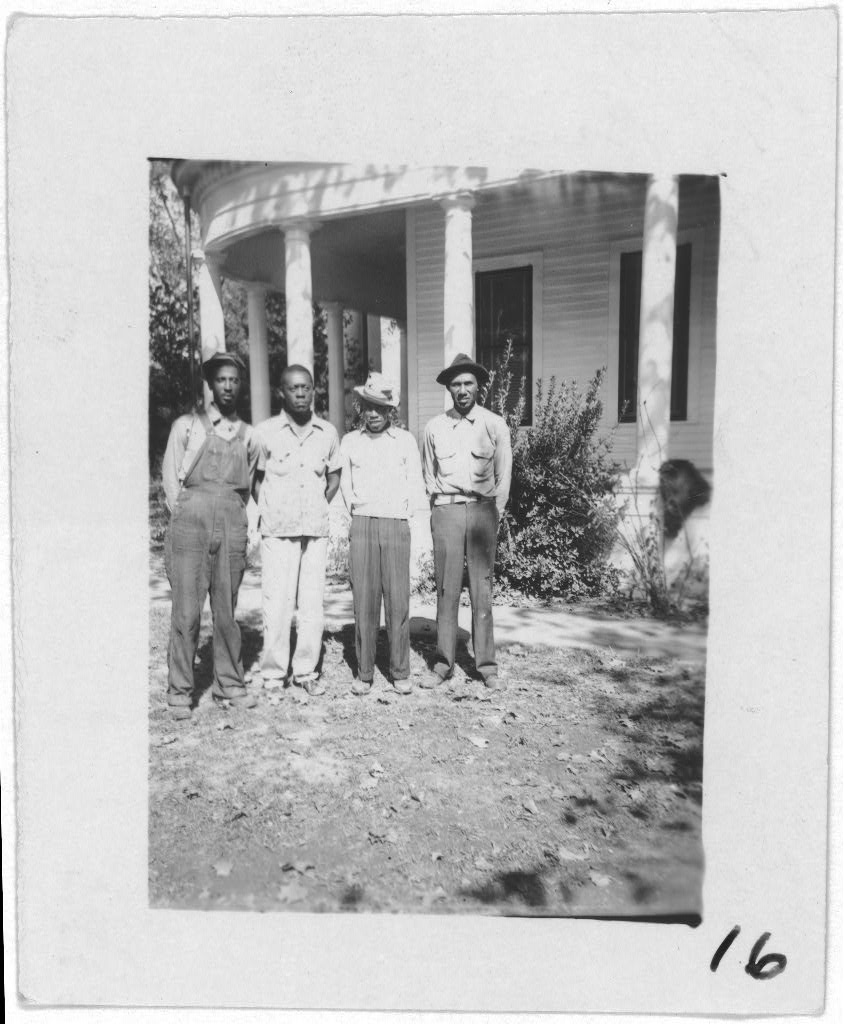
The Angelina Four at Kelty’s Lumber Co., Lufkin, Texas, 1940 Ruby Lomax,
Library of Congress. Alphonso “A.H.” Charlton; Tom “T.J.” Bailey; Jerry Watkins, and Jethro “Jabbo” Williams.

I’ve mentioned these guys before when writing about the work of John Avery and Ruby Lomax, but thought that they needed their own spotlight.

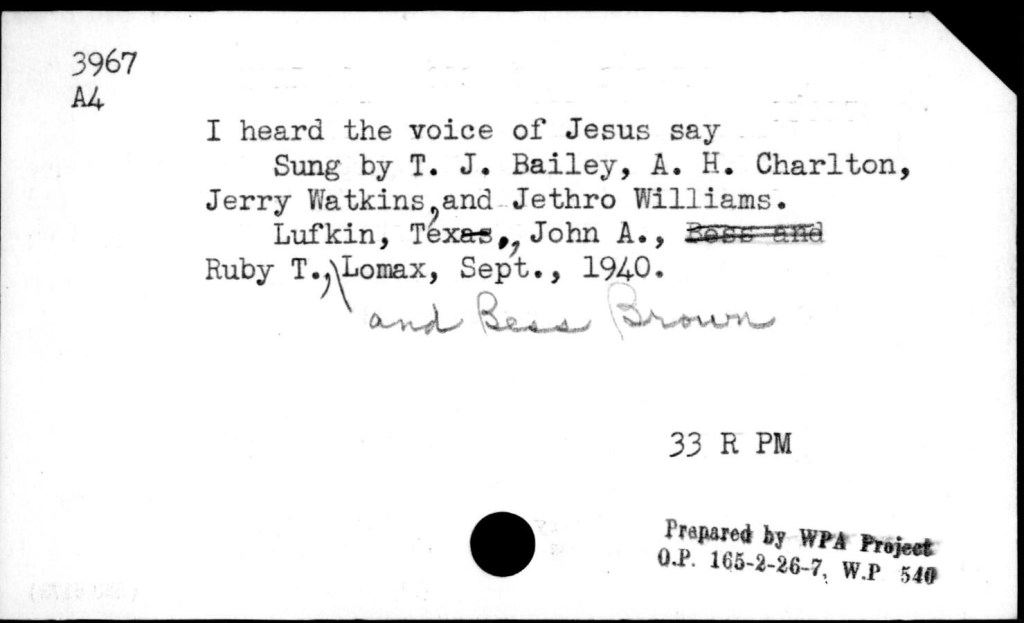
The Angelina Four was a quartet of men who were employed by the Angelina County Lumber Company in Keltys, a community outside of Lufkin. The East Texas musicians recorded 15 pieces, a “singing commercial” – Angelina Longleaf Pine, – and 14 songs that included popular, gospel and spiritual music with rich harmonies.

Notes from Lufkin Recordings. American Folklife Center, Library of Congress.

Please explore these links for citations and further reading:

Amy Bertsch, “Lufkin Recordings,” East Texas History, accessed May 17, 2021.

Megan Biesele, “Keltys, TX,” Handbook of Texas Online, accessed May 17, 2021.

John Foster, “Blues, Baptisms, and Prison Farms: The Lomax Snapshots of 1934-1950,” Design Observer.

Lomax, J. A., Lomax, R. T., Bailey, T. J., Charlton, A. H., Watkins, J. & Williams, J. (1940) Angelina Longleaf Pine. Lufkin, Texas.

*Some of these sources document outdated and now-unacceptable language, policies and ideas around race. Like the authors of these academic works, I do not condone or wish to ignore potential negative impact by reporting or linking to them. In writing about history, I often must weigh the benefit of sharing the “entire picture” against the potential harm in doing so. In this case, I felt that it was important to tell the whole story of the Angelina Four, understanding that the entirety of their lived experiences likely contributed to their creative work and place in history.

Research Notes: Brownsville Snake Hunters, 1900s

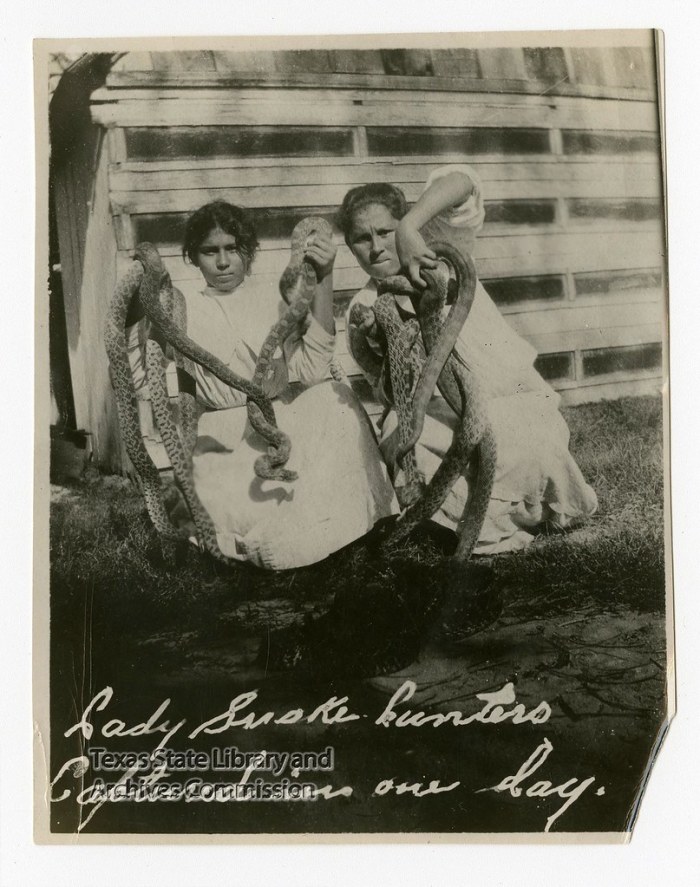
“Lady Snake Hunters, Captured in One Day,” William Deming Hornaday Collection, Texas State Library and Archives.

This photo is so visually arresting! And, the more I researched and learned about it, the more compelling its story was. The image was found in the William Deming Hornaday collection on the Texas State Library and Archives Flickr page (a great resource that I use a lot!). This photo stood out to me, and I immediately knew that I wanted to learn more and create my own work inspired by it. But, without much to go on from the Flickr caption, where to start? This is where the process gets fun for me.

As I learned more about William Deming Hornaday, I discovered that he was a photojournalist and eventually the public relations director for UT Austin, and that most of his Texas work was in Central and South Texas. Moving beyond the TSLAC Flickr Page, I went into the Texas Digital Archive and started searching through his work, focusing in on geographic areas and using the “Search Within” function until I found a set that had a lot of snakes in it. I enlarged those files until I found this image, and the one below, which identifies the ladies as Mrs. W.A. King and her sister.

“Mrs. W.A. King and Sister. Expert snake hunters.,” William Deming Hornaday. Texas Digital Archive.

Here’s where it gets REALLY interesting! I took to Google with a simple keyword search, and pulled up this family’s story. These Lady Snake Hunters were part of a huge snake business in Brownsville, Texas, providing the reptiles for circuses and other traveling animal acts.

According to his biographer and other documents, William Abraham Leiberman was a Russian/Polish Jewish-American businessman in New York who saw unusual business opportunities along the Rio Grande and moved to the then rural border town of Brownsville, Texas to open “Snakeville”, a “roadside facility to breed, sell, and show off snakes for tourists and interested clientele around the world.” Leiberman eventually changed his legal name to William Abraham Snake King.

Texas-born Manuela Cortez King was the snake king’s wife, and evidently quite the talented snake handler, herself. I can’t find exact confirmation on the sister who is pictured here, but Mrs. King’s obituary names two sisters: Matiana Walker and Luisa Samaron. Perhaps it is one of them.

Please explore these links for citations and further reading:

This video shows W.A. and Manuela Cortez King in a “snake catching contest” in 1914, a contest which they won in 3 minutes and 45 seconds.

“Rattlingly Yours…Snake King,” by W.A. King, Jr.

“The Snake King of Brownsville,” Valley Morning Star, Harlingen, Texas. (Gated content)

*As an animal lover, I acknowledge that this story contains some dated attitudes around animal welfare and exhibition that are not acceptable today. I found “Snakeville” to not be not just a fascinating tale of entrepreneurship that brought to life a unique time, place, and personalities in Texas history, but an exciting opportunity to find a name and deeper identities for this photo.

Research Notes: Ruby & John Avery Lomax

Ruby Terrill Lomax and John Avery Lomax produced folklife documentary work that comes up a lot when I am researching East Texas History. Along with her husband John Avery Lomax, Texas folklorist Ruby Terrill Lomax traveled the state and other Southern regions for the 1939 Southern States Recording Trip. The Lomax’s multi-genre journey documented Southern folk musicians and their communities through sound recordings, photographs and other ephemera, and spends valuable time in communities of Color and documenting the creative contributions of incarcerated people. The collection’s primary home is in The American Folklife Center, Library of Congress.

Here are a few items of interest from the collection:

Disc Sleeve with Notes, American Folklife Center
The Angelina Four at Kelty’s Lumber Co., Lufkin, Texas, 1940 Ruby Lomax,
Library of Congress
Enka Square Dance Team dancing at the Mountain Music Festival, Asheville, North Carolina,
Ruby Lomax, Wikimedia Commons

The project’s recordings can be found here: Lomax Iconic Song List, Library of Congress

The Library of Congress also has the 300+ page Field Notes manuscript from this trip, which you can download for easier reading.

East Texas Historic Church

Image of historic church and old cars in the pine trees of Nacogdoches Texas.
“Church of the Divine Infant, Cotton Ford Road, Nacogdoches, Nacogdoches County, TX”

This image caught my attention as I was surfing around the Library of Congress digital archives this week. I loved the trees and the juxtaposition of the old cars against the even older church. The cars are from the early 1930s, and the church was built in 1847.

When I researched some additional history on the church, I found an interesting story. Built in 1847, the structure predates the Civil War, has been a cornerstone of Catholicism in East Texas, and was relocated several times before becoming part of the Sacred Heart church campus in Nacogdoches.

The book “Historic Nacogdoches,” which can be accessed for free on Project Gutenberg, has this to say about it:

“Mission Nuestra Senora de Guadalupe was founded at the same time on the west side of North street in Nacogdoches, overlooking Banito creek, which was called “the creek of the mission.” This mission was never permanently abandoned until it was replaced by the church which stood on the little plaza in front of the present court house, built in 1802. The third Catholic church was formerly the home of Nathaniel Norris at the northwest corner of Hospital and North streets. The fourth church was the Sacred Heart church on Pecan street, built in 1847 under the influence of Bishop J. N. Odin; which was in turn replaced by the present Sacred Heart church, built in 1937 on a portion of the homestead of Judge Charles S. Taylor on North street, the house of the old Sacred Heart church being rebuilt about eight miles south of Nacogdoches as the Fern Lake church. The sites of the presidio and missions have been appropriately marked by the State of Texas.”

As I am more of an artist and less of an academic historian, please explore these links for citations and further reading:

Spanish Missions in Texas,” Texas Almanac

Nacogdoches, Texas,” Texas State Historical Association

Image Citation: Historic American Buildings Survey, C. (1933) Church of the Divine Infant, Cotton Ford Road, Nacogdoches, Nacogdoches County, TX. Nacogdoches County Texas, 1933. Documentation Compiled After. [Photograph] Retrieved from the Library of Congress.

East Texas Mule Skidder

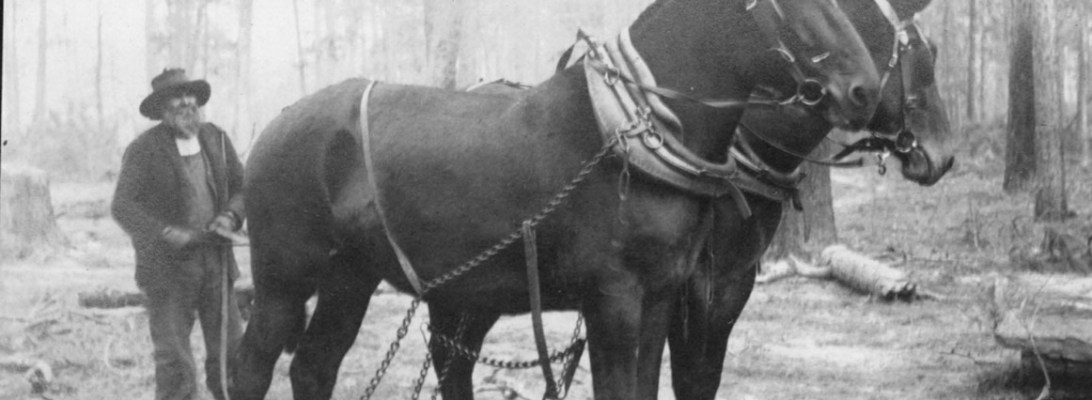
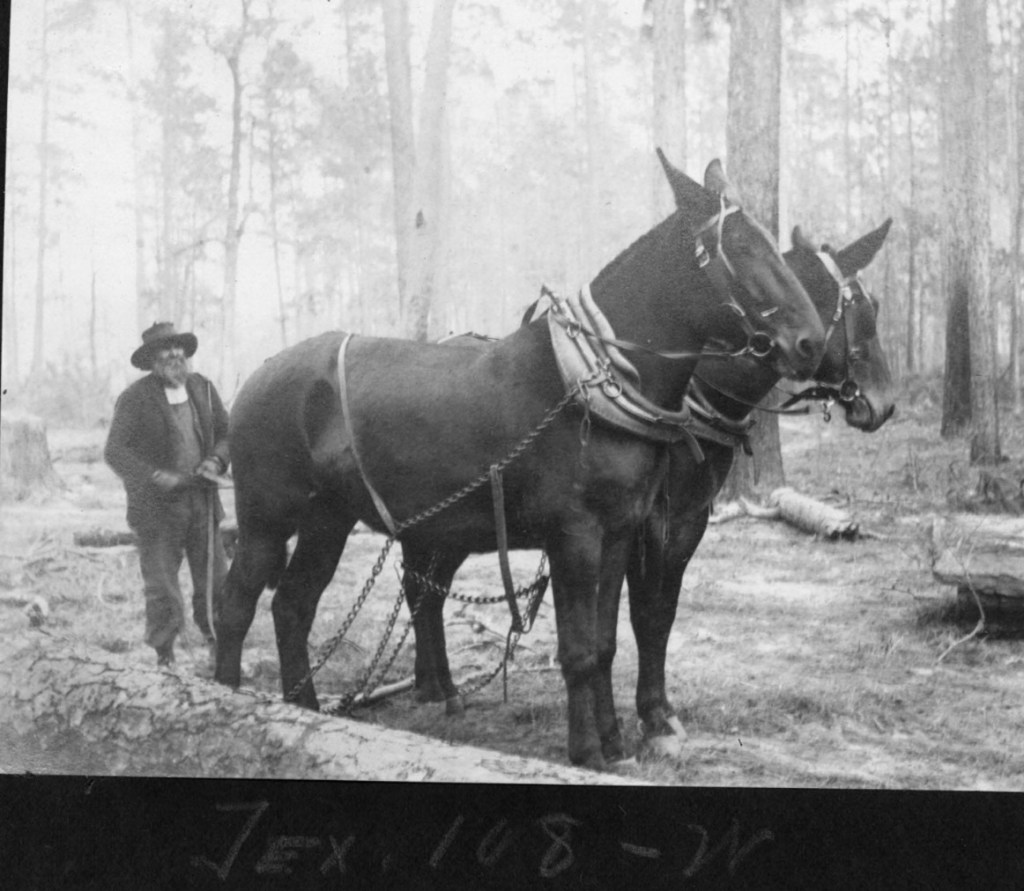
vintage photo of logger with two mule team

This week, I am returning to archive photos from the Diboll History Center. This is just one comprehensive source that I use, and it does a great job organizing its images into historical sets, so it is easy find images from the same era, activity or theme and put them together to document and build larger stories.

This image is “Two Mule Skidders and a Man,” from the Southern Pine Lumber Company, in 1903. The last time I worked from a vintage photo of East Texas loggers, it was a team from the 1930s, if that tells you how long this area has been working with timber.

These photographs at the History Center were part of a larger project by American Lumberman, a weekly trade journal established in 1899.

“The American Lumberman photographs of the Southern Pine Lumber Company consist of 255 gelatin silver prints made by American Lumberman photographers during visits to Diboll in 1903 and 1907. They document the lumber company’s management, logging operations, Texas South-Eastern Railroad, timber, lumber camps, sawmills, commissary, and social life. The photographs provide insight into the early twentieth-century community life of a Texas sawmill company town and connected logging camps.” – American Lumberman Photographs of Southern Pine Lumber Company in The Portal to Texas History. University of North Texas Libraries.

I didn’t know what a “mule skidder” was until today, and when I Googled it, images came up for heavy machinery, not animals. But back when the animal was the machinery, a driver would position the cart over felled logs, where dangling tongs would then raise the end of the log off the ground. The mule, oxen or horse team pulled the tong forward, allowing the log to “skid” along between the rolling wheels.

The photo caption notes that the actual skidder is not shown here, so it looks like the guys in this photo were suiting up for a hard day’s work. Or maybe resting between tasks. Either way, all three were in the middle of a very important job.